











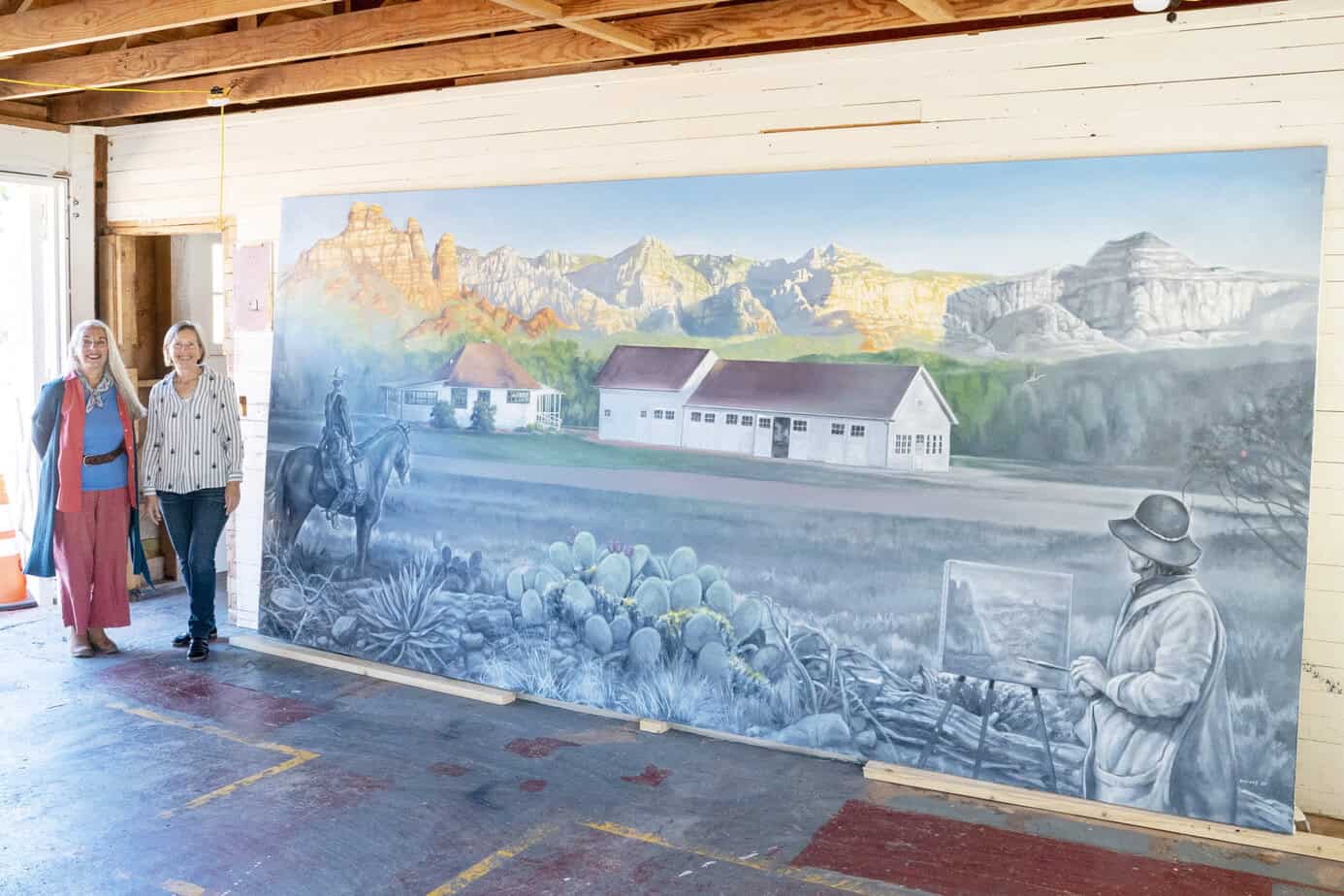
The mural Anchorage-based artist James Havens painted at Sedona Ranger Station Park is complete, but won’t be displayed in the Ranger Station barn until after renovations are completed next fall.
“This project is still under design with concepts being worked through,” Deputy City Manager Lauren Browne wrote in a recent email. “We’re also going to share the design with City Council to get their feedback, and also discuss uses.”
The main renovations in the barn were to add better Americans with Disabilities Act-compliant additions and improve air circulation inside the barn, according to its plan. The inside renovations also make the space inside larger by tearing down one of the interior walls.
“We hope to put the project to bid in early 2026, with construction/ restoration beginning in the spring, with completion in the fall,” Browne wrote.
Once the renovations are complete and the barn opens with the mural on display, it may be used similarly as the Sedona Posse Grounds Hub and Posse Grounds Pavilion at the Barbara Antonsen Memorial Park.
“People will be able to submit a rental request form for whatever activity or purpose they’re interested in hosting,” Parks and Recreation Manager Josh Frewin said. “At the Hub and pavilion, those have included everything from bridal showers, family reunions, work meetings, yoga or meditation classes, small weddings and receptions, local gatherings and community program rentals.”
The Ranger Station House next to the barn is also being renovated with a similar timeline.
“The Ranger Station House will include a small historic section that highlights the building’s early history and will occasionally be open for the public to view,” Frewin said. “It will also feature two meeting spaces equipped with tables, chairs and projector televisions, setup — and ideal for group meetings, local clubs … or even as add-on spaces for events in the barn.”
Both the ranger station, built in 1917, and barn, built in 1934, are designated as Sedona historic landmarks and were listed on the National Register of Historic Places in 2008.
Frewin said the designs for each have been assisted by a historical buildings architect to remain as historically accurate as possible while being ADA-compliant and available for more community needs.
“We anticipate uses will primarily be one-off events rather than ongoing recurring rentals, to help preserve the park’s open and accessible feel for the community,” Frewin said.