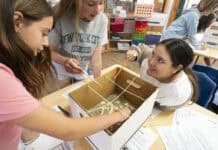














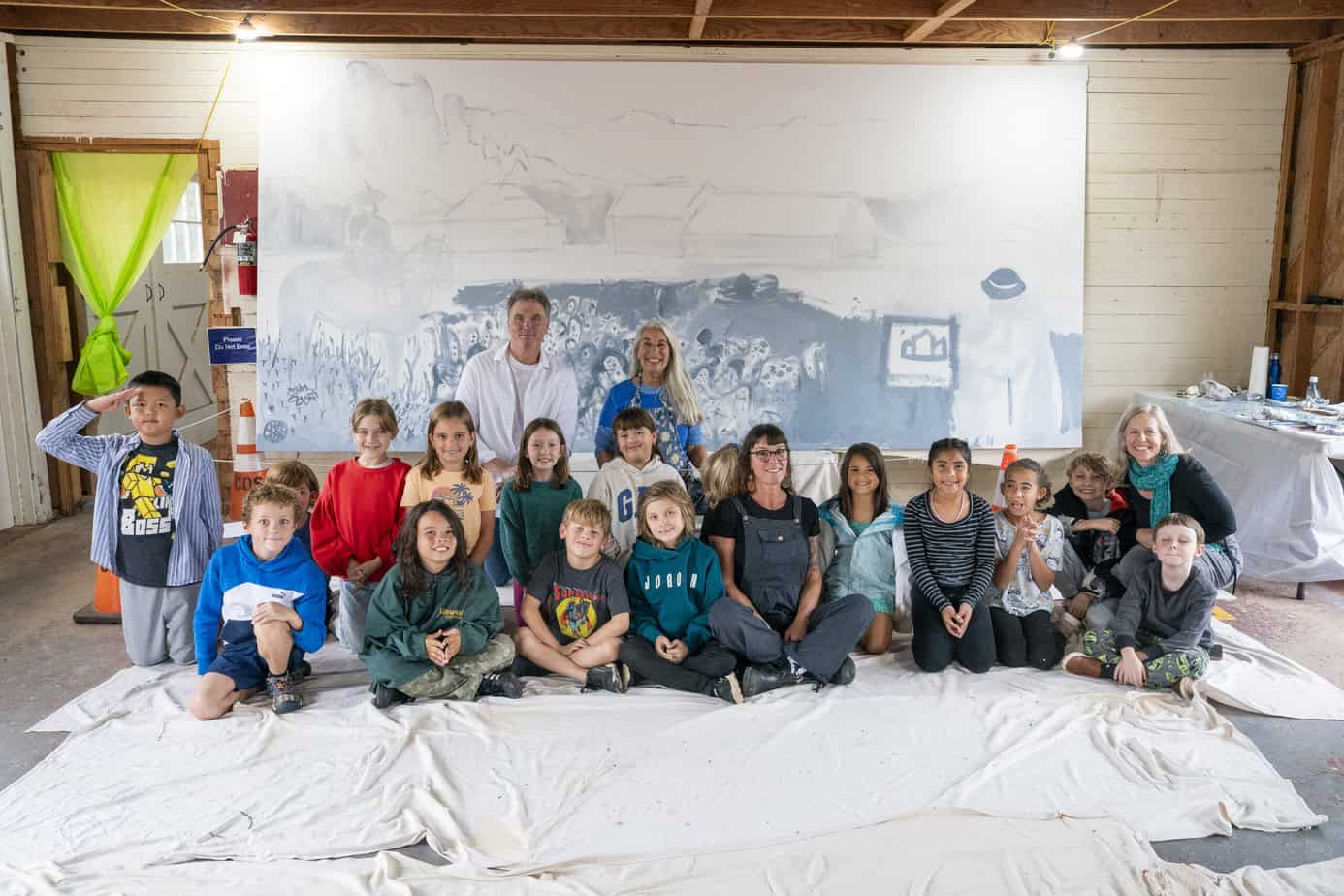
When James Havens’ mural in the barn at Ranger Station Park started out on Oct. 10 at 10 a.m., the paint was only about as high as a third grader could reach: Cacti on the ground, a painter beginning on a canvas in the bottom corner and a hat.
The third-graders came from the Sedona Charter School earlier that morning. The artist in question came from Anchorage, Alaska, earlier that week.
“The really neat thing about this, kids come down, is for the community,” Havens said. “Like in Alaska, they have big dinosaur pieces [kids helped work on] in museums and they’re going to museums as they actually get older and show people.”
When Sedona Charter School Principal Educator Christa Badorek heard Havens was doing a community art piece, she asked if she could make it a field trip for some of her students.
“They just never experienced what it would be like making murals, so they’re excited about that,” she said. “Then right now, what they’re doing is they’re writing letters to their family about the experience and then they’re trying to draw kind of what they did.”
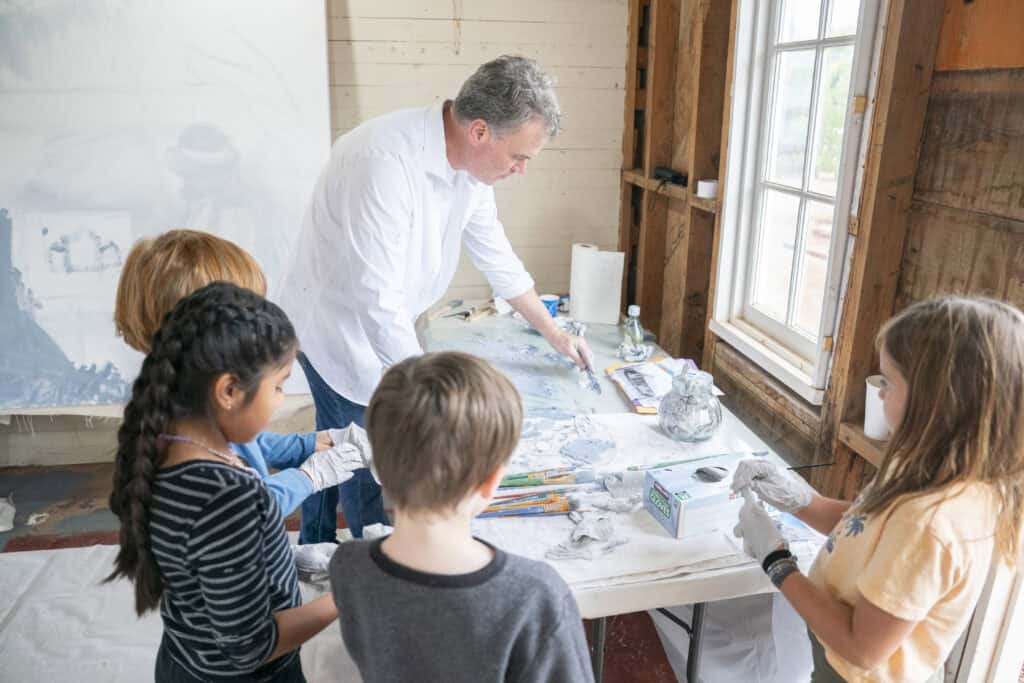
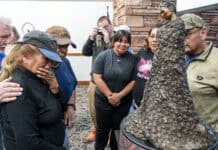
Havens created a rough draft of what his vision for the mural was: A depiction of the Ranger Station Park going from black and white at the bottom and fading to color at the top, cacti growing out front, a ranger riding on horse back to one side and former property owner and artist Lillian Wilhelm Smith painting on the other.
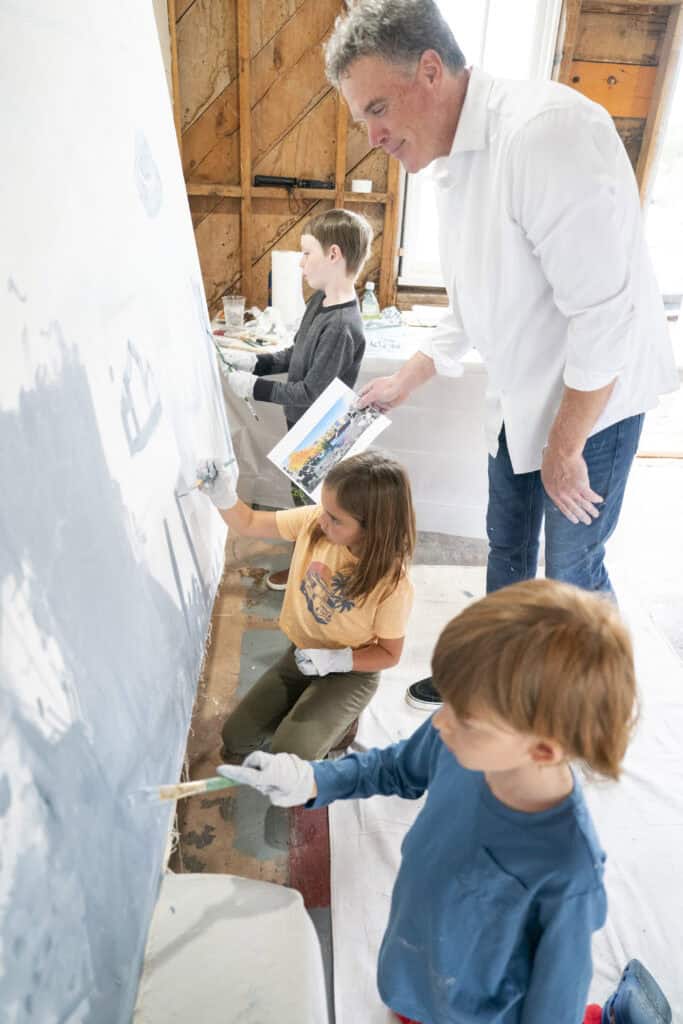
He showed the rough draft to the kids, and sketched out some of the major parts on the canvas. They painted only the black and white section.
Vesper Walker, 8, said she was excited when she heard her class was coming.
She’s been painting with acrylic “since I was 6,” she said, but this was a new experience.
She said she doesn’t know if she wants to be an artist when she grows up. “Maybe a baker,” she said, but the jury’s still out on that one.
Groups of community members went in and out of the ranger park barn until Tuesday, Oct. 14.
“It’s been a steady flow,” Havens said Monday afternoon.
The youngest person who painted was 2-year-old Sammy who helped with the bottom parts of the cactus in the front.
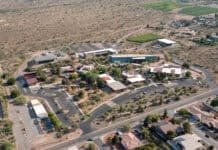
While Smith owned the property, the ranger station house was built in 1917 and barn was built in 1934.
“Back in the day it was … called the Ranger Station Park,” Sedona’s Arts and Culture coordinator Nancy Lattanzi told people who came into the barn to paint on Oct. 10. “So this was the horse stable, and then the house there was where the rangers worked out of, I think it was horseback, no cars or anything.”
Haven said he’s a little surprised by how unafraid everyone is to paint.
For one resident, Roberta Watts, painting came naturally. She has a bachelor’s of fine arts from Kenyon College and bought her townhouse in Sedona earlier this year, where she lives part-time; her other home is in Maryland.
“I saw it was open to the community and thought ‘what the heck?’” Watts said.
She went there earlier on Saturday to check it out and then back again on Sunday, Oct. 12, to actually paint.
She was there for a couple hours on Sunday working in all the foreground pieces like the cacti and grasses.
“I was handed grey,” Watts said, “So I worked with all the black and white.”
She said, as an artist, it’s really admirable of Havens to be able to step back and relinquish control of the painting a bit, even if he does go back later on to touch things up.
“I worked on the bowl in the corner which was just a circle when I got there,” Watts said, although she noted the bowl had gone through several iterations with different artists, but it was fun to work on it.
Havens’ History
Havens was born in Bangor, Maine, but grew up hopping all over the country, living in Illinois, Mississippi, Texas and Alaska, because his father was in the military. He landed in Alaska at age 15.
After going to school at the Art Center College of Design in Pasadena, California, he returned to Alaska working a variety of jobs including as a graphic artist for an Anchorage-based newspaper and a paleo-artist putting faces on new dinosaur discoveries in Alaska.
“I’d go on the expeditions with them,” he said. “We’d go fly a bush plane out into the middle of nowhere and look for the dinosaurs. And my job was to put a face on the new discoveries … One project, we had a new type of plesiosaur, and they found the skull, and it was easily for when the barn finally opens for good. … crushed. And another tablet guy named Jesse Pruitt, he was a digital artist, and he put together the skull and reformed it. And then my job was to hand sculpt the face on it.”
Havens worked in that field for about 10 years.
“During that time, I kind of incorporated this part of the project,” he said, gesturing to the canvas hung on the wall and the mats covering the floor, protecting it from paint. “Go to a public place and set up a huge canvas, invite the public to come down and learn about the new discoveries.”
Havens calls these events “pop-ups.”
“Arizona Community Foundation gave us $10,000,” Lattanzi said. “My budget, my arts and culture budget, I provide $5,000 to James. And then the city of Sedona’s … small grants program awarded him $12,000, so he got a nice chunk of change. And so with that, that’s getting him here, taking care of him, all the transport, the materials and just paying him for his work.”
The Mural
Lattanzi said she met with Havens nearly a year ago, right after his first visit to the city, to begin organizing this mural.
“I had a dream that he would do parts of it in gray for the old parts, like the ranger and the artist in gray and shades of gray, and then it would segue into color,” she said. “It was just a crazy thing and then when I told him, he’s like, ‘I love that idea.’ So that’s what they’re doing.”
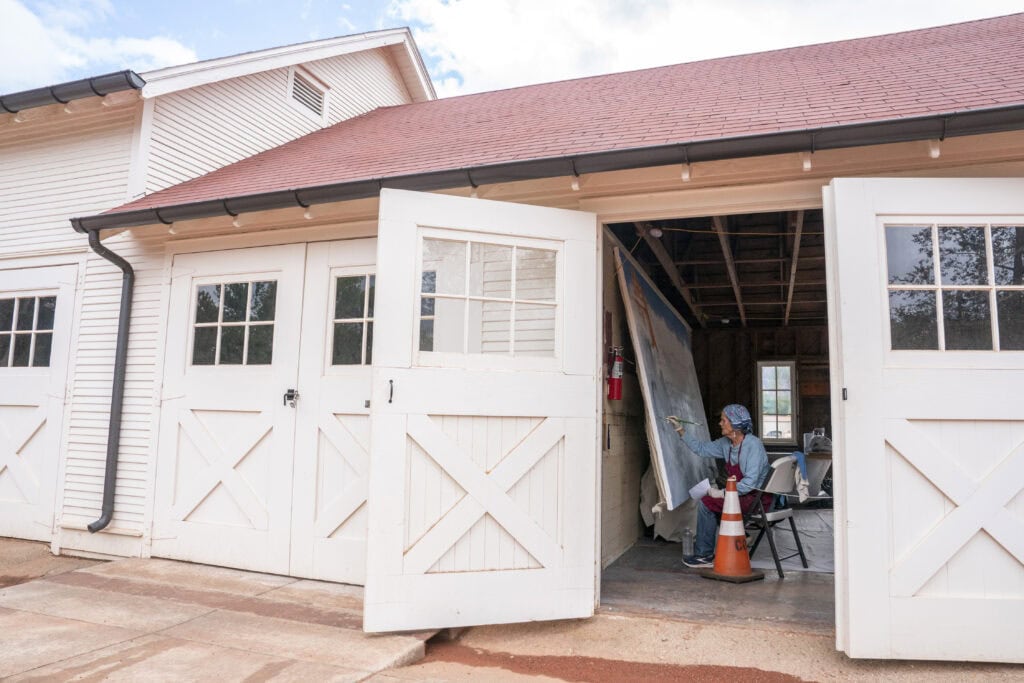
The barn’s ongoing renovations aren’t completed yet, but the mural is on a canvas frame that Lattanzi said would roll up and store until the barn opens up.
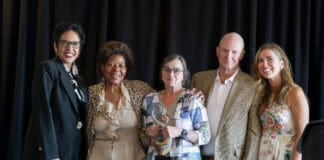
“The mural’s theme is the ranger station, the barn and the vicinity around it,” Keep Sedona Beautiful President Carla Williams said.
She said the idea of the mural was to keep it specific and dedicate it to the ranger station’s history.
For example, pottery shards have been found around the barn in the past, so the painting included a ceramic bowl in one corner.
“Havens is a fine artist, creating his art through canvas and sculpture, while using his talent to bring environmental themes to the public,” Williams said.
“He also shares the canvas with local children to help them engage positively in this type of art medium and get them excited about art.” The public pop-up painting of the mural went on for five days.
“Metric-wise we had over 100 people in the last five days in and out and many return visitors,” Lattanzi announced during a presentation to Sedona City Council on Oct. 14.
She said during one point it got so busy she made a sign limiting participants to 15 minutes at a time to ensure everyone got a chance to paint.
When Havens reached out to Williams, who in turn reached out to Lattanzi, he said he was awed by the bold colors of the red rocks and the way the sunlight shifted as clouds moved overhead.
Havens said he is thinking about coming back this winter.
“There’s going to be more paintings coming,” Havens said. “Sedona’s endless.”