













Inaugural Sedona Butterfly Festival flutters in Sept. 12
When Becky Hardy founded the Butterfly Enthusiasts of Northern Arizona with her friend, Denise Gibbs, she said it was a goal to organize a butterfly festival in five years.
About 19 months after the group’s founding in February 2025, its inaugural Butterfly Festival will take place Saturday, Sept. 12, from 9 a.m. to noon, at the Sedona Wetlands Preserve, west of the city.
“The city actually reached out to us and said, ‘hey, we would love it if you could offer an event for the families,'” Hardy said. “They meant more of a field trip, a couple of hours or something like that for families. I have a tendency to think a little big.”
Kimberly Sager, the city of Sedona’s Athletics and Aquatics supervisor, said she’s excited it’s a bit of a bigger event, because it can highlight a local organization doing important things and the wetlands, which she said many people don’t realize is a Sedona park.
BENA members also help people ask “What kinds of native plants do we need to plant more of for them [butterflies] to thrive?” Sager said.
The event will include vendors for native plants and other nature-related items, butterfly tagging demonstrations and a scavenger hunt.
“That will be, of course, looking for mainly butterfly-related things,” Hardy said, “like butterflies flying around, maybe if they can find caterpillars eating on a leaf or even … evidence of a caterpillar.”
It’s hard to know how many butterflies will be in the area at the time, she said. If more rain falls before the festival, she’s hopeful there will be enough butterflies for attendees to see.
“It’s all up to the butterflies to show up,” Hardy said. “It doesn’t always go as planned, but … right now, butterflies are quite abundant.”
There are several rainy days in the forecast this month before Sept. 12.
Demonstrations
Two demonstrations of butterfly tagging take place at 9:30 a.m. and one at 11 a.m.
Researcher “Gail Morris has done a lot of research tagging using sticker tags, traditional sticker tags,” Hardy said, “but there are now radio tags that can be placed on monarchs as long as they weigh enough, and their wings band is big enough, and they are in good condition.”
The demos will largely be sticker tagging demonstrations, as those are the easiest and can be done for just about every butterfly, regardless of size and weight.
“What’s even more exciting is everybody can do this,” Hardy said. “Once you are trained by Gail, Southwest Monarch Study actually sends out tags if you request them. And then you can tag them on your own. So it’s a huge community science project.”
Radio and sticker tagging helps the butterfly community know where the monarchs go and how long they stay somewhere.
“It’s really going to help the conservation efforts, habitat restoration projects, things like that,” she said. “So that our nonprofit can do those types of things, like being at a habitat restoration; it really helps us to know where best to set different things up.”
Butterflies
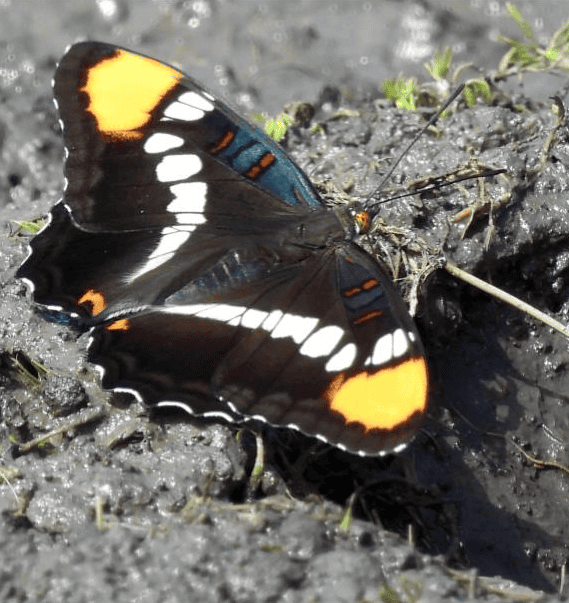
Hardy said there are more species of butterflies than ever that call the Verde Valley and Sedona home. Gibbs began cataloging butterfly species after she moved here in 2018.
“At that time, it was 101 species,” Hardy said. “From 2018 to now, and right now I literally have an email out to experts, … but if that species gets confirmed, we could be up to 127 species. So, it is increasing every single year.”
Butterflies that migrate south for the winter vary by species, but this time of year is a good bet for migration from at least monarch butterflies.
“It’s going to vary on the season,” Hardy said. “In fact, here’s an interesting little tidbit: We’re starting to see monarchs coming through now. This is typical, though. … It used to be kind of mid-later July and now they seem to be getting a little bit later every year. But it was the beginning of August that we got our first report of monarchs coming through the Verde Valley.”
The monarchs are laying eggs now, she said, and will continue to hatch throughout the migration season. Butterfly eggs hatch after about three to five days, according to the Monarch Conservation Fund.
“Those eggs that hatch will then be the one to go either to the central coast of California or down to the mountains and Mexico,” Hardy said.
In addition to the monarch’s later migration season, the clouded sulphur butterfly has been seen migrating in the opposite direction as the monarchs.
“This particular species is not too [heat] tolerant,” Hardy said. “And … about this time of year, we will start seeing a migration north to cool off.”
City Partnership
The Sedona Parks and Recreation Department reached out to BENA originally to put together what it called a “pop-ortunity.”
Sager said it’s because it’s “a pop-up opportunity to connect local organizations with the community.”
Sager said the city is always looking for more local organizations to partner with for events. Organizations wanting to contact the city about partnering can contact her at ksager@sedonaaz.gov or Special Events Coordinator Jason Vargo at jvargo@sedonaaz.gov.
“The thing about local nonprofit organizations is that they’re always trying to do outreach,” Sager said. “This is an effort in line with our Community Plan.”
Other “pop-ortunities” are being finalized for the fall and winter, which Sager said will be published along with the city’s Fall-Winter Activity Guide in mid- to late-September.