

We had a bit of a pre-monsoon storm roll into Sedona and the Verde Valley over the weekend, dropping as much as 0.25 inches of rain in some places while other parts of the Verde Valley remained dry.
My family took a drive mid-afternoon on Sunday, June 14, from Sedona to Cottonwood and our kids were wowed by the sheets of rainfall creating spotty curtains of gray over Camp Verde and Rimrock to the south while the sky was mostly blue to the north. Before we left Sedona, the massive cumulonimbus broke over Mingus Mountain heading right for Sedona and we expected a heavy downpour before noon but, alas, it was not to be, as most of that storm bypassed Sedona proper until it hit the Mogollon Rim.
Looking at the upcoming forecast, it appears the weekend storm spilling over into Monday is the last such storm anticipated for our region at least through the end of June. There are some cloudy days ahead, which may result in scattered rainfall in places, but for most of us will be pretty dry.
Gearing up for the 250th anniversary of the signing of the Declaration of Independence, the skies should be clear and the weather warm for the Saturday, July 4.
Unincorporated communities of the Verde Valley and the municipalities of Sedona, Cottonwood, Camp Verde, Clarkdale and Jerome are all planning something, or several events as are many businesses, loads of nonprofits and community groups.
While this 250th anniversary of the Fourth of July is being billed as the birthday of the United States, that’s not entirely accurate.
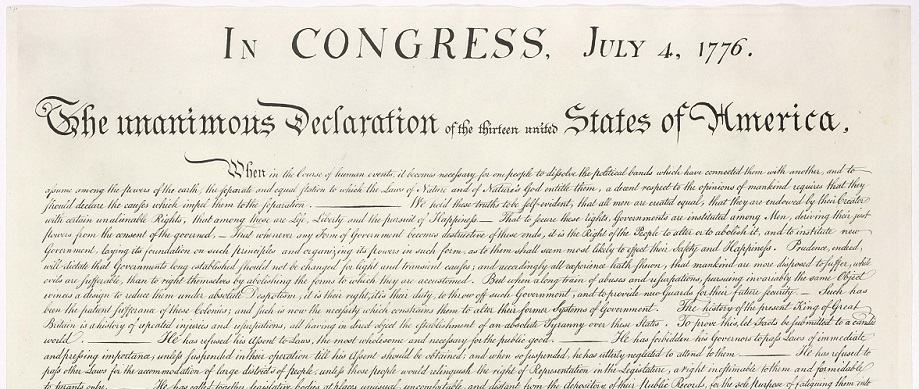
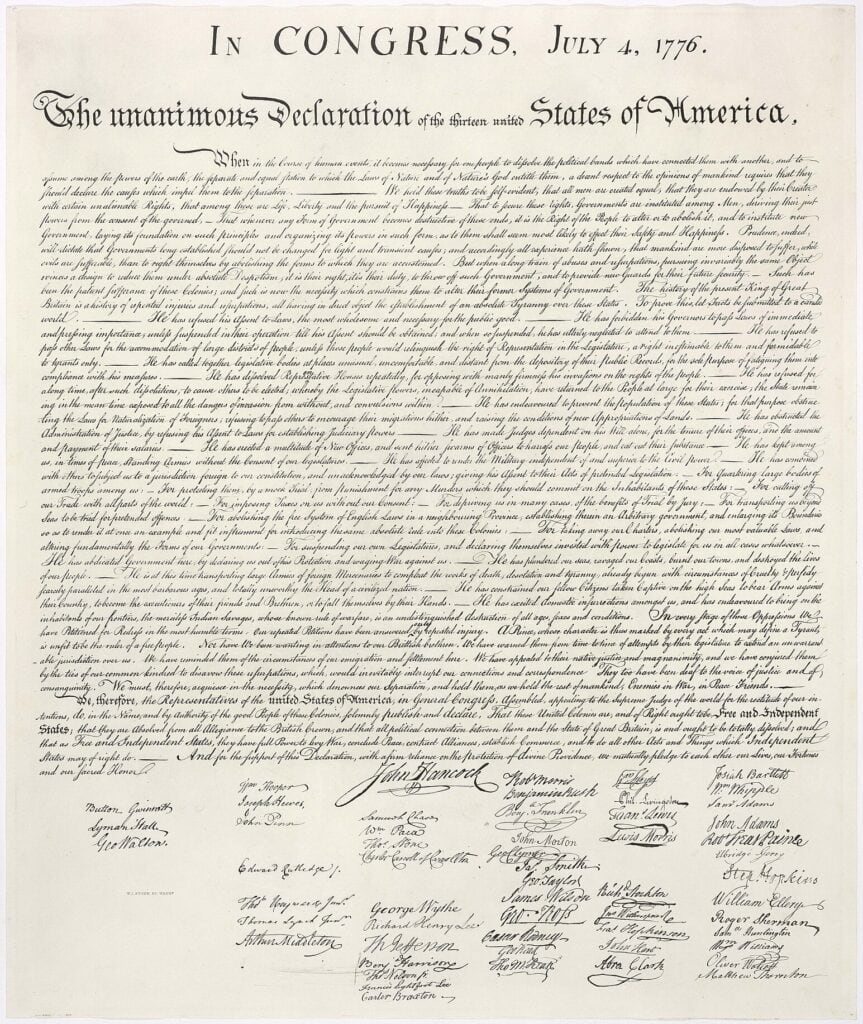
The Declaration of Independence begins with “Congress, July 4, 1776, The unanimous Declaration of the thirteen united States of America ….” The lowercase “united” is the key notation here because at the time, the 13 colonies were not “states” in the way we use it today — as mere territorial portions akin to provinces of a whole country — but as 13 de facto independent sovereign nations.

In a historical context, “states” were constituent entities of a nation that share power with a national government but with their own constitutions and often separate legal systems. The decentralized Holy Roman Empire was comprised of up to 300 principalities, bishoprics, archbishoprics, free cities and kingdoms with a unified elected sovereign in a confederation but with most of those territories treated as sovereign states. Between 1776 and the founding of the United States in 1792, the “united States of America” were seen internationally in much the same way. Most Americans also envisioned their states as separate entities with a common language, culture and recent history throwing out the British Empire but as politically distinct as Mecklenburg, Bavaria and Bremen were in the German Holy Roman Empire.
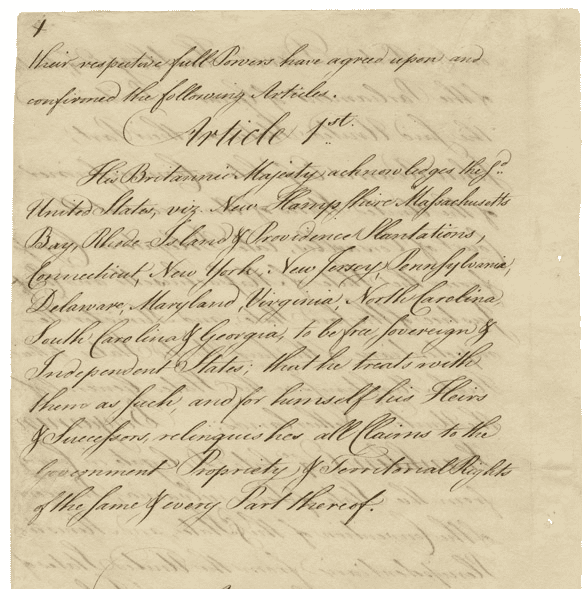
King George III did not sign the 1783 Treaty of Paris with the singular nation, but with “… New Hampshire, Massachusetts Bay, Rhode Island and Providence Plantations, Connecticut, New York, New Jersey, Pennsylvania, Delaware, Maryland, Virginia, North Carolina, South Carolina and Georgia,” acknowledging them “to be free sovereign and independent states; that he treats with them as such, and for himself his heirs and successors, relinquishes all claims to the government, propriety and territorial rights of the same and every part thereof.”

The unworkable Articles of Confederation and Perpetual Union, signed in 1777, led to Mount Vernon Conference in 1785 to negotiate a waterway dispute between Maryland and Virginia and for the Congress of the Confederation to call in 1786 for amendments by a 12-member Grand Committee. Because any colony could veto any proposal, not one of the seven amendments was voted on.
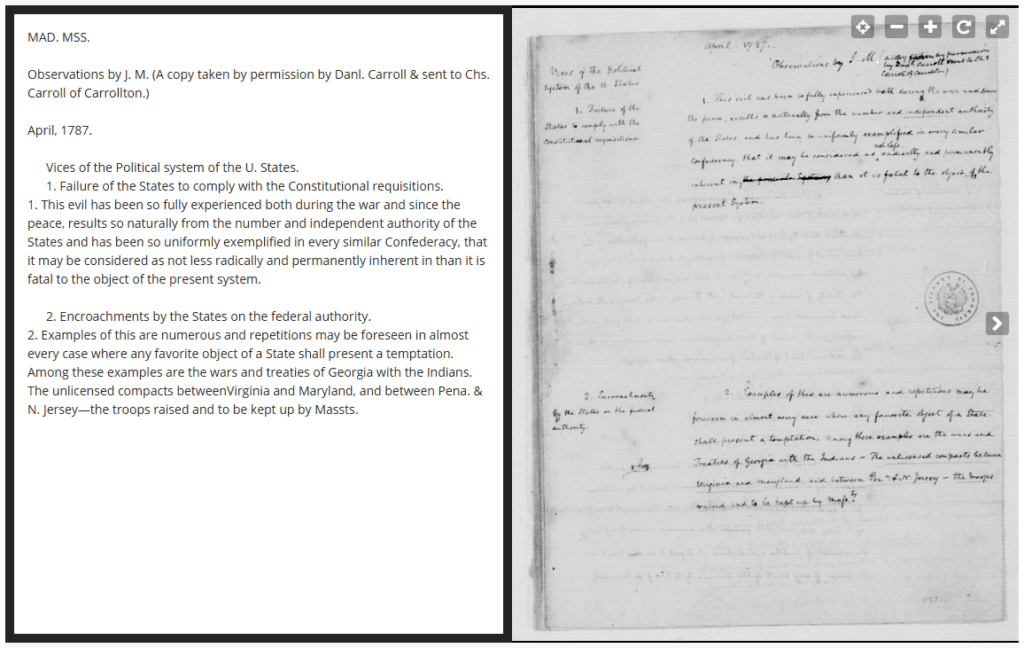
Debates, meetings and conventions started and ended from March 25, 1785, until there was enough for a quorum for a real constitutional convention May 25, 1787. By then, most had read James Madison’s April 1787 “Vices of the Political System of the United States” and his hope that the Congress of the Confederation would not just reform the Articles but give power to a central authority to replace the document.

Embolded by the unifying presence of war hero George Washington, representatives of 12 of the 13 colonies met in Philadelphia ostensibly to rework the Articles, but scrapped the entire experiment on day one and started from scratch.
The convention approved the final draft Sept. 17, 1787, with Delaware ratifying it on Dec. 7, 1787; New Hampshire being the ninth state on June 21, 1788, putting it into effect in the ratified states; and Rhode Island being the last of the 13 colonies to ratify on May 29, 1790.
Any of these dates could technically be called the “birthday of the United States” for we still have every right to celebrate July 4, 1776, as our nation’s founding date, as John Adams wrote on July 3, 1776, “celebrated with pomp and parade, bonfires and illuminations from one end of this continent to the other.”


