
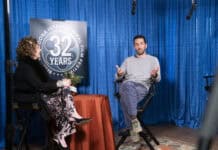









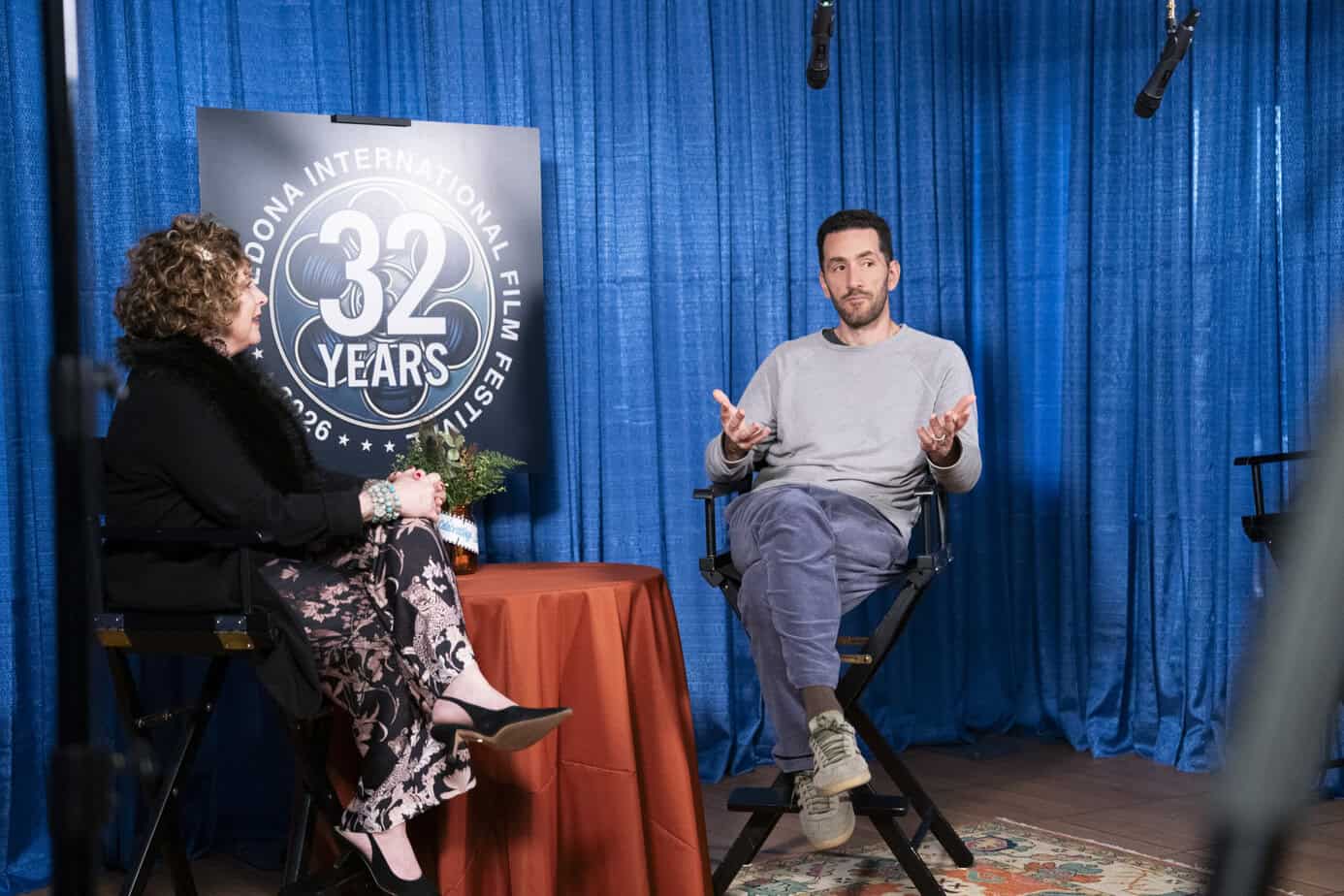
Mustafa Toby Eck, 40, a senior video producer at the J. Paul Getty Museum and Sedona Red Rock High School Class of 2003 alumnus, returned to showcase his newest short documentary, “Van Gogh and the Hospital Garden,” as part of the 32nd Sedona International Film Festival.
“On May 8, 1889, Vincent van Gogh entered a psychiatric hospital near Saint-Rémy-de-Provence, France. The next day, he wrote to his brother, Theo, that he had begun painting ‘violet irises,’” the synopsis reads. “The hospital garden offered solace and inspiration to Van Gogh during his stay. That tradition continues today, as hospital patients engage in artistic practice as a key part of their recovery. This documentary explores the hospital’s lasting legacy and brings viewers to its garden where Van Gogh created countless works of art.”
SIFF has become something of an annual pilgrimage back to Sedona for Eck, noting that this is his “fourth or fifth” film to be part of the festival lineup. He is now living in Los Angeles and married with two kids.
His 2023 entry, “All at Once,” was the story of a Palestinian immigrant father and his Americanized son navigating a dinner with the son’s future in-law. His latest, “Van Gogh and the Hospital Garden,” takes a different subject, looking at the painter’s stay in a psychiatric hospital and the emergence of the field of art therapy.
“Van Gogh himself led me to art therapy as part of the film,” Eck said. “It was initially an exploration of the time he spent at [Saint-Paul-de-Mausole] hospital, and then we learned that art therapy was another
aspect of the story we could explore. It was kind of serendipitous.
“If you read about Van Gogh and what he was going through, he was not in a very good place. He probably wouldn’t have been someone you’d want to be around when he was alive. In fact, the townspeople more or less pushed him out of Arles before he went to Saint-Rémy-de-Provence just for being disruptive, drinking and behaving erratically. He was the troubled man of the village.”
Soon after Van Gogh’s arrival, he had the opportunity to paint in the hospital’s garden. His brother began sending him art supplies. The hospital period became a prolific time for Van Gogh, who ended up painting roughly 150 works including “Irises,” and perhaps his most well known “Starry Night.”
To film the documentary, Eck and his crew spent approximately a week at the hospital grounds, timing their shoot to coincide with peak iris bloom.
Saint-Paul-de-Mausole is till a working psychiatric in 2026 and that continuity is central to the film’s message. The current medical director of the Saint-Paul, psychiatrist Jean Marc Boulon, is still leading workshops and encouraging participation in artistic practice as part of recovery.
“We were in communication with Dr. Boulon about when the maximum number of irises would be open, because they also wilt, and become a little less cinematic,” Eck said. “The crew filmed from dawn to dusk, retracing vantage points where Van Gogh is believed to have painted. We went to as many of those as we could and featured some in the film. We could just walk around and feel like we were following in his footsteps.”
“Solitude,” Eck said is what he thinks the hospital garden gave the troubled painter. “I spent maybe four or five days just in that garden filming the textures, listening to the sounds, filming the irises and the hospital. It gives you peace. And I think Van Gogh, given his mental state, could benefit enormously from a peaceful moment in nature — staring at something specific like the irises, following their contours, building the colors, recording his version of reality. Doing something like that could take him out of his mind to a calmer place.”
“The period when Van Gogh was hospitalized here, and the way that Dr. [Théophile] Peyron treated him … that was a forerunner of art therapy,” Boulon says in the film.
Eck said, the film resists the romantic notion of the tortured genius creating in spite of or because of their suffering.
“We really only told a small chapter of his life, which turned out to be an extraordinarily prolific time for him,” Eck said. The production has given him a quieter, more deliberate outlook on life, he said, and has been a reminder to pause, and appreciate nature and those around him.