

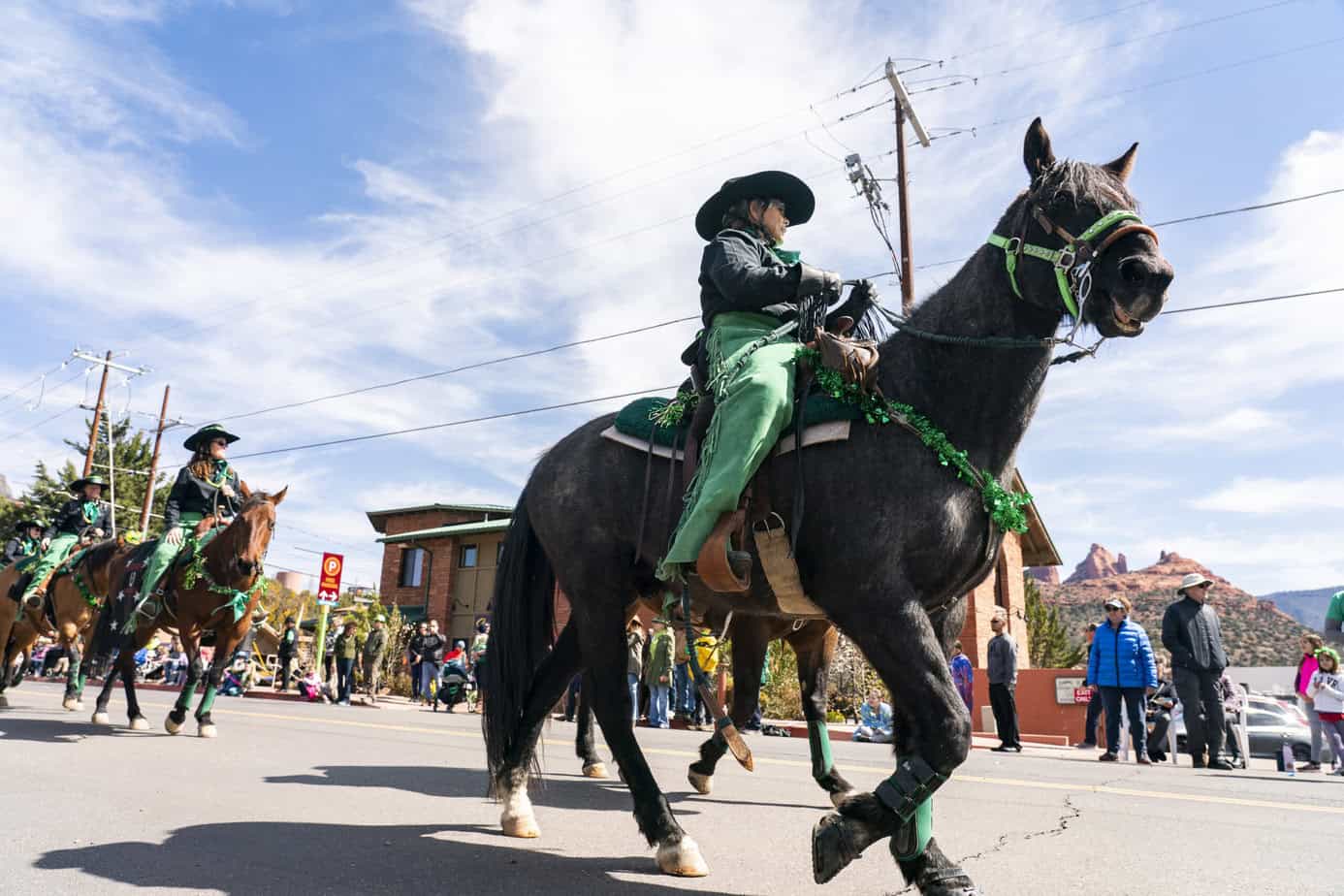
While Tuesday, March 17, is St. Patrick’s Day, Sedona’s nearly annual St. Patrick’s Parade will be held this Saturday, March 14.
A few weeks back, we encouraged local groups and organizations to sign up to march in the parade and we hope some residents signed up for the big community event.
Since the parade moved off State Route 89A to Jordan Road in Uptown, annual estimated attendance ranges between 3,000 and 5,500, depending mainly on weather. The skies should be sunny on Saturday with temperatures in the mid-60s when the parade begins at 10:30 a.m..
Schoolchildren, businesses, clubs and nonprofit groups from around Sedona and the Verde Valley will be joined by public officials. Entrants generally come from as far away as Prescott and Flagstaff. The parade and festival are not exclusive to Sedona residents and visitors. Sedona City Council members are often joined by mayors and council members from other communities in the Verde Valley, especially those with a tint of Éirinn’s blood their veins.
Other highlights marching in the parade from around the region include the Camp Verde Cavalry and others on horseback, bagpipes and drums, royalty from the Yavapai-Apache Nation, Sedona Fire District, U.S. Forest Service, Sedona Police Department, Sedona Marine Corps League, Sedona Heritage Museum, Northern Arizona Celtic Heritage Society and dozens of local nonprofits, businesses, social clubs and community organizations.
You can park throughout Uptown in the city’s two free lots, the four three-hour lots or the paid lot here at the newsroom off Van Deren Road. Arrive early to a get a parking spot and parade vantage point before Sedona police and volunteers close access to Jordan Road, which is the parade route from Navihopi Road to Mesquite Avenue.
In Sedona’s early history, residents attended most of the city’s events like rodeos, dances and celebrations, as they served as the community’s only major gatherings. But as the city grew over the decades, communications technology improved and more and more activity occupied our attention and our weekends, these festivals drew a smaller percentage of the city’s residents. The Sedona St. Patrick’s Parade is one of the few events that remain to bring Sedona’s isolated cliques blend together allowing residents to gather and chat as equals.
You don’t have to have a drop of Irish blood to enjoy the St. Patrick’s Parade nor St. Patrick’s Day on March 17. Egalitarianism is a major component of a small-town community as well as one of the key facets of Irish culture: Everyone is equal in a Irish pub, something I learned while visiting with two American friends, one of whom was Irish-born and had dual citizenship.
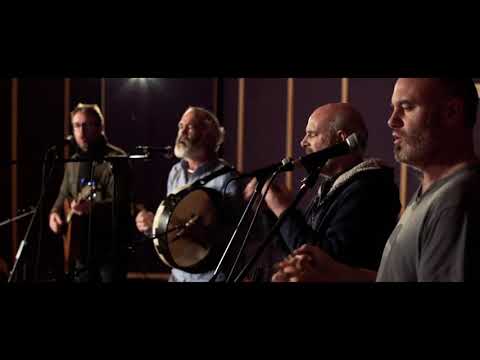
At one underground pub, dancing to bodhrán player and singer Rónán Ó Snodaigh and his Gaelic language rock band, Kíla, surrounded by native Dubliners, we seemingly moved as one dancing mass to music buried deep in ancestral memory, all who spoke as little Gaelic as I did, all of us foreigners to our ancient tongue.

At another pub in Ballinteer, I saw an older man, Seamus Tiernan, writing poetry and struck up a conversation, and mentioned that I was performance poet in the United States. We bought each other rounds of Guinness and Jameson and talked about poetry, Irish history and the Irish diaspora until my friends finally pulled me away. Ireland is a nation of poets, he said, with figures like W.B. Yeats, Seamus Heaney, Patrick Kavanagh, James Joyce, Eavan Boland, Louis MacNeice, Paul Muldoon and Eiléan Ní Chuilleanáin, shaping literature and culture on both sides of the pond.
Ireland’s immigrants were greeted with signs of “No Irish need apply,” and anti-Irish sentiment, but to paraphrase another Irish poet:
Who built the bridges, mate?
Scraped the city skies?
And bled wit’ your sons?
Blend is the backbone of this place, this America.
We were all “them” once.
Now we’re just us. Just “U” “S.”
We are all blend, from the beginning, to the end.
St. Patrick’s Day and our local parade celebrate Irishness, but more so the integration and blending of outsiders into the American fabric. Whether you’re Irish through-and-through, have an ancestor who landed in Boston speaking Gaelic or English brogue or have only seen photographs a land that’s impossibly, immeasurably green, come and enjoy this year’s St. Patrick’s Parade on Saturday, March 14. You’re welcome, you’re part of the blend.
Sláinte mhaith to you and yours. Éirinn go Brách.
Digging
By Seamus Heaney
Between my finger and my thumb
The squat pen rests; snug as a gun.
Under my window, a clean rasping sound
When the spade sinks into gravelly ground:
My father, digging. I look down
Till his straining rump among the flowerbeds
Bends low, comes up twenty years away
Stooping in rhythm through potato drills
Where he was digging.
The coarse boot nestled on the lug, the shaft
Against the inside knee was levered firmly.
He rooted out tall tops, buried the bright edge deep
To scatter new potatoes that we picked,
Loving their cool hardness in our hands.
By God, the old man could handle a spade.
Just like his old man.
My grandfather cut more turf in a day
Than any other man on Toner’s bog.
Once I carried him milk in a bottle
Corked sloppily with paper. He straightened up
To drink it, then fell to right away
Nicking and slicing neatly, heaving sods
Over his shoulder, going down and down
For the good turf. Digging.
The cold smell of potato mould, the squelch and slap
Of soggy peat, the curt cuts of an edge
Through living roots awaken in my head.
But I’ve no spade to follow men like them.
Between my finger and my thumb
The squat pen rests.
I’ll dig with it.
Memory of my Father
By Patrick Kavanagh
Every old man I see
Reminds me of my father
When he had fallen in love with death
One time when sheaves were gathered.
That man I saw in Gardner Street
Stumbled on the kerb was one,
He stared at me half-eyed,
I might have been his son.
And I remember the musician
Faltering over his fiddle
In Bayswater, London,
He too set me the riddle.
Every old man I see
In October-coloured weather
Seems to say to me:
“I was once your father.”


