













To have your club featured contact: editor@larsonnewspapers.com.
The Sedona Area Garden Club is breathing new life into one of Sedona’s most visible public spaces through an ongoing volunteer-led landscape rehabilitation project at the Red Rock Ranger Station.
Co-chaired by Karen Arenkill and Polly Choate, the project focuses on restoring neglected garden areas using native, water-wise plants that reflect the natural beauty of the surrounding Red Rock landscape.
“People come here from all over the world, and this is often their first introduction to Sedona’s environment,” Arenkill said. “We wanted the gardens to feel like an extension of the trails — a true reflection of the native desert landscape.”
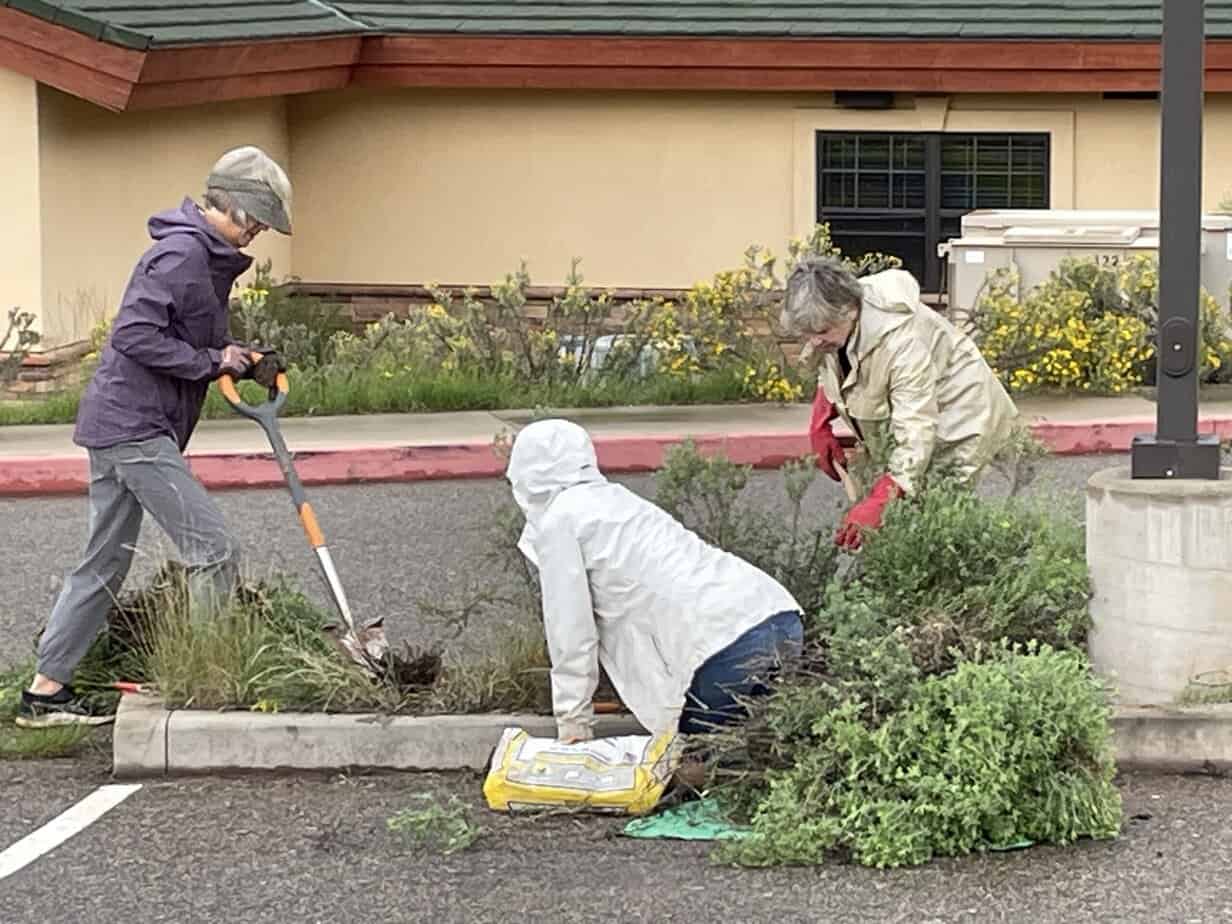
When the Garden Club began assessing the site, many of the garden areas had gone years without consistent maintenance. Invasive weeds, damaged irrigation lines and overgrown plants had replaced the original landscape. Working from an existing landscape plan, volunteers prioritized removing invasive species such as silverleaf nightshade and camphor weed while preserving beneficial plants that support pollinators. Rather than wholesale replacement, the team focused on restoration and enhancement, adding native species. New plantings include agave, prickly pear cactus, hedgehog cactus, native perennials and pollinator-friendly plants selected for long-term sustainability and minimal water needs.
Formal maintenance began in March, supported by Garden Club funding and a dedicated team of volunteers. While organized workdays typically involve six to eight participants, Arenkill and Choate visit the site multiple times each week to monitor irrigation, hand-water new plantings and address ongoing needs.
“This isn’t a one-and-done project,” Choate said. “Gardening in the desert is always changing. Rainfall, heat and invasive seeds mean this will always require care — and that’s OK. This is stewardship.”
The project incorporates rainwater catchment tanks and repaired irrigation systems to reduce reliance on municipal water. Future plans include replacing broken plant labels and enhancing interpretive signage, helping visitors learn about native plants, pollinators and desert ecology.
“So many people have never seen a cactus up close,” Arenkill said. “This becomes a welcoming gateway — a place to learn, appreciate and understand how to care for this environment.”
The project aligns closely with the Sedona Area Garden Club’s broader mission of community service, environmental education and beautification. Future phases of the Ranger Station project will focus on additional landscape zones, including a challenging “desert scrub” area designed to thrive without irrigation. As the work continues, the Garden Club hopes the project inspires broader community awareness of desert conservation and volunteerism.
The SAGC was established in 1996 with the objective of advancing gardening, promoting civic beautification, providing education and aiding in the conservation of natural resources. The club meets monthly, with various educational presentations and other opportunities to educate each other regarding best gardening practices in the area. For more information about the SAGC, contact Suzanna Hubbard at suzannahubbard1@gmail.com