












The late Verde Valley sculptor John Henry Waddell [Feb. 14, 1921—Nov. 27, 2019] sculpted about 150 bronze figurative sculptures in his lifetime.
When he died in 2019, many of statues, including female sculptures now on exhibit at Tlaquepaque, were left at his studio, his painter wife Ruth Holland Waddell [Nov. 25, 1925—Aug. 27, 2023] and their daughter Amy — a writer, film producer and director — wanted to figure out what to do with them.
Amy Waddell met Wendy Lippman, the general manager and resident partner of Tlaquepaque, about a year ago.
“She knows her way around culture, and so she came out to the studio, and I said, ‘Hey, you know, would you consider having one piece out to Tlaquepaque?’” Waddell said of Lippman. “She said, ‘I’ll take them all.’”
There are almost 20 bronze Waddell statues all around Tlaquepaque; those on display are for sale through the Renee Taylor Gallery.
“The idea is that … when we sell that, that will help us keep the Waddell Studio and Foundry and Sculpture Garden going, because we were left art-rich and cash-poor, basically,” Waddell said.
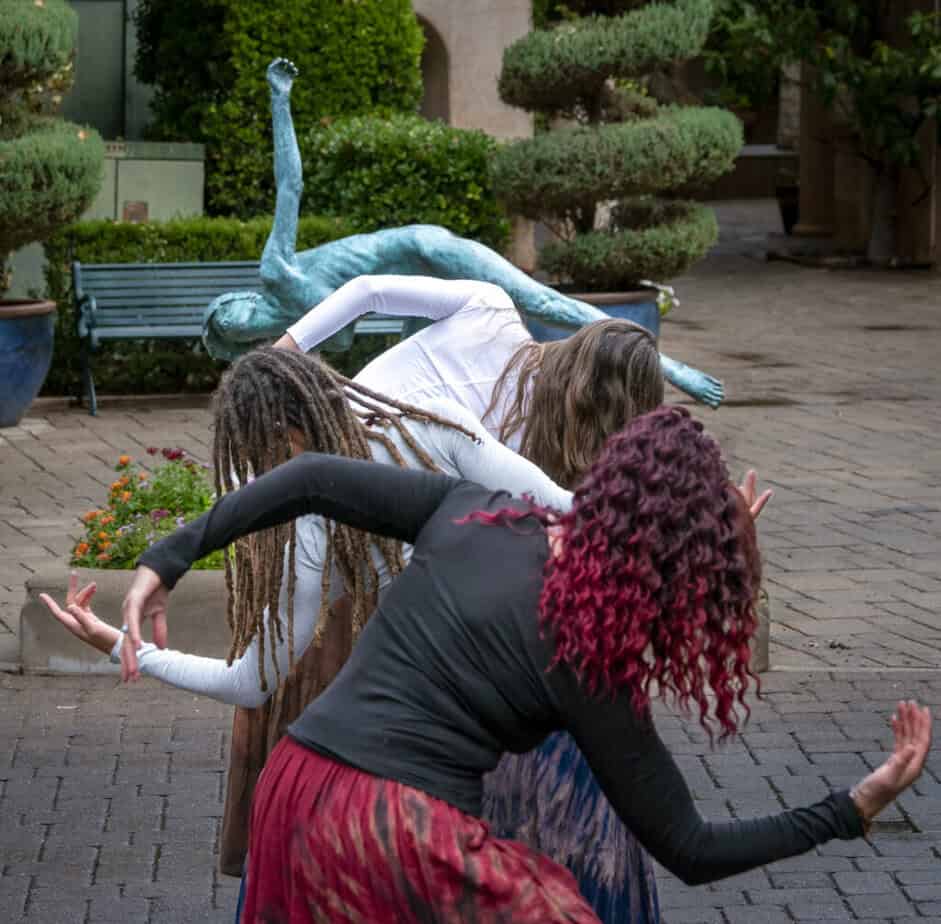
Waddell and the Sedona Dance Project are organizing a celebration event of John Waddell’s work on Friday and Saturday, Nov. 7 and 8.
The event will also include several dance performances around Vue Gallery, a sculpture walk, a presentation on art and architecture and a reservation-only dinner. Other than the food reservation, everything else is free and open to the public.
“We’re working on it because I don’t have everything booked yet, but at one o’clock and three o’clock, we’ll have a woman named Stephanie Lin, who is the dean of TSOA, which is the School of Architecture,” Waddell said.
The two-day event will conclude with a screening of “Rising,” by Amy Waddell honoring her famous sculptor father at the Mary D. Fisher Theatre at 11 a.m. on Saturday, Nov. 7.
“It was a film about my father’s last epic work, which was a 40-foot bronze relief which currently lives at the Waddell Studio Foundry and Sculpture Garden between Sedona and Cottonwood on Oak Creek Valley Road,” she said.
The piece is so large it’s in three pieces at the studio, all hung on different walls.
Sedona Dance Project
The main event, however, are the dance performances happening throughout both days.
“There’ll be two of the dances performed for their First Friday” art walk, choreographer and Sedona Dance Project founder Danielle McNeal said. “Then on Saturday, we’ll be doing two different cycles, so one will start at 1:30 p.m. and the audience will follow through — so it’s a … roaming audience, basically — and they roam to the different sections where the dances will be at specific times.” The second cycle is at 3:30 p.m.
Eight dancers between the ages of 20 and 65 are involved in the project, which McNeal said has taken just less than two months to put together.
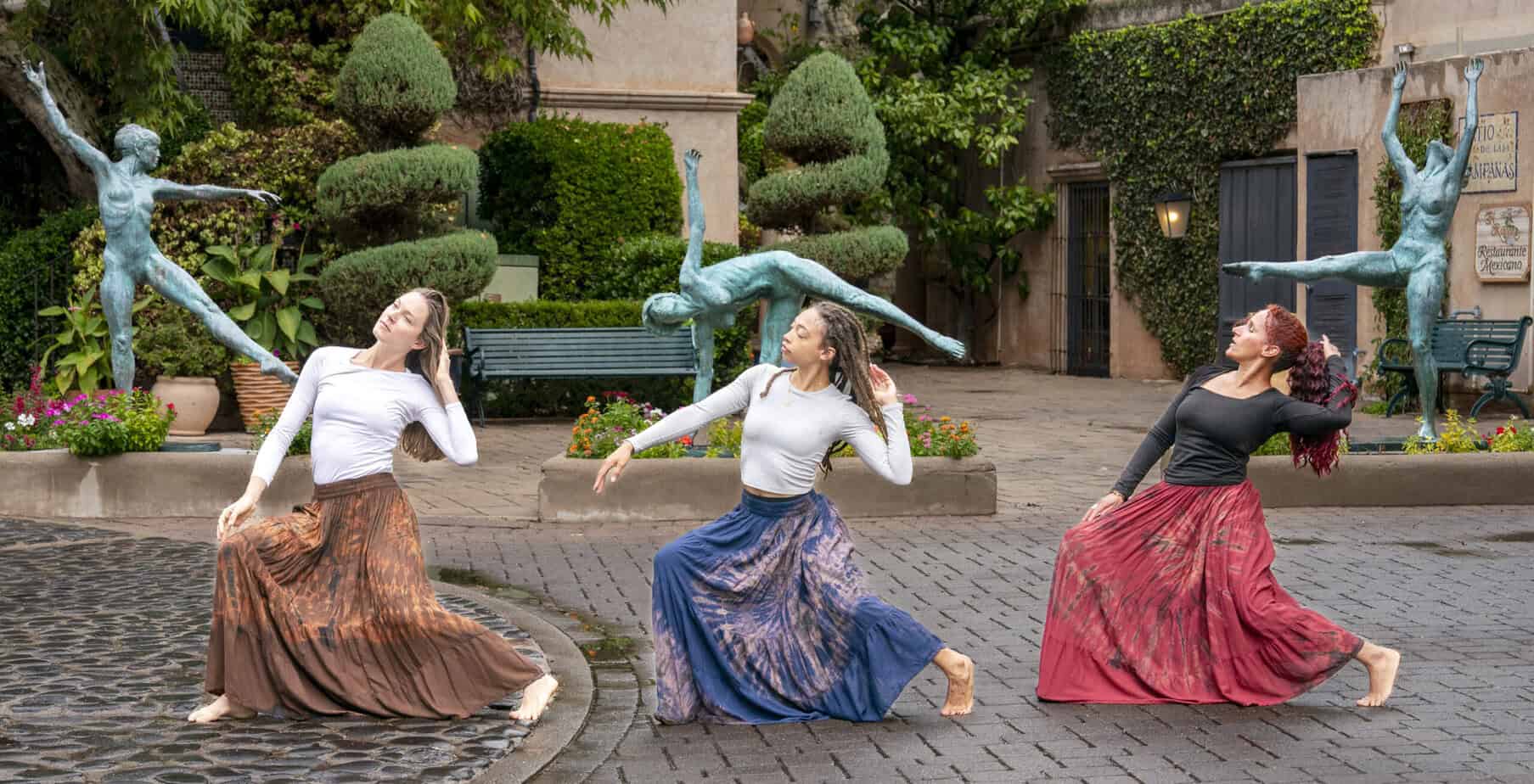
“I chose the ones that had beautiful locations and that I felt really spoke to me,” McNeal said. “There’s six different sculptures that we’ll be dancing with, and each dance I choreograph for that sculpture, so it’s really in some way relating to the sculpture.”
John Waddell always avoided saying the meaning of any of his sculptures, leaving them to the viewer’s interpretation, McNeal said, so that’s what she did with her choreography. She tried to interact with the environment while creating the dances, but practicing in the studio became difficult.
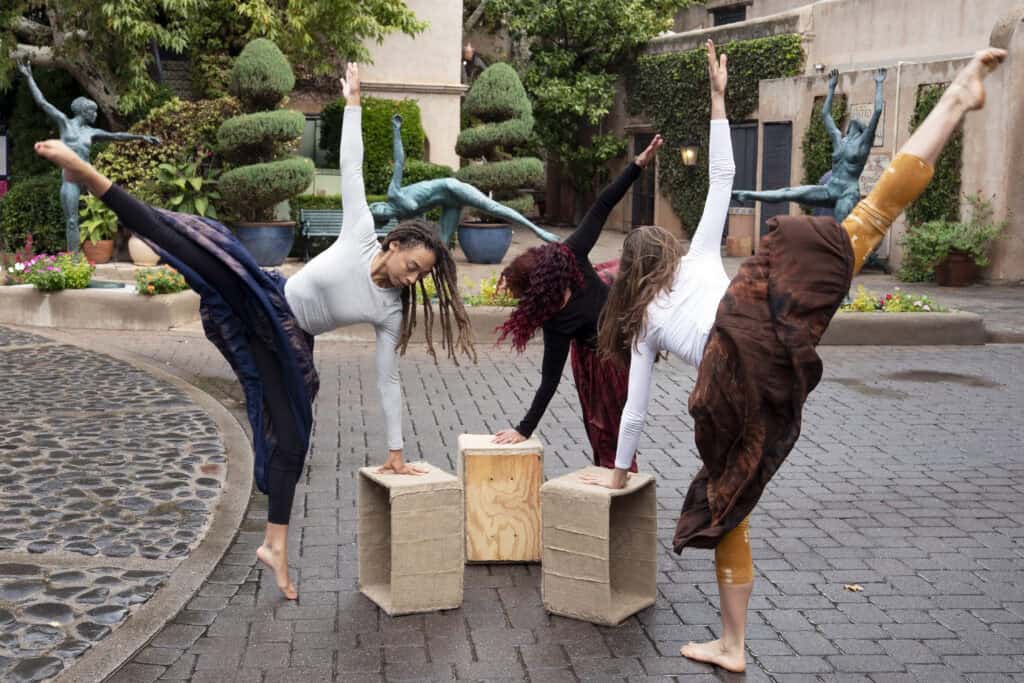
“I try to remind them, ‘this is when you’re standing on rock right now,’” she said on Oct. 24. “‘Now you’re standing on grass’. … Today was the first time we, for some of the dancers, they got to be in the actual space this morning, and it was challenging for them, because they’re not used to working in a whole different environment.”
The practice has been difficult, McNeal said, because the space at Tlaquepaque has heavy foot and vehicle traffic, making it hard to practice on site on a regular and long-term basis.
About 30 people will arrive by bus from Phoenix specifically to watch the performance, McNeal said. Several dancers from her own dance company, Desert Dance Theatre, in Phoenix will be there, too. She said the company has a long history with John Waddell.
“This is probably, I don’t know, maybe 20years ago. Long time,” she said. “They did a dance to one of his sculptures. His sculptures are also out in front of the Herberger Theater. So a lot of the dancers in Phoenix know about the Waddell sculptures.”The Herberger Theater Center’s plaza features Waddell’s “Dance,” comprised of 12 nude figures of dancers in various poses, sculpted between 1970 and 1974.
John Waddell never used photographs, always sketches, and would use a method of bronze casting he learned while living in Greece, where Amy was born to John and Ruth.
“There are usually five castings per sculpture,” Amy Waddell said, “Some of these have been sold and placed in other parts of the world.”
Some of John Waddell’s sculptures are on display at the Flinn Foundation and the Burton Barr Central Library, both in Phoenix, the Mondavi Winery in Napa, California, and the Ravinia School of Music in Chicago.One of his most famous works, “That Which Might Have Been, Birmingham 1963,” depicting as grown women the four little girls killed in the 16th Street Baptist Church bombing, is displayed at the Unitarian Universalist Congregation of Phoenix.
Tlaquepaque Sculptures
The dancers will perform with are “Mother & Child” in the yard of Pump House Station in Tlaquepaque North and “Les Trois Danseuses” which is a collection of three statues of dancers, each in a different pose, labeled “En Tournant”, “Vers Grand Jeté” and “En Balance” between El Rincon Restaurante Mexicano and the fountain at the southern end of Calle Independencia.
The Pump House Station dinner and performance requires a reservation. Tickets can be bought on the Renee Taylor Gallery website, reneetaylorgallery.com.
In the same area as “Les Trois Danseuses” is the statue “Harpist” near the fountain.
“The Vue is one of the three Renee Taylor galleries,” Waddell said. “The Vue is the one who’s really most handling the Waddell work.”