

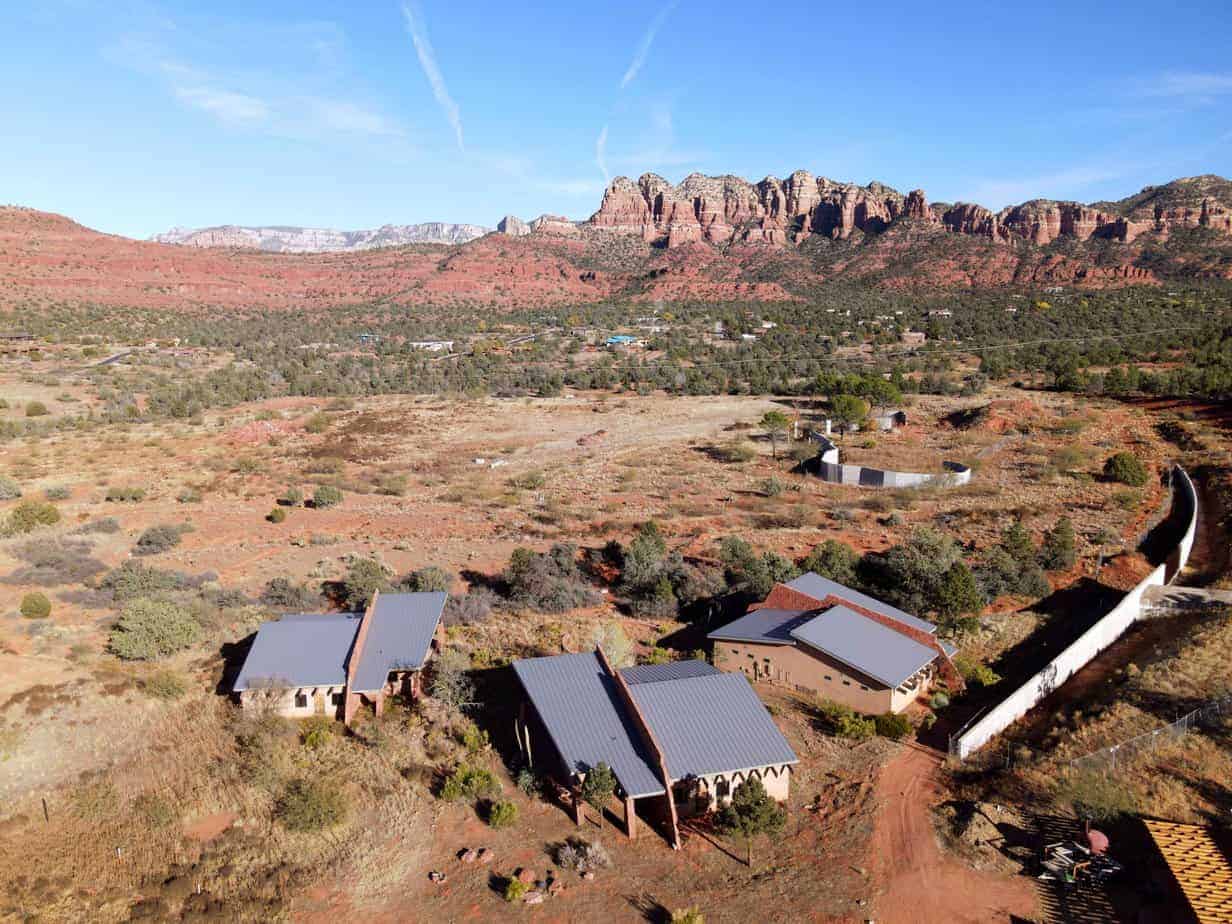
The Verde Valley School board of trustees anticipates finalizing its five-year strategic plan during on-campus meetings scheduled for Thursday, Oct. 9, through Saturday, Oct. 11. A major component of the plan is the development of the Southwest Ethnobotanical Education Destination which is 90 acres of undeveloped land adjacent to the school’s current buildings.
Most notable for the Village of Oak Creek is VVS’ creation of The Sedona Academy, a separate nonprofit and proposed adult education program that would use the revenue generated from the SEED lands to support VVS’ operations.
“The Sedona Academy will create an estimated 15 permanent jobs while generating significant community impact for the region,” according to VVS’ presentation on its strategic plan to the nonprofit Big Park Regional Coordinating Council on Sept. 11. “Key initiatives include: Community lecture series featuring visiting scholars and artists, … Student volunteer programs supporting Sedona-area nonprofits. Shared use of athletic and performing arts facilities for community events.”
The Sedona Academy is a “placeholder name,” according to VVS board of trustee member Christopher Gebhardt.
While having adult education on the SEED lands could involve overnight stays by participants, the board noted the number of overnight guests would range from 35 to 50. The Yavapai County Board of Supervisors previously approved VVS’ Conditional Use Permit on April 18, 2023, to allow the continued use of the school and its expansion, permitting the construction of seven new cottages and 10 dry campsites to accommodate those overnight stays.
Camp Soaring Eagle, once a camp serving children with serious illnesses that went bankrupt in 2007, had abandoned the three buildings it had constructed on land leased from Verde Valley School. With the camp’s closure, VVS inherited the vacant facilities and maintenance responsibilities. VVS eventually sought to reincorporate the property into its long-term vision. The county’s decision allowed VVS to regain access to the 7,500 square feet of the unfinished Soaring Eagle buildings, which can now be used by the Sedona Academy.
“We want to create a program that gives adults a way to tap into the [VVS] goodness that’s been transforming kids for so many years,” Gebhardt said. “[It] creates another customer base, essentially, for VVS, which helps to solidify it and keep it sustainable at a time when small boarding schools like this are a vanishing breed.
“We’ve survived a lot of storms and travails over the years, over these 80 years. But we have to continue to evolve and grow.”
In June 2023, VVS relaunched its endowment fund through the Arizona Community Foundation, with $160,000 and a goal of growing it to $1 million.
“Part of the reason we’re so knee deep in the strategic plan as a school is [VVS’] annual fund needs are high, just as a percentage of expenses [and] it’s higher than it should be,” Abani Heller said. “Because that endowment isn’t [currently larger] … that’s why we look to the SEED lands and speak of it almost as the current endowment, meaning the thing that is supposed to generate supplemental, recurring value and income for the school.”
Gebhardt cited the closing of the Orme School as part of VVS’ impetus for the build out of the SEED land. Founded in 1929 six miles north of Cordes Lakes, the ranching school shuttered at the end of the last school year. However, Gebhardt said VVS financial self-sustainability is not completely dependent on the land’s development.
“The big lesson is the urgency of doing exactly something like the Sedona Academy,” Gebhardt said.
Until then VVS is doing a Facilities, Infrastructure Needs Assessment within the next year to create a list of the condition of campus buildings and prioritize capital and infrastructure needs.
“Part of the importance of the needs assessment is the status of all the roofs on campus, because a healthy roof is one that can handle solar panels,” Heller said. “Solar panels can help reduce our dependence on things like propane and natural gas, which are very expensive for the school. Electricity continues to go up year over year. It makes operating expenses for the school that much more painful.”
The APS electric utility is currently seeking approval from the Arizona Corporation Commission for about a 14% increase in its customer’s monthly bills.
Heller said the VVS will fundraise to install solar panels on its roofs and “if we could just afford, from a capital standpoint, solar panels on the roof of Brady Hall, it could offset 10% of our utilities bills.”
The tentative timeline presented to BPRCC calls for hiring for leadership, establish The Sedona Academy as a 501(c)(3) and start SEED land master planning by the end of 2026, then construct a fire access road and the three unfinished buildings that comprised Camp Soaring Eagle by the end of 2028. Finally, over 2029-2030, open the Sedona Academy and complete its academic accreditation reviews.
Gebhardt said he wants to get the board’s final approval on the five year plan and to “move forward with this aggressively” after the meeting.
VVS is currently led by Interim Head of School Kevin Warren, son of late founders Hamilton and Barbara Warren. Kevin Warren said the school aims to name a permanent successor to former Head of School Ben Lee by June 2027. Lee resigned on June 7 after serving since July 2023.
“These things take time and it’s a difficult prospect to find someone of the appropriate caliber to lead an institution that follows the International Baccalaureate Program,” Warren said.


