















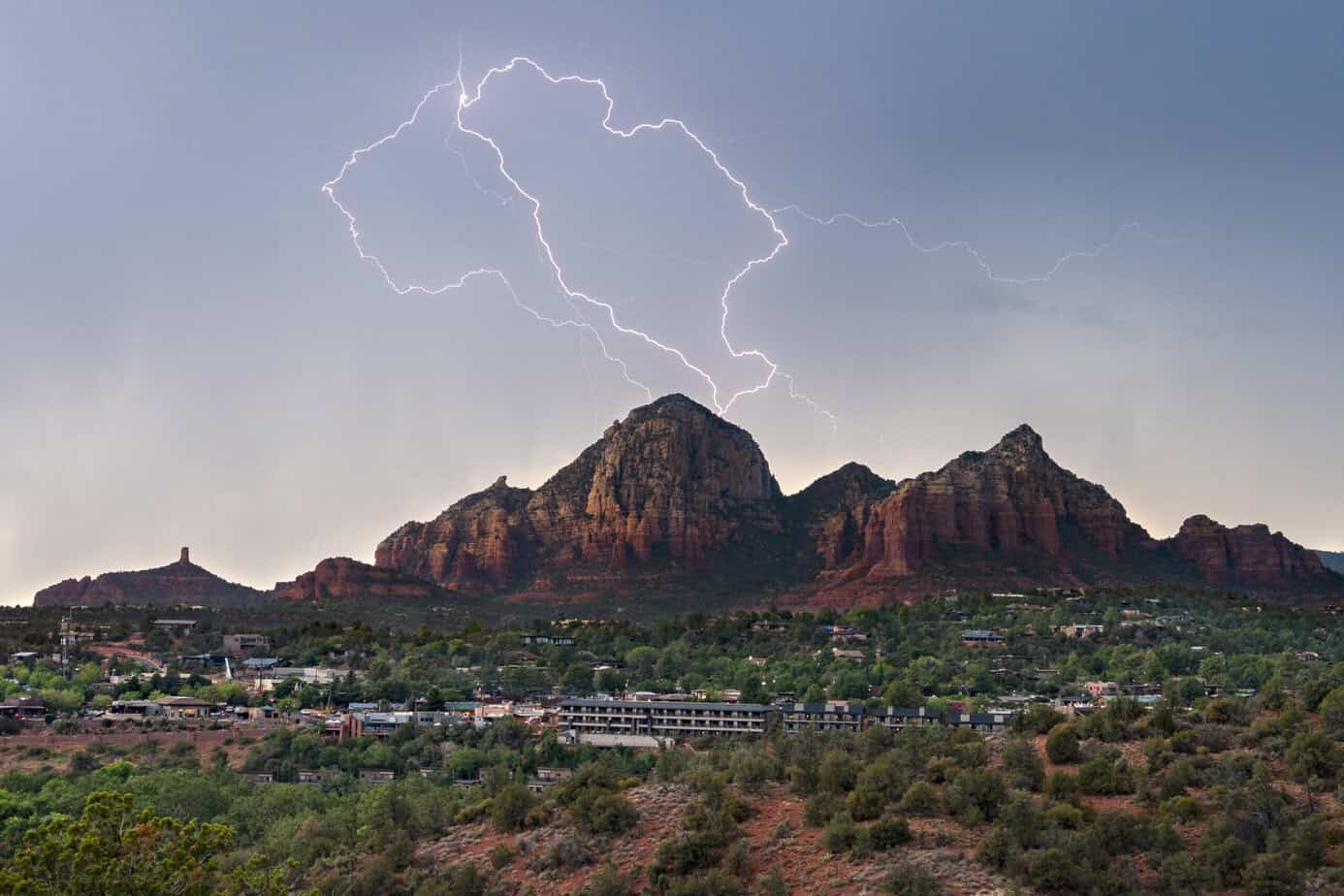
After essentially two months of waiting and false starts, the 2025 monsoon finally arrived in earnest.
The Arizona monsoon is a unique weather pattern, similar to but less intense than the Indian monsoon in South Asia. Under intense summer heat in the Sonoran Desert and the Mexican plateau, winds shift and a low pressure thermal flow forms pulling moisture from the Gulf of Mexico and the Sea of Cortez. The Arizona monsoon in the Verde Valley is somewhat blunted by the central highlands and the Black Hills but it lessens the intensity, not the full effects.
The English word “monsoon” comes from Portuguese “monção,” transliterated from Arabic “mawsim,” or موسم, which just means “season” and describes shifting winds resulting in a predictable and heavy rainy season. Arabic sea traders had experienced the seasonal storms off the Indian subcontinent for centuries and planned their navigation accordingly to safely reach Indian ports. Their word entered European lexicons after Vasco da Gama and other Portuguese explorers rounded the Cape of Good Hope to reach India in 1498 and encountered the weather pattern for the first time.
As a noun, “monsoon” means “season” and is not synonym for one of the typical major thunderstorms, which would be “monsoon storm” with monsoon used as an adjective. Likewise, the phrase “monsoon season” literally means “season season” and is obviously redundant, so avoid it if you want to sound like a native Arizonan.
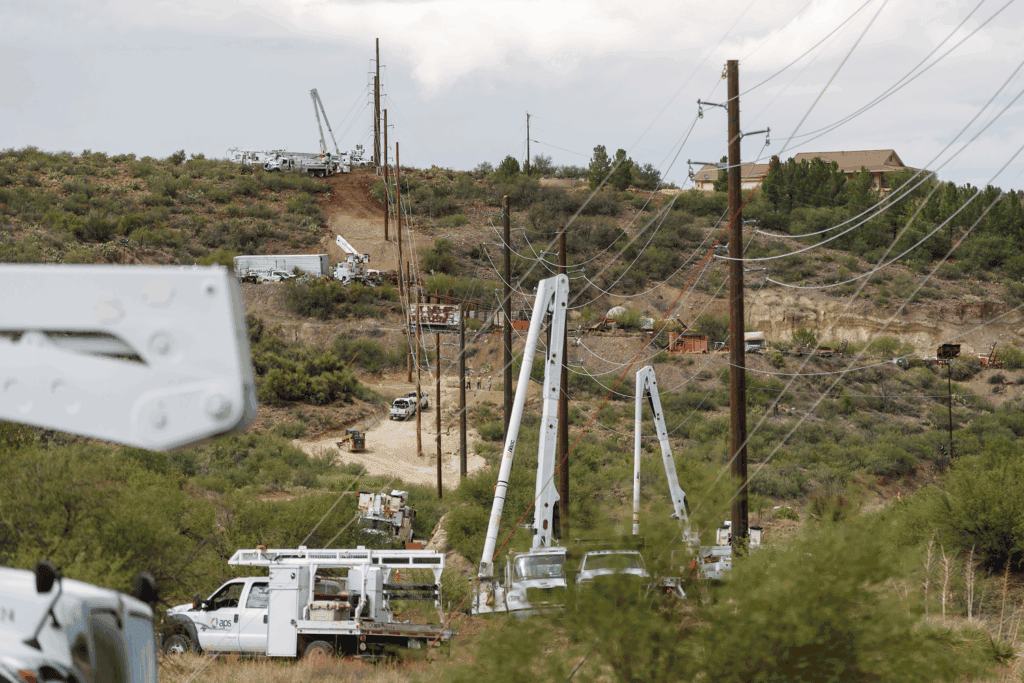
While the monsoon storms in July and early August have been sporadic and light, the storms that arrived this week and last dumped loads of afternoon and evening precipitation on Arizona and specifically the Verde Valley, where high winds knocked down or damaged nearly a dozen power poles in the Camp Verde area, closing roads and affecting internet service for customers whose internet lines are carried on the same power poles as APS’ electric power grid.
On Monday, Aug. 25, a massive haboob hit the Phoenix metro area, with pictures and videos circulating around news sites, social media and the internet. “Haboob” comes from the Arabic “habūb” and means “blasting” or “drifting” and is created by the downdraft of a huge thunderstorm pushing out from a moving storm, building as it goes.
Haboobs are fairly common in the Phoenix area and having grown up there, I’ve experienced my fair share. I grew up in the East Valley before the urban sprawl stretched out to the Superstition Mountains.
Winds would whip up in the afternoon, generally coming from the southeast or east, with a massive wall of dust rolling in. Back then, Apache Junction was far beyond the developed metro area so there was, to our southeast, cotton fields and then open desert with nothing to absorb or blunt the growing storm.
There might be some light drips of rain before the haboob hit, but when it did, wind and dust would drop visibility down to a few feet, the skies would turn a solid black.
We’d watch shingles, lawn chairs and all manner of light debris go sailing through the air through the window of our living room. Drivers often pulled over on the roads to wait out the storm. The dust would roar through for 30 minutes to an hour before a massive rainstorm hit, washing all that dirt into washes, ditches, gutters, roadways and low places. In the aftermath, we were always fishing roof shingles out of our backyard pool and putting them back on the roof before the next storm.
The wall Aug. 25 haboob was about 100 miles wide and 5,000 feet high, not the largest haboob in Phoenix history, but certainly worth remembering.
There were spots of flooding and mudslides throughout Sedona, Cottonwood and Jerome on the night of Tuesday, Aug. 26, with some of the mud spilling out onto roadways in some places. The aftermath was how I used to measure the intensity of a storm when I first moved to the Verde Valley two decades ago, but since becoming a father, I now have three little alarms. On the night of Aug. 26, two of our three kids were woken by the intense thunder and lightning, leading to a few minutes of soothing them back to bed around 2:15 a.m. Our youngest slept through it all, but she would likely sleep through the Four Horsemen riding through our living room.
We have some more storms in the forecast in September, which is sure to bring more rain and winds to the area.