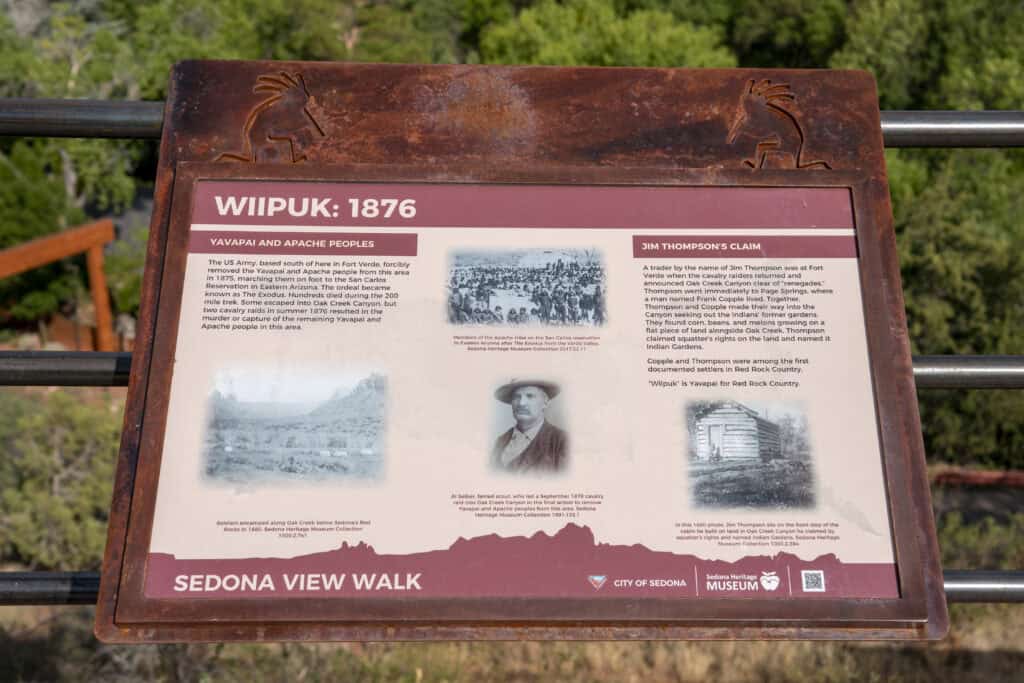











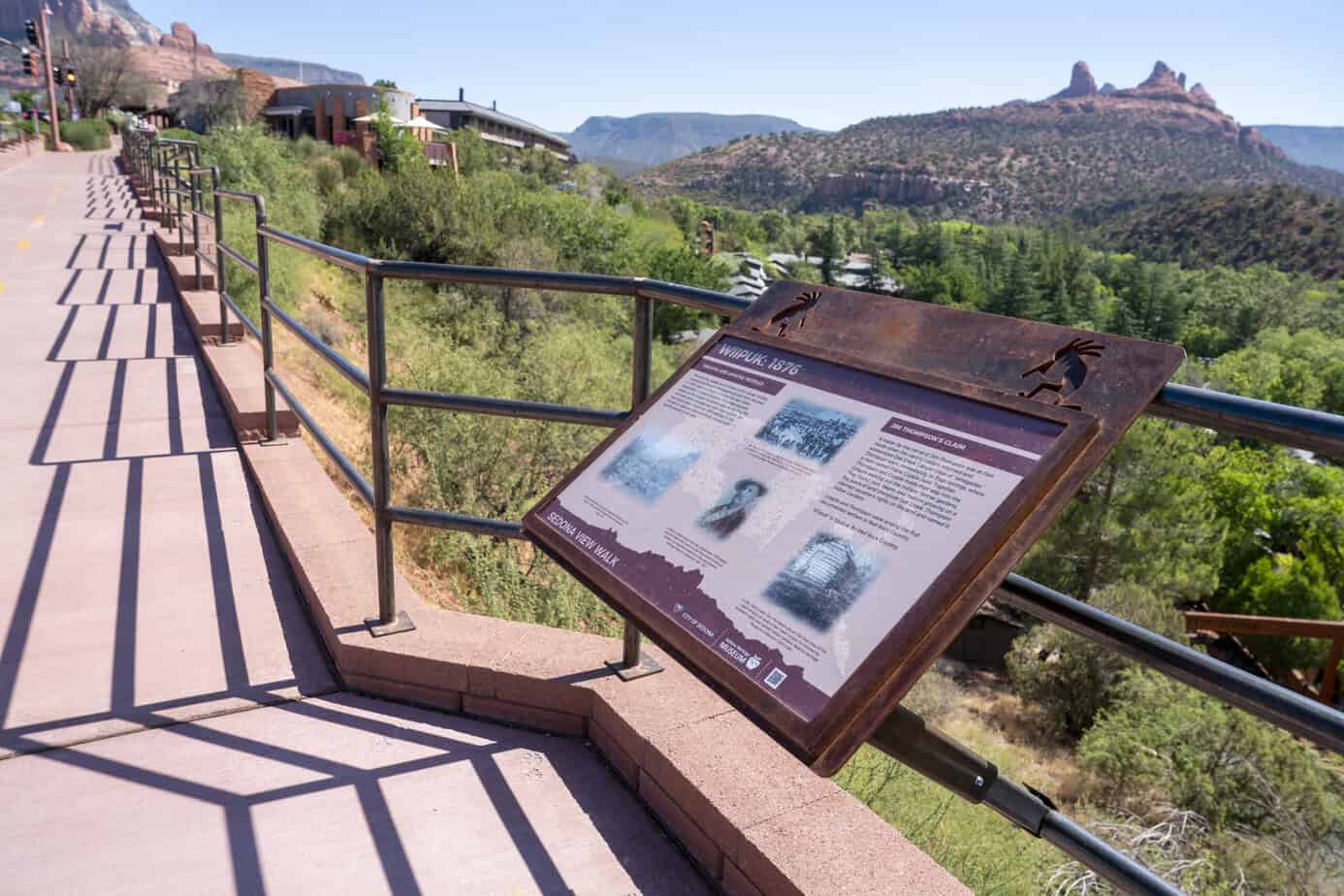
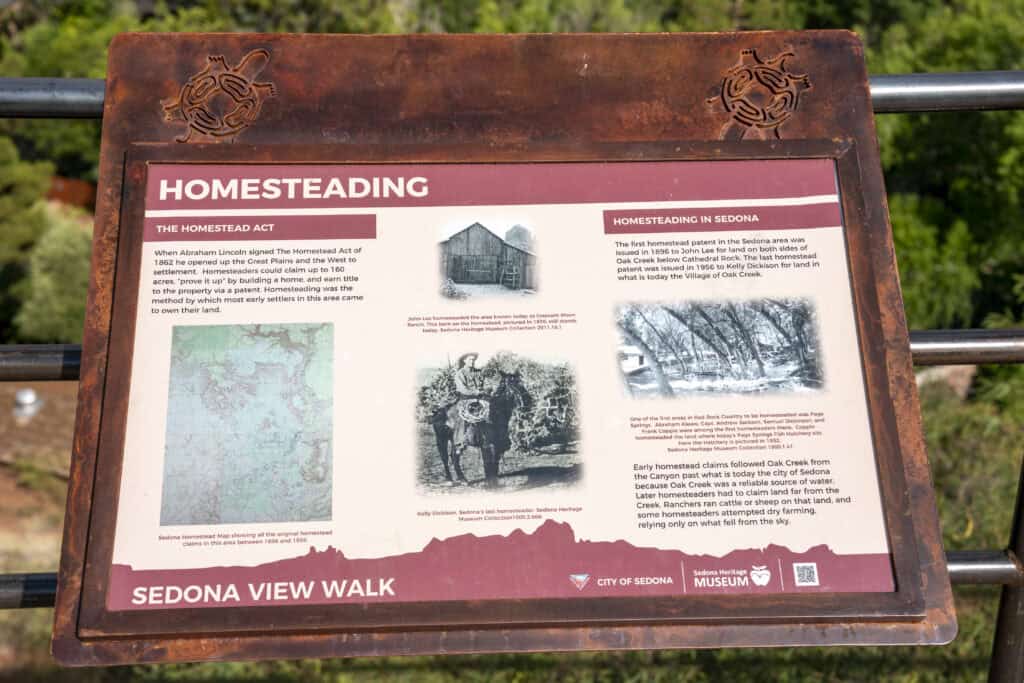
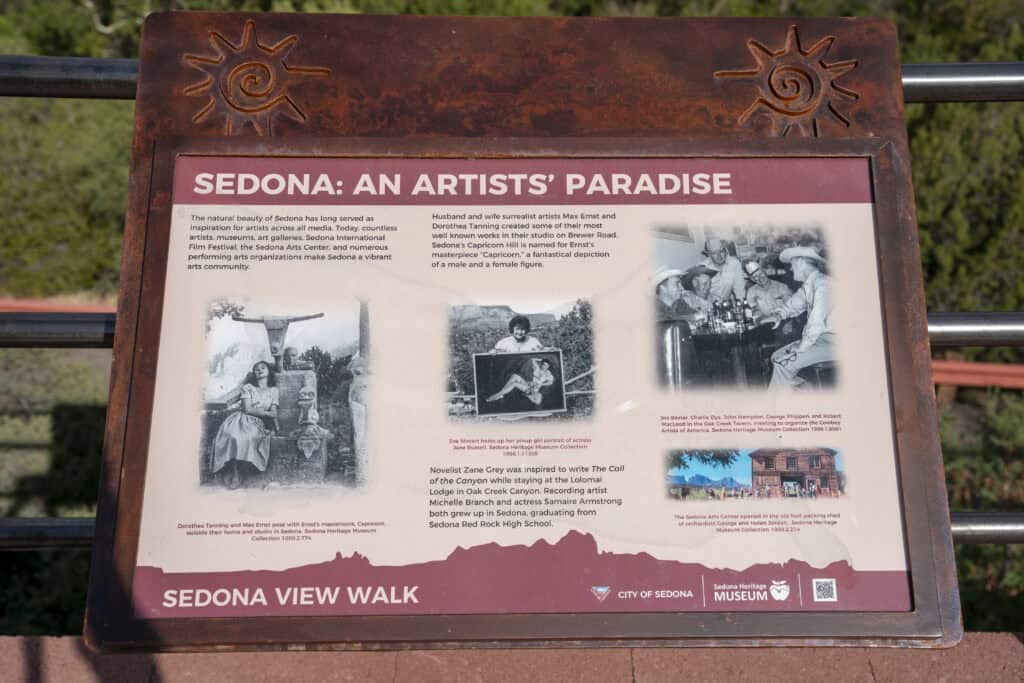
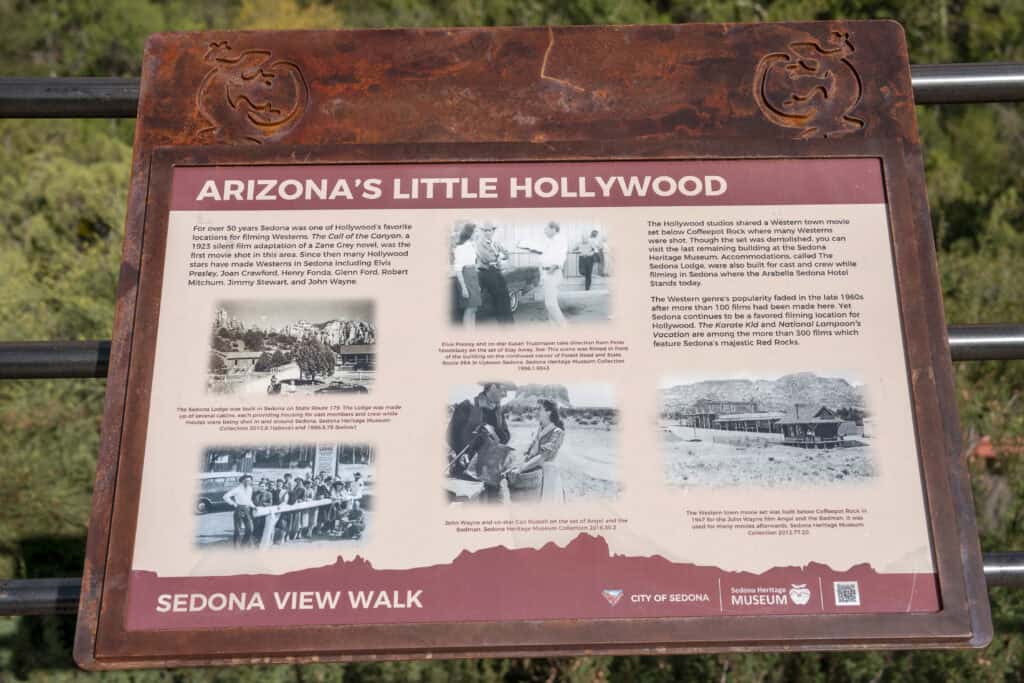
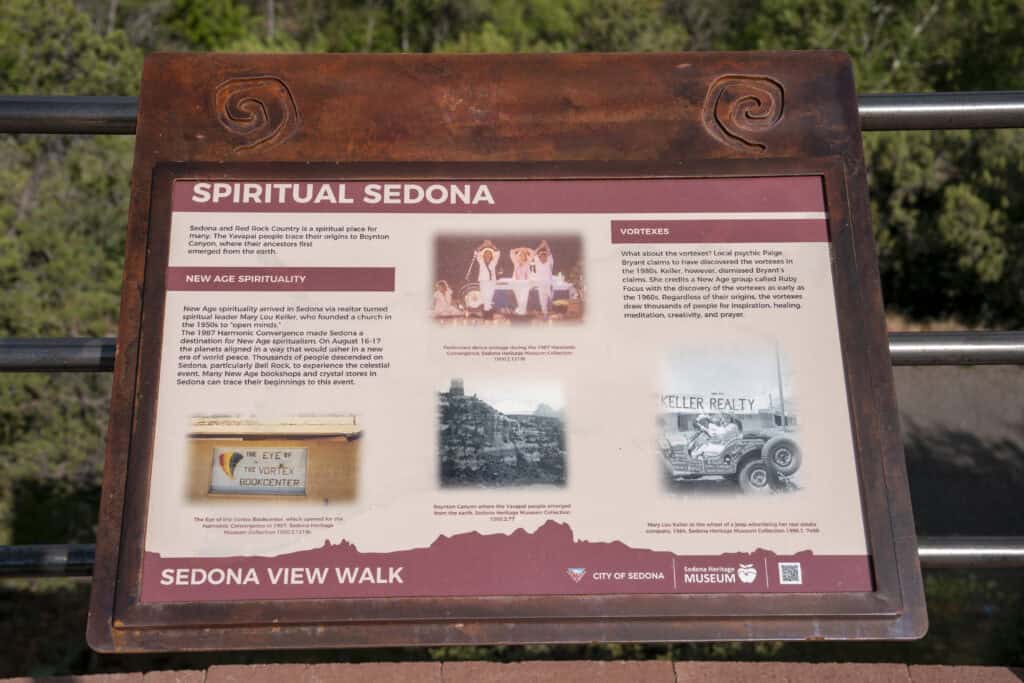
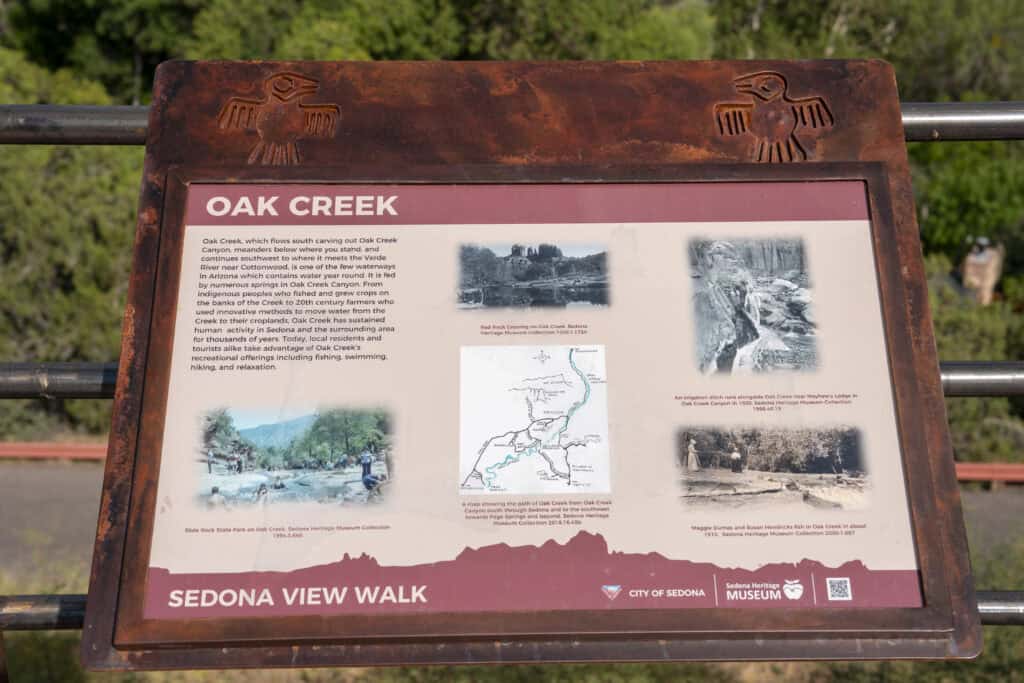
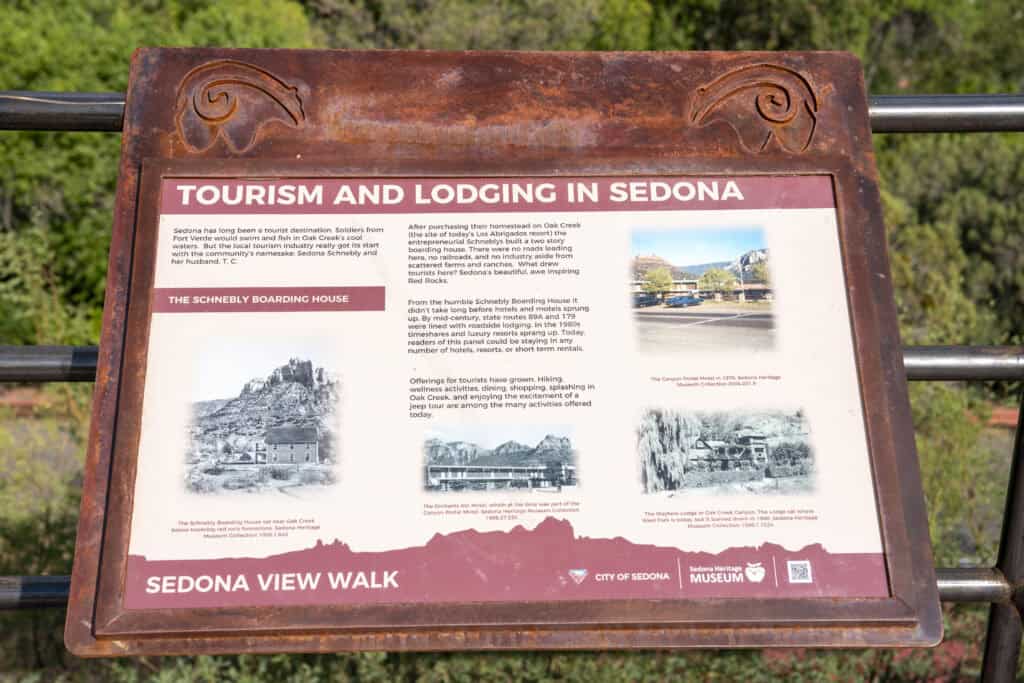
The city of Sedona, the Sedona Heritage Museum and a members of the business community formed a committee that created nine new interpretive panels for the View Walk project over the last six months.
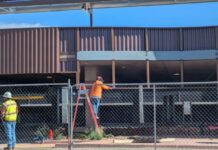
These panels cover the human history of Sedona and were installed in June at the south end of the intersection of State Route 89A and Forrest Road along the shared-use path, at an estimated cost of less than $40,000, according to Director of Public Works Kurt Harris.

“My goal was to give people walking that stretch something to see and learn from. Since most walkers are tourists, I wanted to share what makes Sedona unique,” Sedona Historical Society Executive Director Nate Meyers said. “I approached it like a Sedona History 101 course, choosing nine stories [that] I want visitors to know so they can truly understand what makes this place special beyond its beautiful red rocks.”
A 10th and final sign, a panorama highlighting the rock formations visible from the View Walk, has not yet been installed and Harris estimated it will be another two months.
Additionally, sculptor James Muir will have his piece “Call of the Canyon” also installed on the east side of the intersection by the end of the summer, with Deputy City Manager Andy Dickey noting in a July press release that another monument will be installed on the south end of the pathway.
The city must first design footing and avoid unexpected high-pressure gas lines, before Call of the Canyon can be installed, according to Harris.

The View Walk project replaces 24 aging interpretive signs installed in 2015. Seven were either vandalized or stolen, which was the impetus for this project. The remaining signs have been given to the museum board, according to Harris.
“These [new] signs are much more robust and hopefully will prevent theft [or] vandalism,” Harris said, and added that the city will pay the cost for repair or replacement if either occurs.
Although Harris said he doesn’t imagine theft will be an issue after public works completes reinforcement of the signage “[vandals] will require a cutting torch or steel cutters” once the project is finalized. Additionally the panels can easily be swapped out if one is damaged, which also can allow for updating the signage or temporarily installing a seasonal display.
Meyers has also has created a website, accessible through QR codes on the signs to provide longer versions of the stories, more photos and videos.
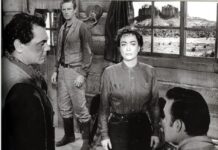
“What I appreciate about this project is that it forced me to think about Sedona history from the perspective of someone who knows nothing about the red rocks and ask myself what the person on that street will care about,” Meyers said. “We had to include movies because that’s something everyone can relate to, the wine industry since some visitors come specifically for that, and where the name Sedona came from — those basic but important topics. I also had to present them in a way that’s engaging, both visually and through storytelling, so people are drawn in instead of just walking by. So I’m really excited to help share these our stories with a wider audience.”
“As a reminder, this shared-use pathway is a part of the greater Sedona Trails & Pathways System, which consists of over 10.5 miles of these types of paths,” Dickey wrote. “Additional paths coming soon include Phase Three of the pathway along Dry Creek Road, the Andante Shared-use Path Project and the Coffee Pot shared-use Path Project.”
More information can be found at sedonaaz.gov/stps. SHS and the city have discussed how to expand the View Walk project to other areas such as Ranger Station Park, the pedestrian underpass near Tlaquepaque and areas near Uptown.
“Later this year, the committee will be working on other areas that could benefit from interpretive signage, to further enhance the pathway experience for users, all as a part of a bigger effort we’re calling the ‘Sedona Walk’ experience,” Dickey wrote.
“We’ve also talked about how this approach can encourage walkability and get people to park and walk instead of driving all over Sedona,” Meyers said. “If good storytelling can be a model to draw people through our community … or give them something to look at as they walk from Tlaquepaque to Uptown, I think that would be great, and I’m excited to be a part of that.”