















Over the past several years, cultural shifts have led to an increase in American Indian influence in cinema, fashion and now food.
Films like “Gather,” a story about “back to the land” food practices, which are interrelated with the topic of food sovereignty, are informing society about long-lost traditional cuisines and recipes that have little to do with once-popular staples like fry bread, spam and other foods made with “government” ingredients.
Twila Cassadore, of the San Carlos Apache Tribe, in what is now Gila, Graham and Pinal counties, appeared in the film, in which she explained that she was long unaware of many traditional ingredients that can be foraged locally, and that such knowledge was kept secret out of fear.
After realizing that many tribal elders had retained traditional food knowledge in spite of cultural conditioning that accustomed them to keeping quiet, Cassadore began interviewing them and compiling the data. She also did extensive fieldwork, familiarizing herself with plants, animals and “medicine foods.”
Cassadore’s work eventually led to a database of foods, recipes and nutritional information called the Traditional Western Apache Diet Project, which she put together in collaboration with Seth Pilsk, a botanist with the tribe’s Forest Resources Program.
To date, “hundreds of Apache elders and traditional food authorities” have been interviewed and 300 food species have been identified.
The project has also compiled 96 pre-reservation Apache daily menus for nutritional analysis.
Some of the traditional foods on these menus include Emory oak acorns, roasted agave hearts, wild seeds, corn and meat, including 30 species of mammals and nine main species of birds. The project juxtaposes the nutritional density of traditional foods with that of unhealthful Western diet foods, which have been linked to a variety of health issues, including diabetes and cancer.
“It’s pretty exciting,” said Cassadore. “It’s something that the ‘mainstream media’ was not very aware of, just the way that people live.”
Cassadore also remarked that the diet helps reconnect people to the land and their own culture, noting that when she leads foraging excursions, she’s noticed a tendency for people, even youth, to “forget about” their phones for a while.
Challenging Perceptions
Cassadore explained that one of the biggest challenges for the program is getting younger generations to change their views about certain foods that are considered “poor people foods” because they are found in nature rather than in a grocery store.
“People kind of shun their own food to not be labeled as ‘poor,’” Cassadore said. “I always say that’s Western colonization, that label, that word ‘poor’ … really, what is poor? We are not poor. We’re able to forage and we’re able to provide for our family.”
When she leads foraging excursions, Cassadore also teaches students how to prepare and cook what they find, often coming up with new recipes that more closely resemble the modern foods they are used to eating.
“Peoples’ palates have changed, so they like a lot of seasonings,” Cassadore said, describing the “trial and error process” of making a barbecue glaze from hand-picked “chidnkozhe,” or sumac berries. “It was so good. They were like, ‘I didn’t know you could do that.’”
This August, Cassadore visited the Yavapai-Apache Nation in Camp Verde to teach a class on how to prepare and clean the berries, where she shared another of her discoveries. Acknowledging that traditional methods for cleaning sumac, such as the use of juniper ash, are not always convenient or cost-effective, Cassadore suggested using sugar as a “scrub” to remove the outer layers.
“We use sugar scrubs on our feet and hands, so let’s sugar scrub these berries,” she said. “We use what the government gave us, but we can use it this way, too.”
“They were like, whoa, this is super easy,” Cassadore said. “I was like, ‘I know.’”
Daulton Venglar/Larson Newspapers
Hopi Corn Returns
The Ancient Puebloans of the Verde Valley are popularly known as the Sinagua, from Spanish words meaning “without water”; however, the Hopi people call them the Hisatsinom, a word meaning “ancient peoples.” The Hopi, Yavapai, Apache and Zuni tribes claim relationships to these ancient people.
The Verde Valley Archaeology Center states that while “the ultimate fate of the Sinagua is unknown, there is some evidence linking the Sinagua with the Hopi of historical times. The Yavapai-Apache hold that not all the Sinagua left the area. Several family groups remained in the Verde Valley and intermarried with the Yavapai and Apache.”
VVAC’s Native American Heritage Pathway and Garden serves as more than an exhibit. It is also a research center dedicated to preserving traditional farming methods, primarily the “three sisters” technique of companion planting.
The “three sisters” are the three staple crops of corn, beans and squash, which are planted together in a way that is complementary, creating a self-sustaining ecosystem. Also known as the milpa system after the milpas, the polyculture fields in which the crops are planted, the combination was developed in ancient Mesoamerica and gradually moved northward through technology transfer, becoming established as far north as New England by the year 1000 CE. Radiocarbon dating of archaeological sites has showed that maize was present in the Southwest by 2,100 BCE.
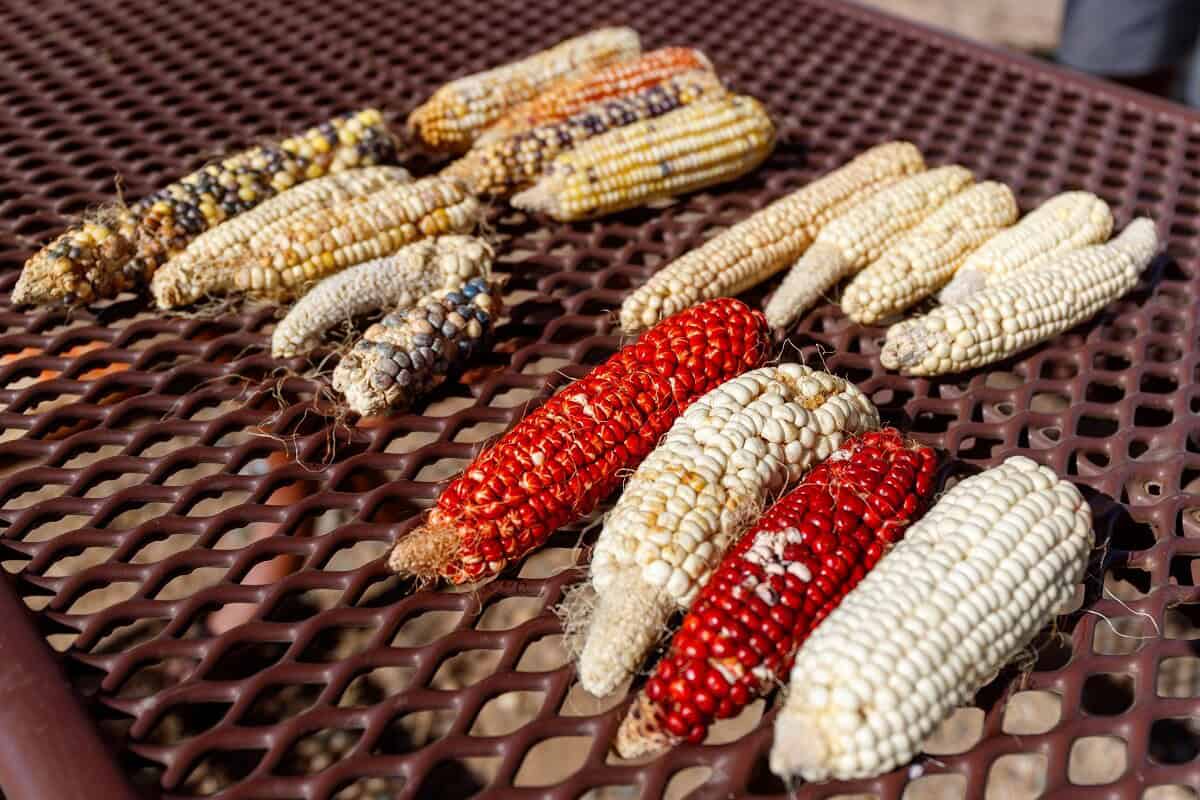
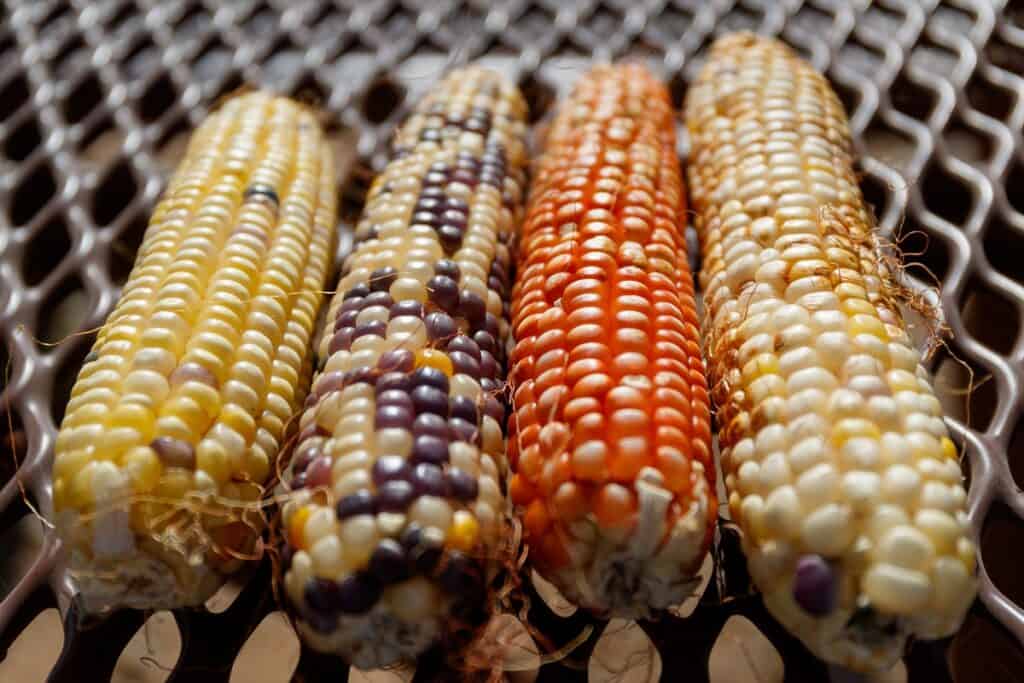
With help from Hopi elders and VVAC volunteer and retired seed industry corn breeder Walter Trevisan, ancestral corn species have recently been introduced to the garden for the first time.
VVAC ethnobotanist Rob Estrada explained that the garden’s corn crop is part of an ongoing study to determine which specimens will perform best over time, with the goal of creating a seed bank for farmers in the area.
This year, 14 heritage varieties of corn were planted in the garden and monitored throughout the growing season.
“[Trevisan] acquired 22 varieties of native corn seeds from the USDA, and each one is a registered heritage variety, not just Hopi,” Estrada explained. “Many are Hopi. We also have varieties from Tohono O’odham and Arapaho.”
Estrada noted that the Hopi varieties are unique in that they can be planted much deeper than commercial corn.
“Hopi varieties can go 10 inches or more, so they’re unique with that feature that’s probably been developed over centuries … because they don’t irrigate, per se, they don’t have flood irrigation and canals up there, they rely on rainwater and the moisture in the soil. So that’s one of the reasons they go down deep, so that the kernels can get down to where the moisture is in the earth.”
Science and Knowledge
In October, an article on the Open Notebook website titled “Weaving Indigenous Science into Reported Stories” explored the notion of context as it applies to traditional knowledge and its place within western fields of science.
Author Emma Gometz wrote that “indigenous science — which can be briefly defined as knowledge gathered systematically by indigenous peoples and shared across generations — is deeply interwoven with ecology, astronomy and medicine, among other fields often deemed ‘Western’ science. Yet journalists, alongside mainstream scientists, have not historically recognized the value and importance of indigenous expertise.”
B. “Toastie” Oaster, a reporter at High Country News, commented in the article that “[tribes] are doing way more than a lot of other scientists are to actually help the animals and the plants and the waters and the lands. And it’s just inspiring.”
Cassadore said that her understanding of traditional ways is both scientific and spiritual: “We all walk upon Mother Earth, and Mother Earth doesn’t see the colors, nationalities, race, religion. She hears all of our heartbeats and how we treat her is how we treat ourselves. It’s never going to go back to the way it was, but just remember that we all live on this earth and need just be mindful and respectful. Some of the industries, I don’t think that’s something they’re conscious of, but in our culture we say ‘the earth doesn’t belong to us, we belong to the earth, and we are here to help the earth.’ It’s a partnership between all of us.”
Closer to Home
While most of the restaurants that serve American Indian foods are located either north or south of the Verde Valley, there is one that is beginning to blaze a trail in Clarkdale. Located in the Taawaki Inn, which is managed by the Hopi Nation and features an all-Indian fine art gallery, the café is a test kitchen of sorts. Led by Chris Cooka of the Hopi and Tewa nations, the café is using traditional Hopi ingredients “like nowhere else.”
While the noova — Hopi word for “food” — menu is still in development, a favorite among locals and visitors is the blue corn waffles with berry compote and floral Chantilly cream.
Cooka hopes to eventually incorporate traditional foods like rabbit, venison and pheasant, but for now it’s a matter of finding a way to source such items.
Other places to find American Indian-inspired foods in the Verde Valley, mostly “Indian” tacos, are El Rincon in Sedona as well as numerous pop-up stands in Camp Verde, typically near the Yavapai-Apache Nation’s Cliff Castle Casino.
For more information on how to find indigenous foods and farms in Arizona, visit goodfoodfinder.com, an initiative of Local First Arizona, which features over 30 organizations and individuals who collect, grow and prepare traditional foods.