













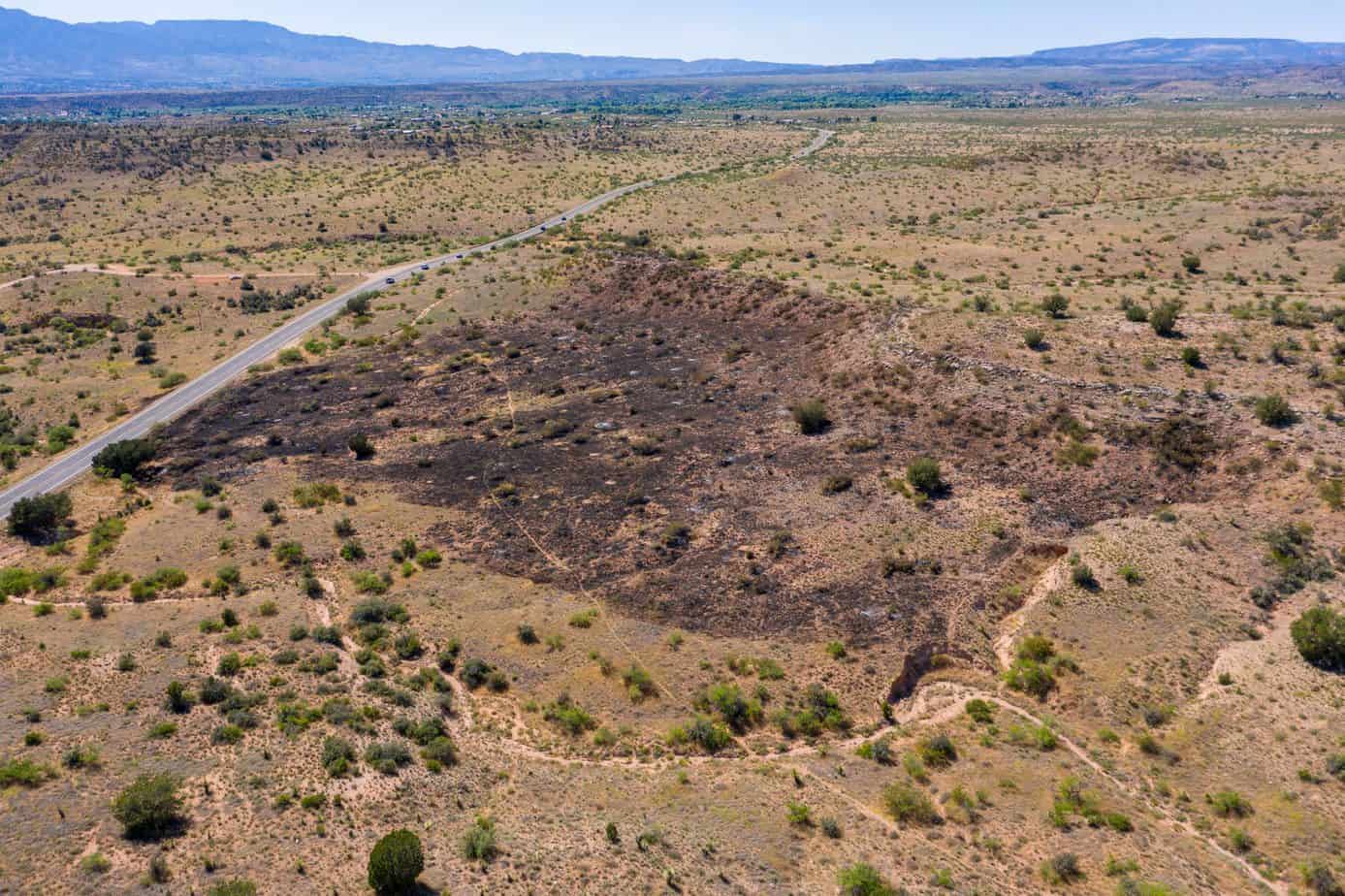
If you’ve been noticing a lot of scorched patches along the highways this year, it’s not just your imagination: It’s been an unusually bad year for roadside fire.
Brian Steinhardt, zone fire management officer for Coconino and Prescott National Forests, said that there have been 22 fires on national forest land in the Verde Valley so far this year, and all of them were roadside related except one.
That’s about double the number of wildland fires the forest would typically expect at this point in the fire season, Steinhardt said.
“If you drive down the interstate now you see more black areas, or previously burned areas, everywhere. It’s very bad this year,” John Artley, fire prevention technician for Coconino National Forest, said.
Artley said that with the cooperation of the Verde Valley emergency response agencies, all the roadside fires have so far been contained to under 10 acres, except one.
A worrisome hazard of roadside fires is that they can develop into larger conflagrations. Firefighters believe the Bush Fire started when a vehicle caught fire on State Route 87 about 22 miles north of Mesa on June 13. That fire, now 98% contained, eventually swelled to 198,000 acres, making it the fifth largest in Arizona history.
Steinhardt blames a robust grass crop along the roads, fed by above average winter and spring precipitation, for the unusually high number of roadside fires. Where there might have been bare dirt on the shoulder in previous years, there is grass this year, and the roadside vegetation becomes drier and drier as the summer progresses.
Steinhardt said common causes of roadside fires are sparks from wheel rims when tires go flat, vehicles dragging chains and vehicles with hot undercarriages pulling off the road into grass.
While roadside fires are especially bad this year, local fire fighters said fires originating from roadways have historically been one of the top causes of fire in the Verde Valley.
Artley estimated that two-thirds of the human-caused wildfires in the Verde Valley in the past 50 years were roadside related. Getting exact figures on roadside fires in the historical data is difficult, he said, because in the past, fires starting near roadways were categorized as either “smoking” fires caused by cigarette butts, without a lot of evidence, “miscellaneous,” or “equipment.”
Steinhardt said that despite the increased roadside fires and challenges of COVID-19 this year, there are positive developments to report as well.
“The good news is that while there have been large fires within our region, federal, state and local cooperators have been able to maintain a high level of safety, not only with regard to wildfire, but to exposure to COVID-19,” Steinhardt said. “Despite the impacts of COVID- 19, we are still able to staff crews, equipment, and aerial resources and respond to wildfires. Resources from across the country have been able to respond and assist, all while practicing COVID-19 protocols and mitigations. It is remarkable how fast our wildland firefighting community adapts and overcomes these types of challenges. Our capacity, while occasionally reduced because of potential exposure to COVID-19, has not resulted in a lack of sufficient resources.”
Steinhardt’s No. 1 recommendation to prevent roadside fires this year is to make sure tires are in good condition and properly inflated. Bare rims creating sparks in the asphalt are a major cause of fires. He pointed out that drivers are responsible for fires caused by vehicle malfunctions.
He also said that drivers towing loads should be careful to do a final inspection of vehicles and trailers to make sure nothing is hanging down to the ground, since loads will cause vehicles and trailers to sink down significantly.
“Pay attention to where you’re pulling over,” he added. “The underside of your car is pretty hot.”