









With Friday’s edition on June 19, we are concluding the essays and profiles of candidates for Sedona mayor and City Council.
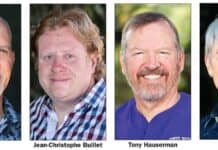
For the five candidates running for three open Sedona City Council seats, political newcomers Lita Loesch Boyd and Jean-Christophe Buillet and incumbent Melissa Dunn appeared in the June 12 edition, newcomers Rich Gay and Tony Hauserman appeared in the Wednesday, June 17, edition. The mayoral candidates, Vice Mayor Brian Fultz and newcomer Henry Silbiger appear in today’s Friday, June 19, edition.
Hopefully enough candidates resonated with you to make your decision about whom to vote for. If you’re still undecided or on the fence, we will be posting all the candidates’ essays and profiles on our website at redrocknews.com for you to peruse at your leisure to help you make your decision. We are also covering candidate forums to which all the candidates have been invited. We don’t cover events to which only a select group has been invited, or private events, as that type of coverage is not fair to all those seeking office. City reporter Joseph K. Giddens has been diligently writing stories about these public events to give voters a balanced view of the candidates seeking your vote, which includes quoting their statements and fact-checking the claims they make.
All registered voters in the city of Sedona’s jurisdiction get one vote for mayor and up to three votes for City Council. Due to the field, not all of the council candidates will survive the Tuesday, July 21, primary.
Voters can choose up to three candidates in the council race, so if 3,000 citizens vote, there are potentially 9,000 votes that could be cast. If 400 people only vote for two candidates, there would be theoretically 8,600 votes cast. According to the state’s formula, those 8,600 votes would be divided by the number of seats — by three for a max of 2,833⅔ — then cut in half — 1,416⅓ for 50% — and rounded up to the nearest whole number, 1,417, marking the theoretical threshold candidates need to win the primary outright. Readers don’t need to worry about this, but please appreciate the hard work of our election team to crunch these numbers from two counties on election night.
If candidates fail to reach that threshold and seats remain open, candidates will head to the runoff in the general election. The statistical probability of five candidates for three seats has three most likely scenarios:
■ One candidate will win outright and four will head to the November runoff for the final two seats.
■ Two candidates will win outright and two will go to the runoff for the last seat — mathematically, this is the most likely scenario.
■ Three candidates will win decisively, with the bottom two defeated and no runoff.
Voters are not required to use all their allotted votes, but every vote counts, especially in municipal elections when the total number of votes is small.
In 2005, Sedona voters approved a ballot measure that changed how our mayor was selected from vote by City Council members at the start of the new term to a direct popular vote. Sedona held its first direct mayoral election in 2006, choosing mayors to a two-year term instead of the four-year City Council term. In order to run, then-Mayor Pud Colquitt strategically resigned in November 2005 so that she could run, elevating Susan Solomon to mayor and Ernie Strauch to vice mayor in the short interim. Rob Adams was appointed to fill the new vacancy [Strauch’s seat]. Colquitt won easily in June 2006.
In the 2008 election, Adams challenged Colquitt and after a very close election, Adams won the recount by a hair’s breadth 1,970 to 1,966. So even four votes matter.
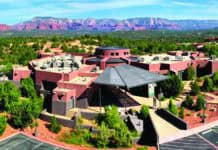
With home rule and the Sedona Cultural Park measures also on the July 21 ballot, we’re expecting a higher-than-normal voter turnout.
Since only two candidates are running for a mayor, a runoff is a statistical improbability unless the difference of votes for Silbiger and Fultz are as razor-thin as 2008 and there are enough write-in votes on throwaways to make their totals under 50%, but such a scenario has less than a 1% likelihood of occurring.
Early ballots go out Wednesday, June 24, and the primary election is Tuesday, July 21. If a runoff is necessary, it takes place on Tuesday, Nov. 3. We wish all the candidates the best of luck, and hope everyone will make your voices heard in the ballot box.