















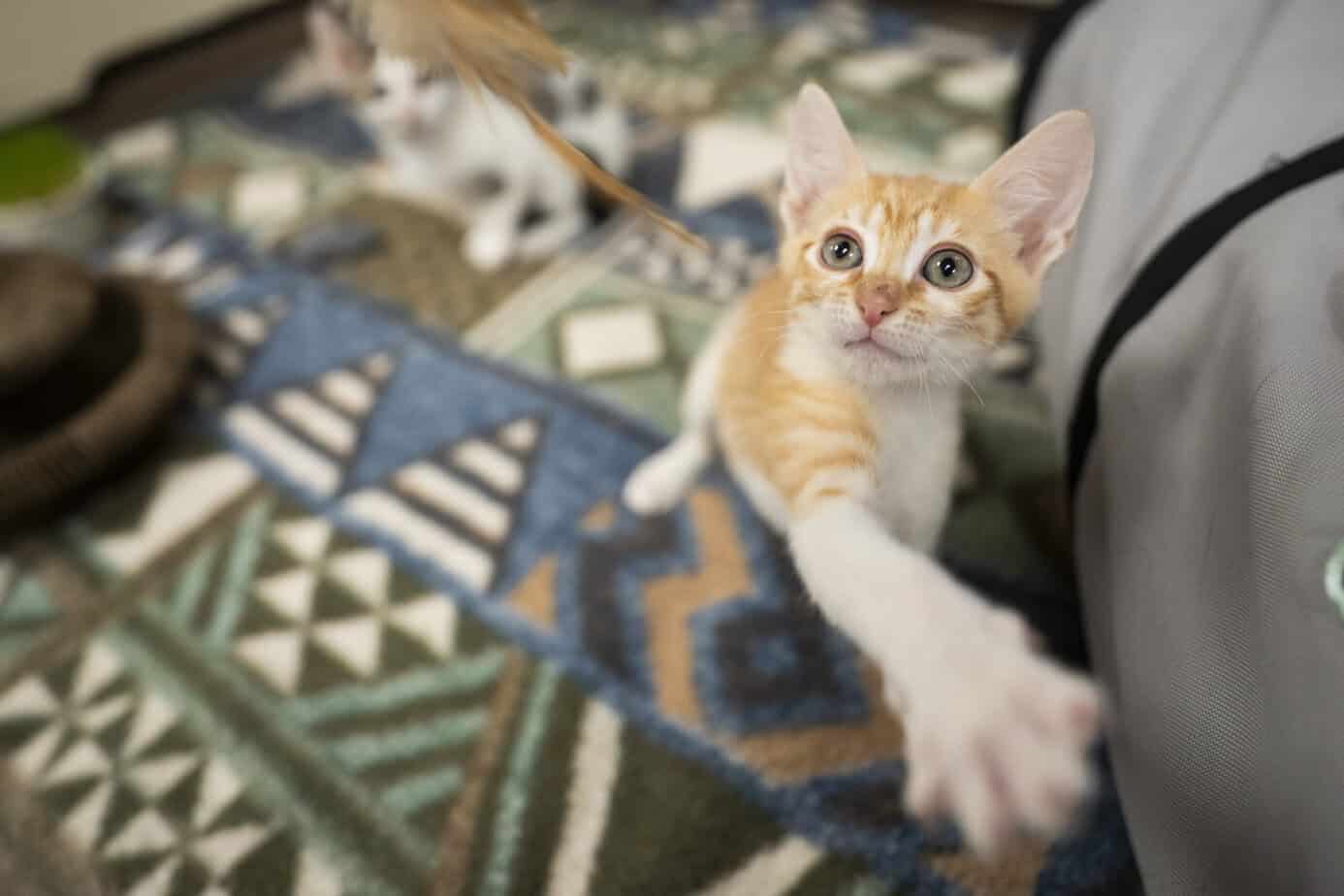
Forty-eight kittens. Twenty-nine days. One shelter. Kitten season has come to Sedona.
“Kitten season is when we start seeing a lot of young kittens coming into the shelter,” Humane Society of Sedona Executive Director Jennifer Brehler said. “It usually runs about April through September, and we have different stages. An adult female cat can have three litters of kittens in that time period. So when the days are longer, the weather is warmer, unfortunately, that is when kitten season happens. So that’s why it’s so important for people to spay and neuter their cats.”
That surge has stretched the shelter’s resources and its foster network. While the peak months remain consistent, the volume has grown, according to Brehler because the shelter took in 48 kittens in the last 29 days, compared to 35 in the entire first four months of 2026.
One of the recent arrivals is Meechee, a black kitten in the care of foster Sue Woolaghan. Found alone, covered in fleas and battling an upper respiratory infection, he was so young he still needed to be bottle fed.
“I came here from California and I’ve been fostering since 1989. I used to feed the stray kitties, and they just would show up,” Woolaghan said. “Cats have always followed me since I was a little kid, strays would show up and I would just feed them because I felt bad for them. And then a rescue group approached me to foster. I had no clue what I was in for, but that’s how it started, and then I was addicted. Once you start taking care of them, you just want to continue.”
The volume of underage kittens is the biggest challenge, according to Brehler, because many require around-the-clock care. Neonatal kittens are often found without their mothers or are abandoned and must be fed every two hours by foster parents. Resources, such as formula are a constant strain.
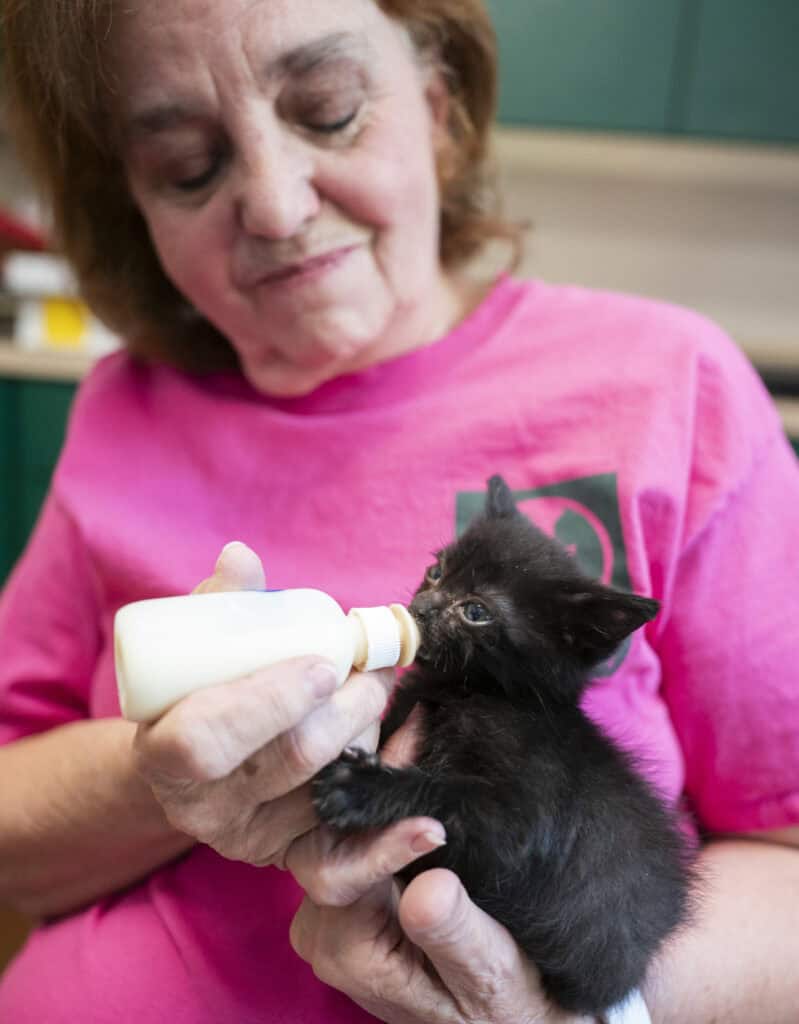
“Meechee makes me laugh, and you need to laugh. I recently lost my mom, and so it was good to have Meechee around, because it was something cheerful and happy,” Woolaghan said while feeding the kitten.
“You feel good that you helped them, and it makes you feel better about yourself, like you’re a better person, that you’re doing something good,” Woolaghan said. “Kids and animals can’t speak for themselves, so both of them I feel for, but animals are easier for me to deal with than kids. I’m better with animals.”
Brehler said there are several ways the community can help the shelter make it through kitten season.
“The best way to help us during kitten season is, if you’ve been thinking about adopting a cat or kitten, come on down and adopt, bring them into your home. If you’re not ready to adopt but you have some time and you’d like to help out, you could take a cat or kitten into your home and foster them,” Brehler said. “We also need supplies, a lot of kitten formula, kitten food, toys for them to play with. And of course, always financially, our resources get really strapped in the summertime during kitten season.”
Visit humanesocietyofsedona.org/volunteer or call 928-282-4679 for more information about fostering shelter animals.