


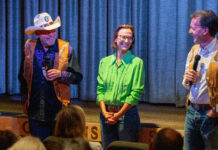









On April 25, the Verde Valley Archaeology Center and Museum opened the exhibit “Tim’s Cave Reimagined: Stewarding a Cultural Collection.”
This exhibit tells the story of the sighting of prehistoric artifacts by helicopter, a recovery effort by the U.S. Forest Service, a theft and federal investigation, while weaving in the history of the ancestral Hopi and the importance of visiting sites with respect.
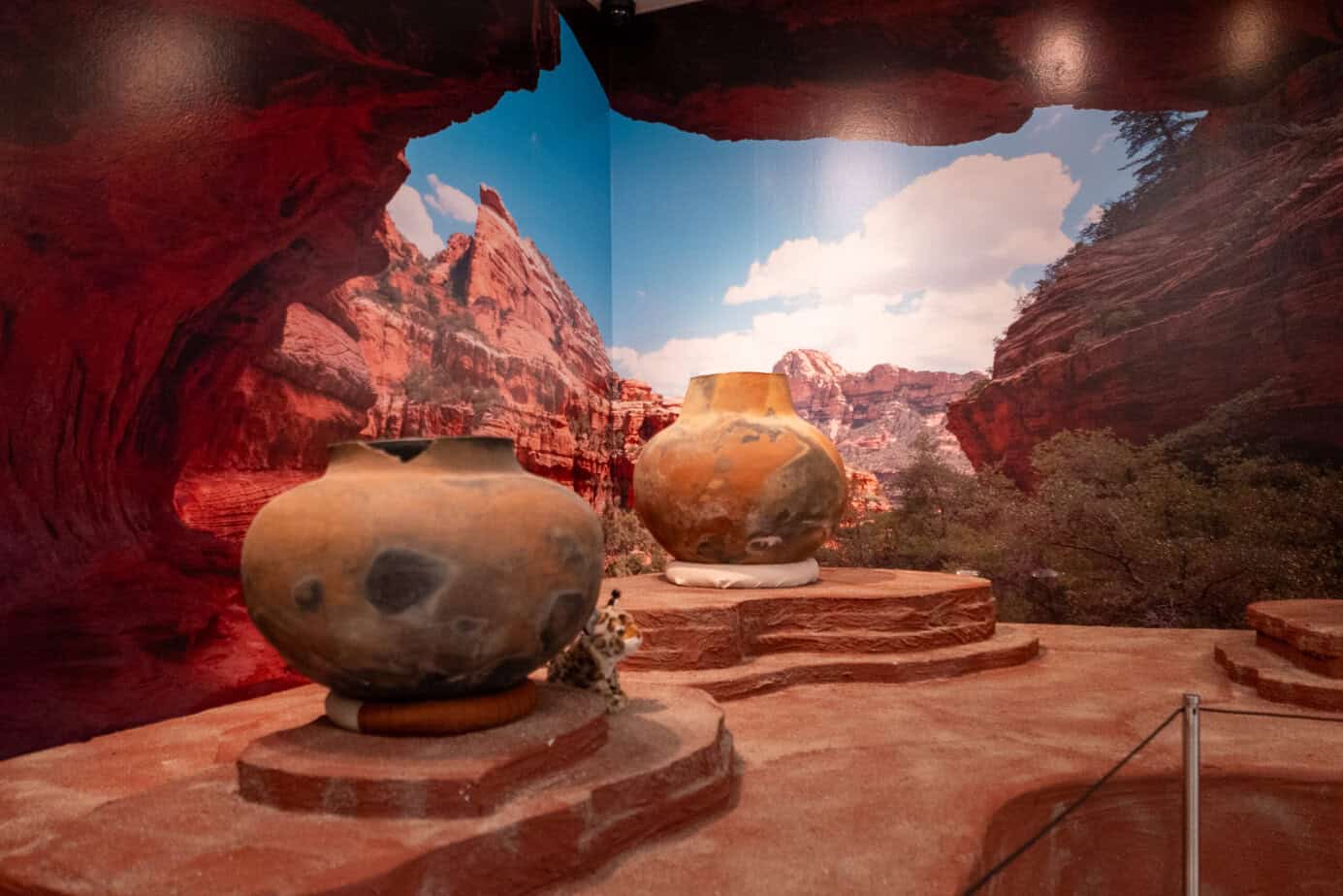
On July 21, 1991, Andy Seagle, one of five passengers on a helicopter tour, spotted a grouping of ollas at the mouth of a small cliff dwelling outside Sedona. The size of the ollas are significant, with the largest measuring two feet in diameter and weighing nearly 50 pounds. They were left at the cliff alcove around 800 years ago by the Sinagua, also called the Hisatsinom, the Hopi word for “the ancient ones.”
The Sinagua inhabited the Verde Valley region beginning about 500 CE to approximately 1400 CE, when they disappeared from the area. According to the National Park Service, some Hopi clans believe the Sinagua were their ancestors, as do the Zuni, though some Yavapai and Apache say not all Sinagua left, but instead integrated with their tribes.
Alongside three ollas, baskets and basket fragments were present in the cave, including a rare example of a painted basket.
Seagle had been on the tour in honor of his brother, Tim, who trained to be an archaeologist before his death at age 24 in 1976. Seagle reported what he saw to Peter J. Pilles Jr., then-forest archaeologist at Coconino National Forest. Pilles had previously worked with Tim Seagle and after making the connection between Andy and Tim, the site was called Tim’s Cave.
The USFS went to the site simply to document the artifacts, but after realizing that some items were missing, they launched a recovery effort to remove the items. Pilles led a 13-person crew on Aug. 2, 1991, including John Whittaker, Neil Weintraub, forest archaeologist for the Kaibab National Forest and other USFS employees to retrieve the remaining items.
The theft launched a federal investigation that made national headlines. After 15 months, the items were returned to the Yavapai-Prescott Tribe in Prescott on Oct. 12, 1992. The artifacts were then turned over to the U.S. Forest Service, who placed the artifacts at the Museum of Northern Arizona. MNA catalogued and stored the items until December 2024 when they were transferred to VVAC, which is now the custodian of the collection in perpetuity.
The exhibit re-envisions the narrative of the cave by providing cultural context and highlighting the history and achievements of the Sinagua, like their complex social structures and pottery crafting.
“For people who reside in Sedona and visitors to the area, it’s paramount to understand the context of the land and the incredible cultures that still exist, as well as their cultural material,” VVAC’s Executive Director Monica Buckle said. “This exhibit is something to be celebrated because of the achievements of the Native Americans that masterly created these remarkable ollas. Sedona and the Verde Valley can help amplify the legacies of the various cultures that have come and gone for millennia through this region, and cherish that cultural integrity.”
The exhibit emphasizes the significance of the tribal collaboration integral to the process of naming heritage and cultural sites in present-day. It also features easy ways people can enjoy sites while visiting them respectfully.
“There’s nothing like it,” Buckle said. “There truly isn’t. The caliber of the exhibit, the thoughtfulness of the intention, the exhibit narratives, the display and the understanding that it’s not just ancestral objects that should have reverence, but the appreciation that people inhabit spaces and what those spaces or places then become in collective memory. If you’re looking for a cool indoor alternative for a summer excursion, come visit the Tim’s Cave Reimagined exhibit.”
The exhibit will be open one year.
The museum will operate on summer hours starting Monday, May 18, and will be open Thursdays, Fridays and Saturdays from 10 a.m. to 4 p.m. with last admission at 3 p.m. until Labor Day, Monday, Sept. 7.
Visit verdevalleyarchaeology.org for more information.