














3 died at makeshift sweat lodge at Cornville retreat center in 2009
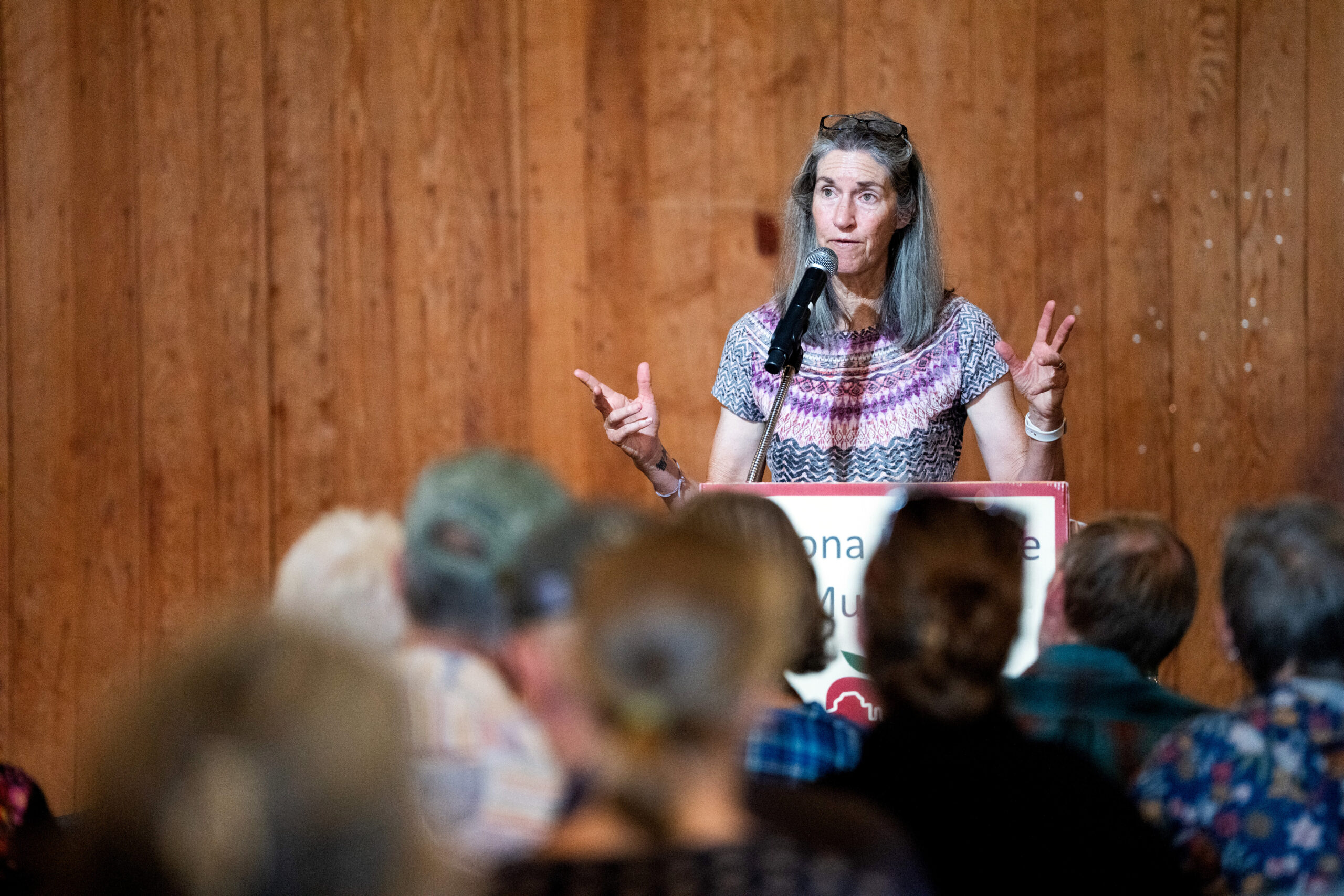
The quest for enlightenment left three dead in the wake of a 120-degree Fahrenheit self-constructed sweat lodge. Their deaths was the topic of the fall’s first Sedona Heritage Museum’s Speaker Series as author Annette McGivney presented “Plastic Shaman,” her new book investigating the Oct. 8, 2009, event led by James Arthur Ray at Angel Valley Retreat Center, five miles southwest of Sedona.
The ceremony was part of Ray’s $10,000-a-head “Spiritual Warrior” five-day retreat that he sold as an authentic Lakota Sioux sweat lodge, falsely claiming that he had been trained by a Lakota medicine man in how to conduct his ceremony. Kirby Brown, 38, of Westtown, N.Y., died from heat stroke; James Shore, 40, of Milwaukee, died from organ failure due to hyperthermia; and Lizbeth Neuman, 49, of Prior Lake, Minn., died Oct. 17 at Flagstaff Medical Center after being in a coma. Ray held retreats at Angel Valley beginning in 2003.
Ray was found guilty on June 22, 2011, and sentenced on Nov. 18, 2011, to two years in prison on three counts of negligent homicide; the judge allowed his sentences to run concurrently, though Ray had originally faced up to nine years.
“How does someone who killed three of his clients get to go back into the same business he was running?” McGivney said, about Ray, who returned to the New Age circuit after prison. “There’s no regulation in the self-help and wellness industry. You’ve got to be licensed to cut someone’s hair, but you can call yourself a shaman and charge people money to hold ceremonies.”
Ray fit 56 people inside the sweat lodge, while Lakota tradition typically calls for eight to 10; while traditionally Lakota did four rounds in the lodge he went for eight. While traditional sweat lodges are covered with blankets to allow for breathability, Ray’s was covered with plastic tarps.
“It was continually brought up that Ray warned participants beforehand his sweat lodge was more intense than others, and those inside could feel like [they] are going to die,” the NEWS reported during the trial in June 2011. “The defense argued other factors beyond Ray’s control could have contributed to the deaths. In the end, the jury felt Ray was responsible for the deaths the state argued could have been prevented.”
McGivney noted that Ray coached his sweat lodge participants to ignore the symptoms of heat illness and heatstroke, telling them “beforehand that they’d throw up, pass out, feel like they might die — but you’re not gonna die, because overcoming fears of death leads to enlightenment.”
Even after the deaths, Ray’s methods continued to deny the material reality of the aftermath of his “ceremony.” When he held a private conference call with retreat participants a few days later, he urged them to eat healthy, exercise, rest and surround themselves with “like-minded individuals,” according to an Oct. 15, 2009 report by NBC News.
In 2008, Ray published a best-selling book “Harmonic Wealth,” which pushed this idea that one can make money and also be spiritually enlightened, which was fortuitous timing with the onset of the Great Recession.
“There was a lot of desire in the U.S. population about how to get by, like how to overcome struggles, how to make your mortgage payment, and like can you manifest your mortgage payment? James Ray has the answer for you,” McGivney said.
“Indigenous cultures are more about living together as a group and sharing resources,” McGivney said. “In the United States, you’re kind of a self-made man, pioneer grit and all that. The self-help industry really capitalizes on that.”
Indigenous Perspectives
“I began investigating this other aspect of this tragedy, which is the harms caused to Native American people by cultural appropriation, especially through these wellness, so-called plastic shamans, who are what Native Americans call white people, who lead ceremonies and sell their spirituality for money without any permission from indigenous people,” McGivney said.
McGivney added that she prefers to do investigations after the initial flurry of media coverage ends, which is an approach similar to the one she took for her book “Pure Land,” about the 2006 murder of Japanese tourist Tomomi Hanamure in the Grand Canyon.
Ray died on Jan. 3, 2025 at age 67. He remained active in the self-help industry post after his stint in prison, hosting a podcast with his wife and offering $2,500 one-on-one video sessions with clients.
“There’s this inherent contradiction in Sedona,” McGivney subsequently said. “The economy relies on vortex tourism, shamans, New Age crystals. Is that the right thing to do? And if there was a shift away from it, how would that impact the economy?”