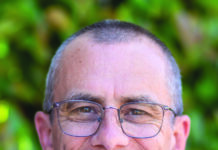










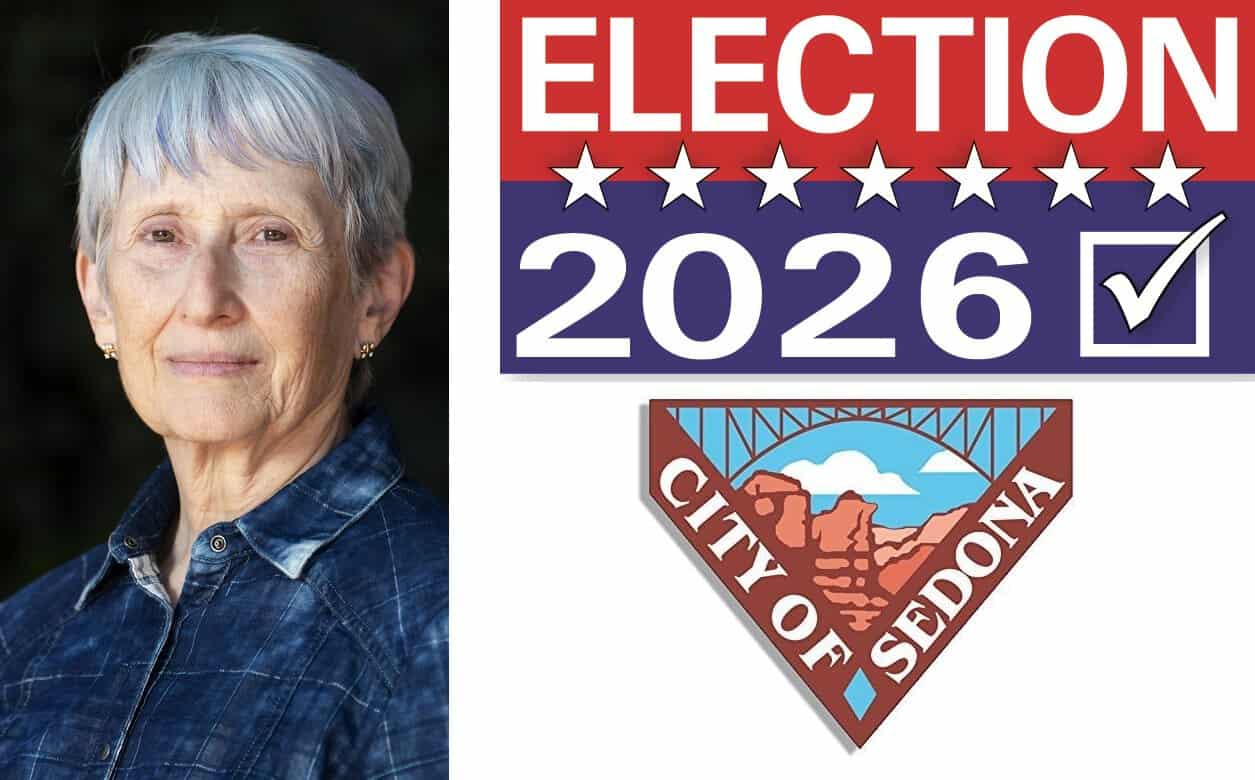
Melissa Dunn is an incumbent Sedona city councilwoman, first elected in 2022 and seeking reelection as one of five candidates running for three open seats on the Sedona City Council.
Candidate Profile
- Sedona City Council candidate Melissa Dunn
- Time in Sedona: 16 years
- Professional and personal background: Melissa Dunn earned a master of arts degree in sociology and a master of science degree in human computer design and engineering. She was a principal product architect at Microsoft; director of product development and search engine technology at Sears Digital; and director of digital product development and research at Argos/Sainsbury UK. She is a certified hatha, yin and restorative yoga instructor.
Questions
What is your vision for the Western Gateway / Sedona Cultural Park? Do you support or oppose the restoration of the Georgia Frontiere Performing Arts Pavilion?
I’m not opposed to a community amphitheater at the Gateway, but only if there are clear conditions: It must come at no cost to the city, operate under a fair-market lease, provide real community benefit, include approved noise, traffic and parking mitigations and protect dark-sky viewing. It also must reflect the priorities residents ranked higher in the survey, such as festival grounds, a recreation center and smaller gathering spaces. Once those higher-priority spaces are decided — at the Gateway or elsewhere — we’ll know how much land is still available, which will determine the amphitheater capacity.
Do you support crossings over Oak Creek outside city limits? What other alternative routes do you support and how would you pursue them?
Oak Creek crossings could help reduce traffic at the “Y” for drivers trying to reach State Routes 89A from 179 before entering the business district. I’m open to any route that proves workable, cost-effective and does not negatively change residential areas. So far, most of the suggested routes cross Forest Service or state park land and passes through or near neighborhoods.
While the goal is to give residents a way to bypass the “Y,” we’ve seen with Brewer Road that visitors often use the same bypass, sometimes causing slowdowns at Brewer and Ranger Road. Visitors may stop to take photos of the creek and scenery, similar to what happens along the 179 Scenic Byway, creating new traffic issues.
More than one crossing may be considered, which would mean more roads to police and maintain.
How will updates to the city of Sedona’s Land Development Code address affordability, residential and commercial development while still balancing what makes Sedona unique?
The LDC covers many parts of development, including densities, signs, lighting, fences, screening, building height, colors, massing and landscaping. These rules protect Sedona’s character by blending development into the environment and keeping important views open. The LDC also gives us ways to allow housing types we don’t currently support, such as duplexes, triplexes, cottage homes, prebuilt homes and homes built with modern materials.
We can use the LDC to streamline permitting and reduce costs, building on the Development Incentives & Guidelines for Affordable Housing. Deed restrictions can help prevent family homes from becoming short-term rentals. The city is already creating a Verde Valley–wide catalog of ADU and single-family home designs that can bypass the review process if unchanged, moving straight to the site-map stage.
Zoning and DIGAH need updates, along with efforts to reduce processing time. Next year, duplex and triplex designs will be added to the catalog. As we make these changes, it’s critical we keep building quality high and stay within LDC guidelines that protect Sedona’s scenic beauty and unique character.
What plans do you have to alleviate traffic congestion?
There are two main ways to reduce congestion: Disburse traffic or remove traffic. We are working on both.
Efforts like adding signaling at the “Y,” creating alternate routes such as Portal Lane and the Forest Road extensions and reducing pedestrian-car conflicts all help spread traffic out. At the same time, reducing traffic by offering safe, practical alternatives — like useful shuttle routes and shared-use pedestrian and bike paths — cuts air and noise pollution, shortens travel times, reduces accidents and improves overall quality of life.
Traffic disbursement requires coordination with other jurisdictions. Traffic reduction, however, is fully within the city’s control.
I don’t believe we can convince all locals and tourists to stop driving around town and visitors passing through are unlikely to do more than park for a few hours. But by working together with residents, lodging partners and the tourism sector, we can build a city where alternate ways of getting around are both possible and preferred.
Essay
Four years ago, I focused on three main ideas: Community, environment and accountability.
Even though some issues have changed, my commitment remains. My record shows it. I’ve taken part in more than 80 decisions to improve parks, recreation facilities and community events. I’ve supported building 11.9 miles of shared-use paths and maintaining 32.7 miles of streets. I’ve supported trailhead and on-demand shuttles, diverse types of housing and higher fines and fees for short-term rentals. I’ve also supported community conversations, more funding for arts and culture, evacuation planning, emergency sirens, better police radios, hiring an emergency coordinator and much more.
I’ve remained focused on protecting our environment. I supported more than 20 decisions to reduce noise and air pollution from traffic, lower heat impacts and increase shade. Shuttle services have helped remove over 350,000 car trips since 2022. I’ve supported heat-mapping projects, the home-retrofit program, buying creekside land and testing heat-reflective asphalt. All these steps help protect and improve the place we love.
When it comes to accountability, I supported over 10 policy changes that saved over $100,000 in interest payments, added more than $58 million to city reserves and helped start a performance-audit working group.
But there’s still more to do. If I’m re-elected, I’ll work to improve existing community spaces and create new ones. I will support neighborhood and city-wide gatherings and make sure everyone knows what’s happening through a single community calendar. I’ll work to help stabilize our population by attracting and keeping families through affordable housing options — some rentals, some ownership — while still protecting our community’s character and density. I’ll also keep pushing for more open conversations between residents, council and staff.
I’ll work with our lodging partners to make better use of trailhead and on-demand shuttles, so more cars stay parked. I want to expand on-demand shuttles to seven days a week with longer hours, so we can use them to get around town or enjoy a stress-free night out. I’ll continue supporting projects that keep Sedona clean, green, resilient and sustainable. I’ll also support reasonable purchases and projects that protect our natural resources and keep Sedona a peaceful, beautiful place to live.
Finally, I’ll keep working to make city projects and costs easier to understand. That means strong performance metrics, outside audits, clear dashboards and reports everyone can access.
I hope you’ll give me the chance to keep working for a vibrant Sedona — a place where young families, entrepreneurs, artists, seniors and visitors all thrive, surrounded and inspired by the red rocks. Together, we are Sedona.
Sedona City Councilwoman Melissa Dunn is one of five candidates running for one of three open seats on the Sedona City Council. Election day is Tuesday, July 21.
Sedona City Council Election
Lita Loesch Boyd, Jean-Christophe Buillet, incumbent Councilwoman Melissa Dunn, Rich Gay and Tony Hauserman are running for three open seats on the Sedona City Council.
Vice Mayor Brian Fultz and Henry Silbiger are running for Sedona mayor.
Election day is Tuesday, July 21.