













Council OKs parking vendor contracts, will vote on lot fees
During its May 12 meeting, the Sedona City Council discussed the proposed Uptown parking rates and provided direction to staff; however, a rate approval faces a 60-day comment period before a possible vote at council’s meeting on Tuesday, July 14.
Councilwoman Charlotte Hosseini was absent.
Proposed Fees
The proposed fees would apply from 9 a.m. to 6 p.m. seven days a week, and have two rate tiers: Non-seasonal rates would be in effect in January, February, June, July, August and December while tourist season rates would apply in March through May, and September through November.
The Uptown Parking Garage would have a non-seasonal hourly rate of $2.50 and a seasonal hourly rate of $3.50. The garage is currently anticipated to be completed by early July, with the fee hours from 9 a.m. to 6 p.m., no overnight parking — midnight to 5 a.m. The garage’s projected annual revenue is $1.6 million to $1.7 million.
Meters along State Route 89A would have a non-seasonal hourly rate of $4, and $5 an hour for the seasonal rate. Staff recommended 15 minutes of free parking for quick dropoffs and pickups and no parking from midnight to 5 a.m. Staff anticipates $665,000 in revenue annually from the meters.
For the surface lots outside, not including Lots 3, 4 and 5, there would be a five-hour maximum at $3 per hour non-seasonal and $4 per hour seasonal for the first three hours. The rates for beyond that would increase and cap at the five-hour max rate of $24 in non-seasonal periods and $32 seasonal. No overnight parking from midnight to 5 a.m., and fee hours of 9 a.m. to 6 p.m.
“The Sacajawea [Lot 3] and Matterhorn [Lot 4] lots, we do not have plans at this point to implement a fee on these lots, but there is a possibility of doing that in the future,” Dickey said.
Total annual expenses for the Uptown Parking Garage through 2031 are $1.3 million annually; transportation administration costs roughly $200,000 annually through 2031; and a parking management system cost of $452,202 for Fiscal Year 2027, with a later average annual cost of $244,000 through 2031.
The combined total revenue from the Uptown Parking Garage and the new fee structure has an annual anticipated revenue of $3.5 million against an anticipated annual total cost of $1.7 million.
“For estimated revenue, the city used occupancy data from the city’s pay stations and Passport’s pay-by-phone app, which showed an average of 65% occupancy across the calendar year, 9 a.m. to 6 p.m.,” according to the council packet.
The city intends Uptown Parking revenue to go into an enterprise fund with parking fees paying for the parking program and that the city would not use general tax dollars.
Employee Parking
Where Uptown employees will park under the new plan remains unresolved. That was the central concern raised by speakers from the public and is one of the tasks assigned to the Parking Work Group Advisory Committee formed in January.
“Just doing the quick math on this, I got a lot of employees [in Uptown], and it’s going to be about a million dollars per year expense on the employee side for us,” L’Auberge de Sedona General Manager Kevin Pickard said during the public comment. “I’m doing quick math from the $2.50 hour times 150 employees a day, times 365 days a year. So I just want to make sure that we really look at it as a huge expense, and we got to figure it out.”
Council and staff acknowledged the problem but offered no solution. However, council and staff plan to discuss employee parking during the July 14 meeting in addition to parking rates for Lot 5.
“We’ve never thought that employees would be required to pay these rates,” Dickey said. “That’s never been a thought of the work group or staff, or I’m assuming council, either.
“We have some … private lots that are an option to do a lease on [for employees]. That would allow not only a reduced cost for some sort of employee parking program, but it also accounts for that significant piece of the overall parking demand. We hear a lot of rumors that the city’s closing all these lots, these parking lots, and there’s a net reduction — that is absolutely not the case.”
Communications
The city’s issue with communications on parking later drew a brief council and staff discussion over public outreach.
“I’m a little bit concerned about the public outreach and I think people have recently been advised that these parking discussions are taking place, but there’s so much misinformation,” interim Mayor Holli Ploog said. “How does that happen? And I would say that it happens because we aren’t providing accurate information.”
City Manager Anette Spickard responded that staff has done sustainable outreach on the parking program: The prior transportation manager was “practically going door-to-door, trying to pass out information, encourage people to take our survey” along with meeting with residents and the Sedona Chamber of Commerce promoting the survey.
“We’ve had communication with many of these people who are creating this communication, and for the last year, we’ve heard a lot about the misinformation, and I can only say that it appears intentional,” Dickey said.
Vendors
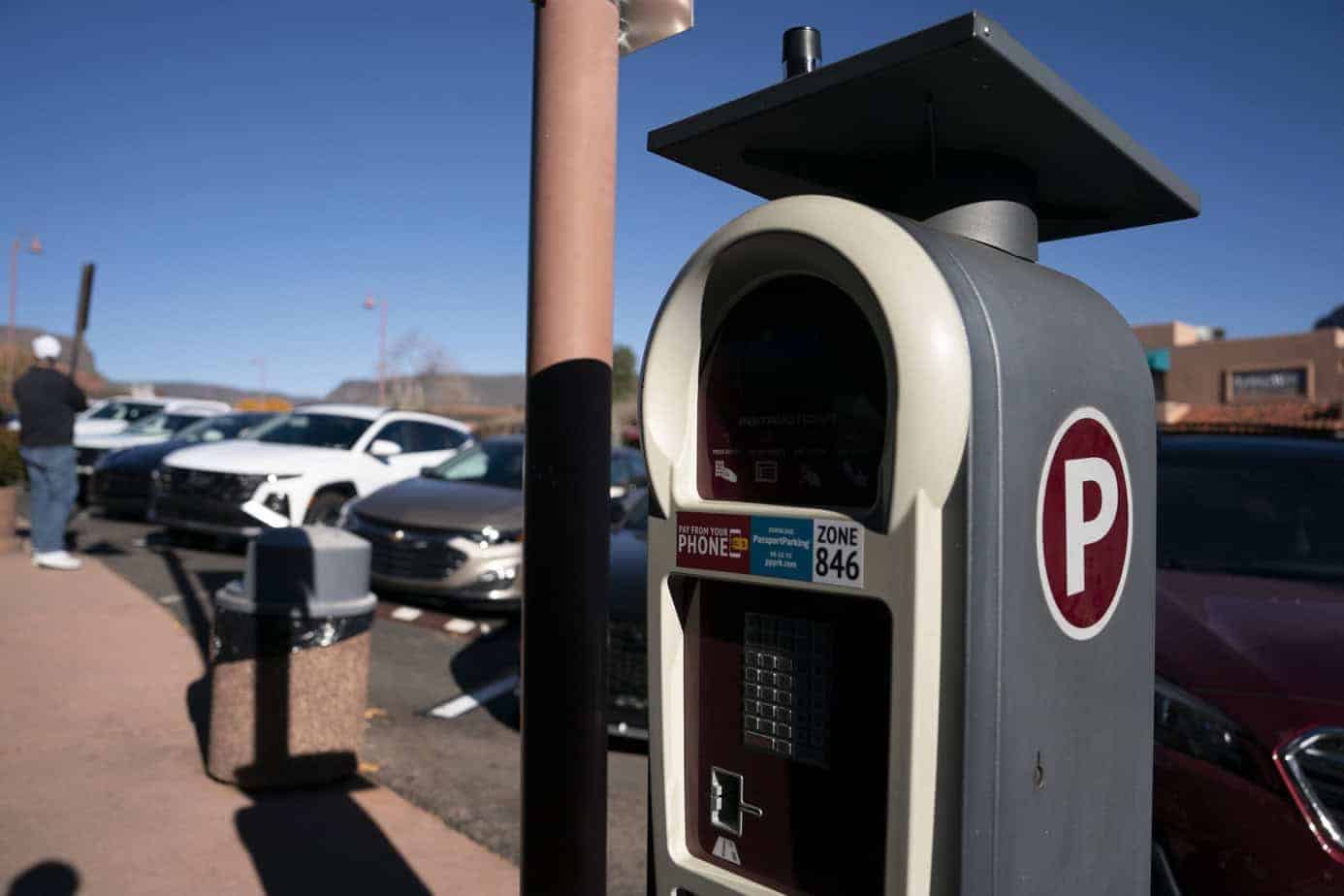
Council unanimously approved four five-year contracts with vendors to administer the parking program technology. The vendor most users will interact with is Arrive/ParkMobile which will handle mobile payments. MacKay will manage the physical pay stations; Park Loyalty will oversee enforcement, permitting and violations management; and SpotGenius will monitor parking occupancy. The total cost for all four vendors for the first year is $273,719 and the average annual cost of all four vendors is $75,000 for the remainder of the contracts.
E-bikes
Council will discuss a possible ordinance to move bicycles and electric bikes off city sidewalks at a future meeting, following a request from Councilwoman Melissa Dunn, who received support from Councilman Derek Pfaff and Ploog.
Dunn argued the city’s narrower sidewalks are not well-suited for shared use by pedestrians, bicycles and e-bikes, and asked whether council would be interested in crafting an ordinance governing bicycle use on sidewalks.
“Remembering that we can always take some of those sidewalks and we can expand them out like we did on Shelby and turn them into shared-use paths, which would support less pedestrian-bicycle conflict,” Dunn said.