













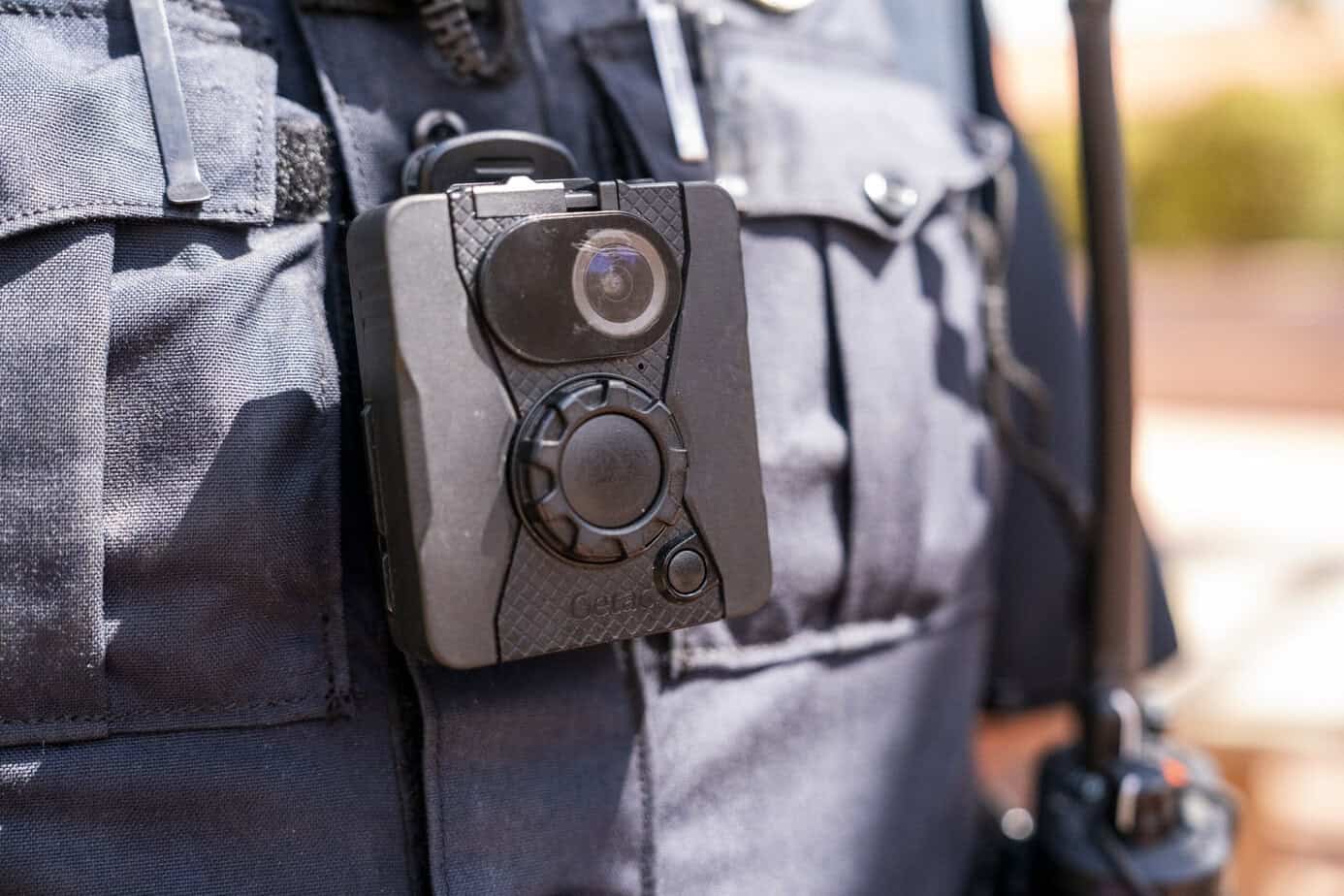
With a 5-0 vote on Aug. 26, the Sedona City Council unanimously approved a five-year $1,199,393.15 agreement to purchase 39 Tasers and associated cartridges, replace 30 patrol car cameras, replace officer-worn cameras and software for the Sedona Police Department from Scottsdale-based Axon Enterprise Inc.
Councilwoman Melissa Dunn and Councilman Pete Furman were absent from the meeting. Axon sales representative Adam Smith attended virtually. One member of the public spoke against the agreement.
“What’s important to emphasize with this contract is that this is replacing existing equipment, just refreshing and replacing things that we already have,” Executive Assistant to the Chief of Police Jessica Bryson said. “Aside from some newer training tools … we’re not adding any equipment. … and all the public facing equipment that we have is going to be remaining the same. So we’ve been using the same type of equipment since the early 2000s. It delivers transparency and accountability to our community aids and officer safety services as an evidentiary tool and mitigates liability for our city.”
However, one major potential for change was raised during council’s work session discussing the city’s now indefinitely paused automatic license plate reader program on Aug. 13 when Furman asked SPD Police Chief Stephanie Foley if ALPRs are in SPD patrol cars.
Foley confirmed the Axon patrol cameras have the ability to scan license plates and to integrate with the Flock Safety Inc. system but SPD currently has not been authorized by council to do so.
“Is that on your to-do list in the future?” Furman asked Foley during the Aug. 13 meeting.
“Ideally,” Foley responded. “But we really need to understand and use the system that we have in place first.”
“If we made a decision in the future to put [ALPRs] in cars, would that also be a policy discussion at some point?” Furman asked.
City Manager Anette Spickard said doing so would be a matter for the City Council to decide.
However, the installation of the city of Sedona’s Flock network was done without direction from a majority of council and according to an Aug. 17 memo from Spickard and Foley to council, instead appears to have been driven by a desire from Mayor Scott Jablow.
The replacement of body worn cameras is a project that was supposed to be a higher priority than the purchase of ALPRs, which was authorized by Spickard in January.
Included in the Axon purchase is a software license to use ALPR technology in the purchased patrol car cameras that is not currently activated.
“What’s the safeguard against somebody going rogue and saying, ‘let’s turn on the ALPR capability,’ when, at the moment, that’s a hard no,” Councilman Brian Fultz asked Foley during the Aug. 26 meeting.
“It would be that we’re not doing it, because it’s not what’s in our contract,” Foley responded. “So, if that was going to happen, it would be one of us to make that adjustment that has the authority to make adjustments to the contract. So, it wouldn’t happen unless somebody that’s sitting here authorized it.”
At the table with Foley was Patrol Cmdr. Chris Dowell, who was the only person in SPD with access to the city’s Flock network, which was turned off after the Aug. 13 meeting.
“Usually it’s only one or two people that have that super admin privilege within the department,” Smith said and added doing so would first require SPD to give approval to Axon to turn on that functionality.
Axon can store gathered license plate data for up to five years.
The Sedona City Council is scheduled to resume its discussion of ALPR with its potential citizen ALPR work group as an agenda item during its upcoming meeting on Tuesday, Sept. 9.