










Northern Arizona is a hodgepodge of jurisdictional overlap between municipal, state, county and federal governmental bodies, so the agencies that manage public lands coordinate wildfire response conditions in the late spring and early summer before the monsoon arrives to extinguish wildfires and reduce fire risk.
The English word “monsoon” comes from Portuguese “monção” or early modern Dutch “monson” both transliterations of the Arabic word “mawsim,” which means “season” after early Portuguese and Dutch merchants first encountered the weather phenomena after expanding their trading empires into the Arabian and Red Seas and the Persian Gulf in the early modern period. So the erroneous “monsoon season” by newcomers to Arizona are literally saying “season season.” Arizonans, instead simply say “the monsoon” to correctly refer to our summer rainy period.
The Asian monsoon on the Indian subcontinent has been a weather phenomena for about 8 million years, long before the first modern humans evolved in Africa and spread to the region, adapting to the annual summer rains coming from the Arabian Sea and Bay of Bengal.
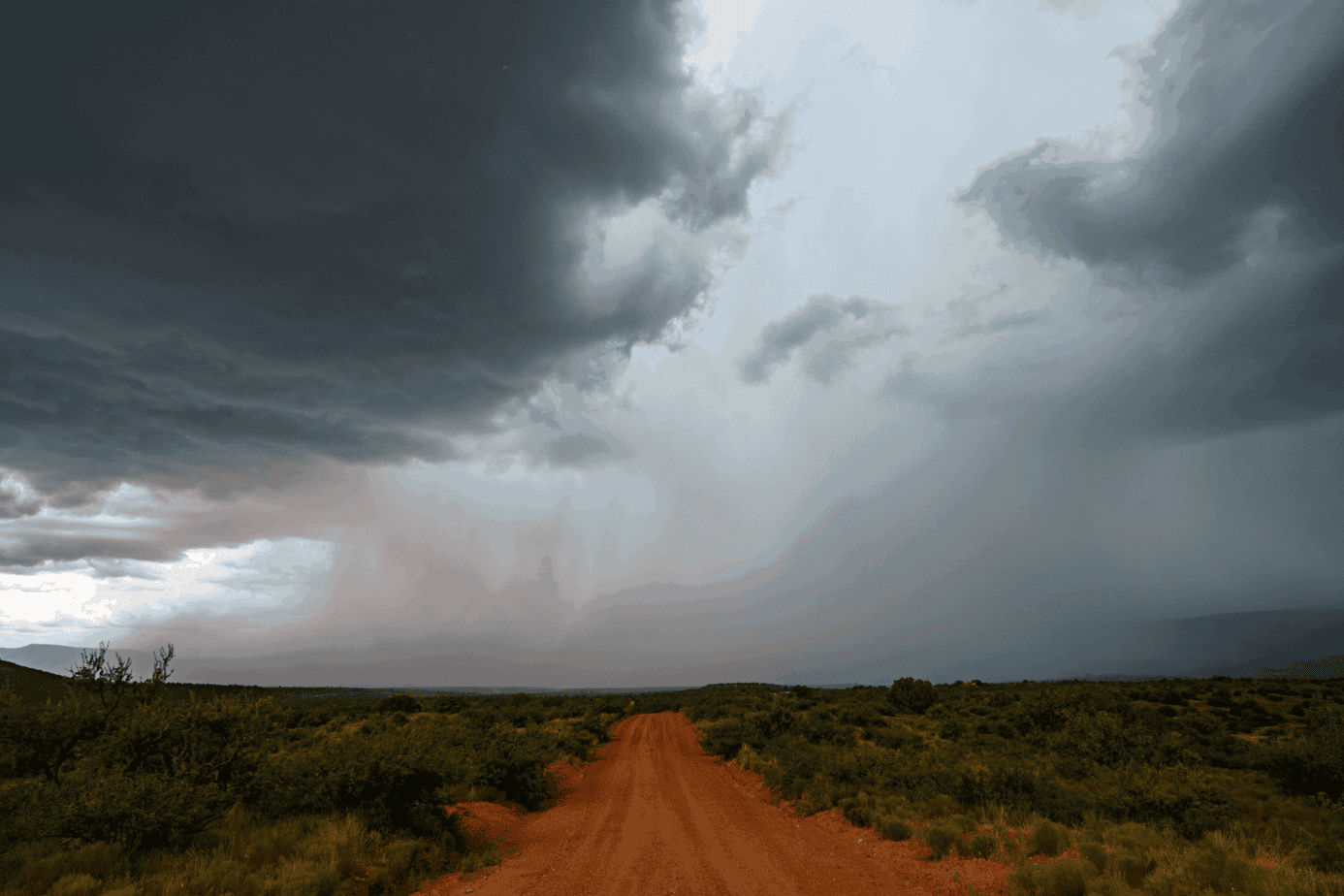
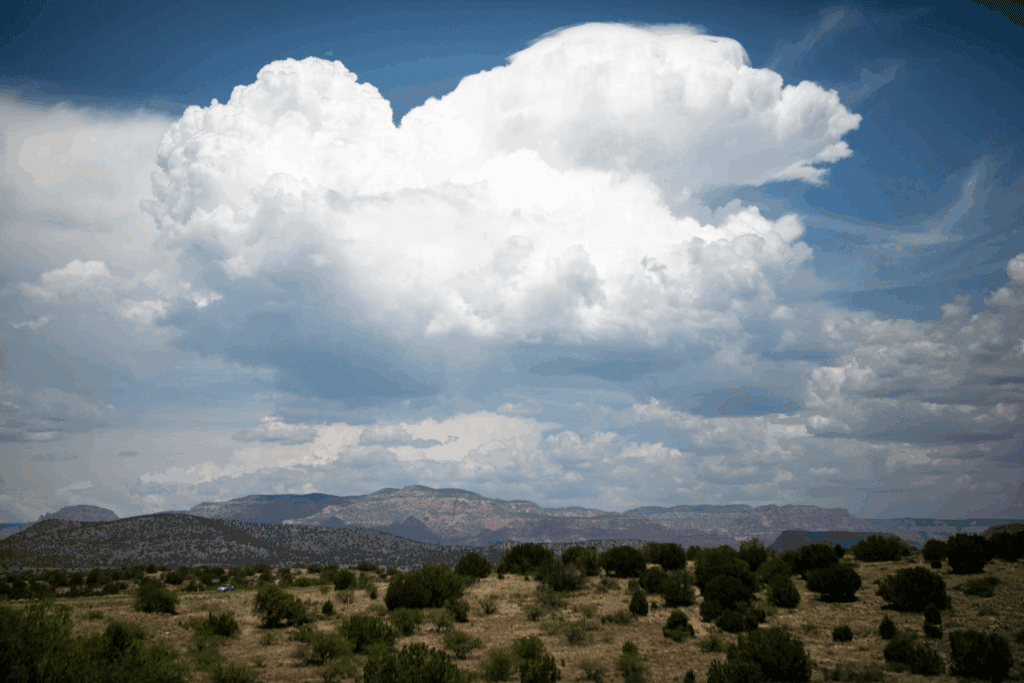
The Northern American monsoon is created by a thermal low over northern Mexico and the desert Southwest of the United States that brings moisture up from the Gulf of Mexico over the mountains of northern Mexico and into Arizona and New Mexico as far north as Utah and Nevada, or up from the Sea of Cortez and the eastern Pacific Coast. The rains from central Mexican storms tend to be lighter and more sustained, while those coming from Baja tend to be heavier and wetter especially as they pass over the Verde Valley, then hit the edge of the Mogollon Rim, dumping rain before rising up over the Coconino Plateau.
But before the monsoon arrives, the hot Arizona summer brings an increased risk of wildfires.
The National Park Service, U.S. Fish and Wildlife Service, Bureau of Indian Affairs, Arizona Department of Forestry and Fire Management, U.S. Forest Service and Bureau of Land Management coordinate through the Arizona Interagency Wildfire Prevention, which announced Stage 2 fire restrictions on June 17.
The Sedona Fire District, Coconino County, Yavapai County and the Coconino National Forest announced June 16 — with the Arizona Department of Forestry and Fire Management which made a similar announcement for state lands on June 17 — that Stage 2 fire restrictions would go into effect June 18.
Stoves or grills fueled by propane, pressurized liquid petroleum or pressurized liquid petroleum gas and indoor fireplaces are allowed.
Under Stage 2 fire restrictions, the following are prohibited:
- Igniting, building, maintaining, or using a campfire or fire with charcoal and briquettes, smudge pots and wood stoves anywhere within the Coconino National Forest, state lands, public lands in the jurisdiction of Coconino County or Yavapai County and/or the SFD, including developed recreation sites. Violating a campfire restriction is a Class B federal misdemeanor, which may incur fines up to $5,000 and/or imprisonment up to six months with civil restitution.
- Smoking outside. You can still smoke inside an enclosed vehicle or building, at developed recreation site or while stopped in an area at least 3 feet in diameter that is barren or cleared of any flammable material, like on the sidewalk or outside a business.
- Welding, blasting or operating an acetylene or other torch with an open flame.
Within specific areas of the Flagstaff Ranger District motorized vehicles will be prohibited on forest roads of the San Francisco Peaks area, Pumphouse Wash area and Marshall Lake area.
From 9 a.m. to 8 p.m. the USFS has also banned operating a generator, chainsaw or equipment powered by an internal combustion engine for felling, bucking, skidding, processing, road building and woodcutting during industrial operations or firewood gathering capable of igniting a fire. However, there’s an allowance for certain devices with spark-arrestors.
- SFD won’t issue burn permits until restrictions are lifted and existing burn permits are suspended.
- Fireworks and pyrotechnic displays are banned.
- Discharging firearms, air rifles or gas guns, except while engaged in a lawful, permitted hunt.
- Vehicles cannot go off-roading and must stay on National Forest system roads.