










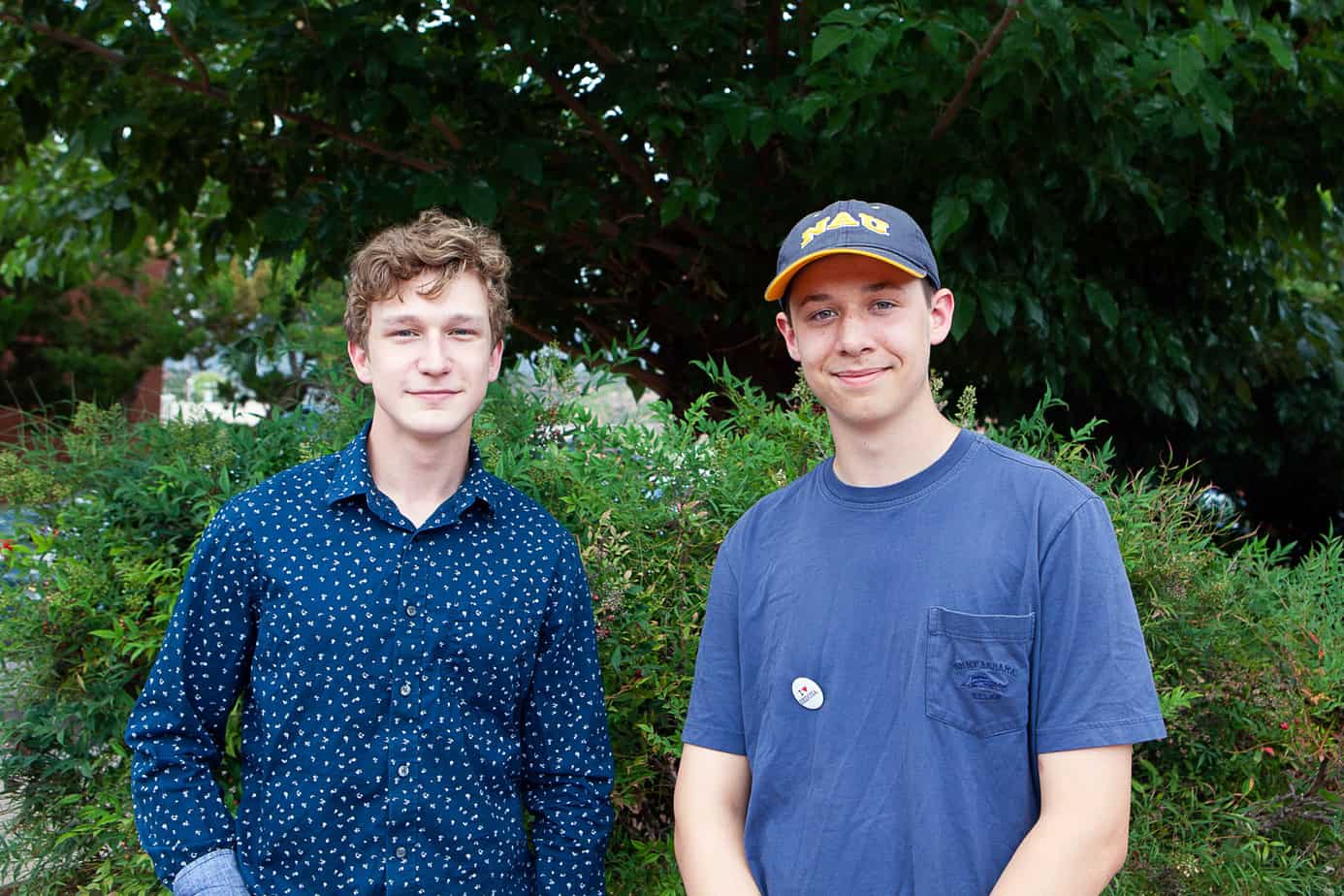
Two Arizona teens have their sights set on small-town Sedona with the ambition to make a big impact.
Environmental advocates Daniel Daines and Gannon Tulumello want to address an aspect of sustainability that often does not make the headlines: Bees and the impact they have on our society and economy.
Daines will be a senior at Arizona Agribusiness and Equine Center, a college preparatory high school in Prescott Valley.
Tulumello, a graduate of AAEC, will be attending Barrett Honors College at Arizona State University this fall. The two aspire to one day work in the political field as environmental spokesmen.
“Right now there is something happening called colony collapse disorder.” Tulumello said.
Colony collapse disorder is a phenomena caused when a colony’s worker bees disappear, leaving behind the queen and a few nurse bees to care for the immature bees.
CCD is a global phenomena that has affected several continents including North America, Europe, India, Asia and Africa.
In a study conducted by NPR, in conjunction with the Bee Informed Partnership, results indicated that in the United States alone, beekeepers lost an estimated 40% of their worker bees.
Beekeepers say this is bad because bees are vital to agriculture and food security. Honey bees specifically, via direct pollination, enable the production of over 75% of commercially grown crops in North America.
On an economic scale, bees contribute over $24 billion to the U.S. economy with their agricultural impact. The honey industry tacks on another $1.96 billion to United States economic output.
Daines and Tulumello want to use education as their main platform to inform the public on ways to mitigate the affects of colony collapse disorder.
“We think the time to take action is now. In our project specifically, we want to teach people about sustainability,” Daines said.
On June 11, the two met with Sedona City Manager Justin Clifton to propose a bee sanctuary with the Sedona Wetlands as their target implementation site.
Daines and Tulemello want to build a bee sanctuary alongside a large community garden so visitors can observe the tangible contributions bees make through plant pollination and their industrious honey production. The two hope that one day the site will be a destination for students in the surrounding area to learn about sustainability and the importance of bees.
The two stressed that one of the best ways to help bees in the community is to simply leave them alone. Extermination should be a last resort.
A personal apiary, which is a domesticated bee hive, is not for everyone. They have the potential to disrupt local bee hives by creating competition between colonies for food.
“Before helping out, it’s important to do your research to ensure you are not disturbing local hives,” Daines said.
“If you want to help them naturally, the best thing you can do to support them is to plant more flowers for natural feeding and pollination,” Tulumello added.
Daines and Tulumello picked Sedona due to the residents’ admiration for the environment.
“Sedona is a great place for this because people here want nature to thrive,” Tulumello said. “I don’t think this is just an idea that environmentally progressive people can get behind. It’s not left or right. Everybody can appreciate nature, especially people in Sedona. When we all come together to help out for the collective good, great things can happen.”
Tristan Decker can be reached at 282-7795 or by email to editor@larsonnewspapers.com