














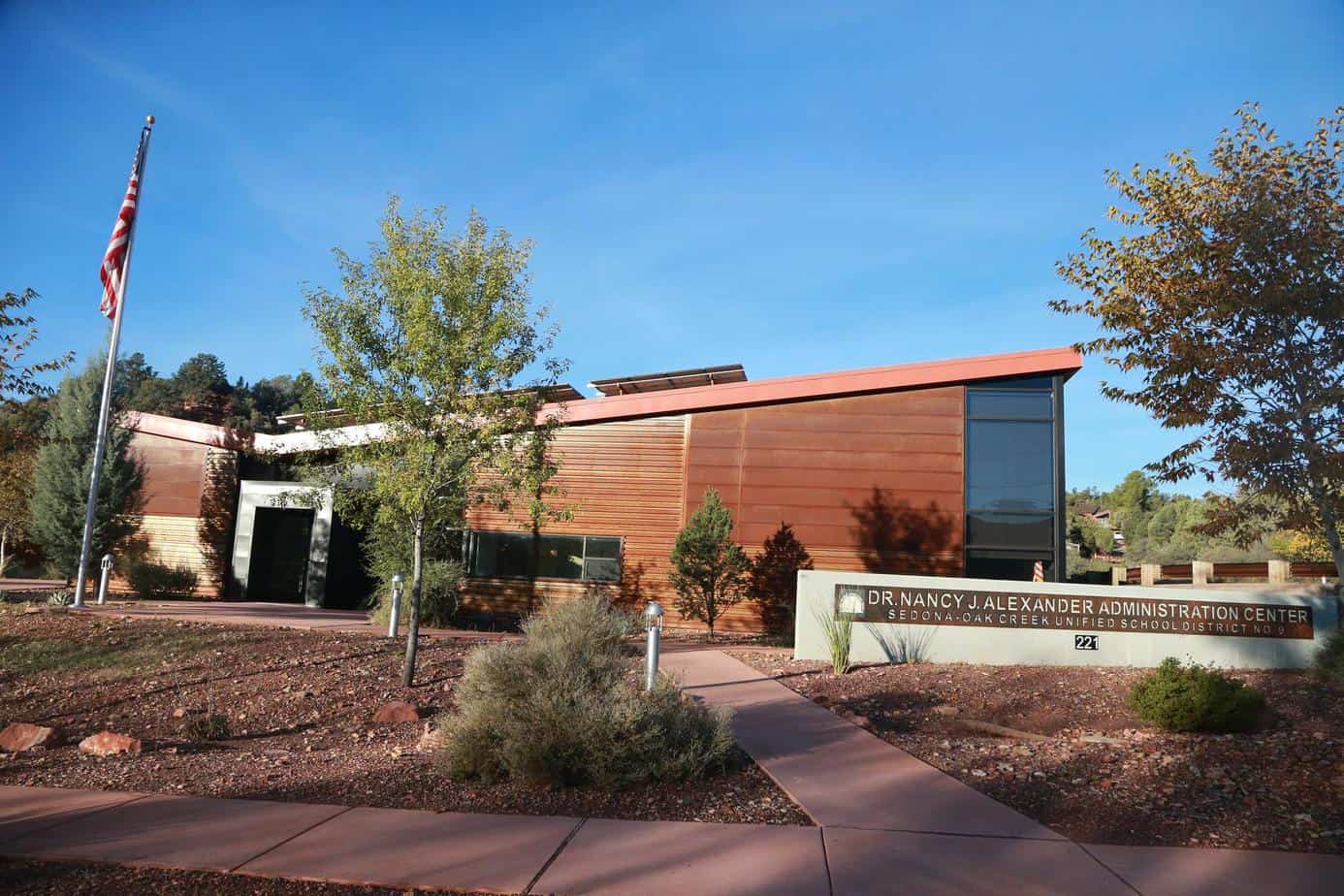
Much of the recent talk in Sedona-Oak Creek School District has been about declining enrollment and how it will impact state funding.
As recently as the Jan. 12 SOCSD Governing Board meeting, SOCSD Superintendent David Lykins said that declining school enrollment — as a result of declining population — is a trend throughout Yavapai County. To meet this alleged countywide challenge, the SOCSD administration has chosen a particular path: Lykins and SOCSD Finance Director Colleen Toscano presented five school restructuring models to the Governing Board.
According to the Arizona State Demographer’s Office, population estimates for Yavapai County predict a steady net increase of 1.4 percent to 1.6 percent annually over the next 10 years, adding between 3,271 and 4,477 new residents per year.
Coconino County numbers predict a steady net increase as well, although the rate of increase is predicted to slow to 0.9 percent by 2019, then remain steady thereafter, but still increase.
According to the U.S. Census Bureau, Yavapai County had 7,829 new residents between 2010 and 2014. Coconino County counted 3,245 new residents in the same time frame.
A comparison between local school districts also questions the veracity of Lykins’ claim of declining enrollment throughout the county.
“Our enrollment has remained stable with slight increases each year,” Cottonwood-Oak Creek School District Superintendent Barbara U’Ren stated via press release Jan. 15. “Knowing we have a choice of keeping the status quo or growing to meet the needs of the time, COCSD is looking forward to growing our culture.”
On Jan. 19, Mingus Union High School District Superintendent Paul Tighe said that his enrollment is “relatively stable.” Tighe added that each year experiences some fluctuation, but that the general trend is similar to that of COCSD. “Overall, our 10-year enrollment has experienced a 0.2 percent increase. The average line is flat.”
Concerning her district’s enrollment numbers, U’Ren stated, “This is good news, for it means that if we move to what is called current-year funding, where funding is not based upon the 100th day average daily membership but rather a series of averages the following year, we can still confidently plan for our staffing needs and offer contracts in April.”
U’Ren’s statement about current-year funding reflects the reality of stable or slightly increasing enrollment, standing in contrast to Lykins’ warnings about current-year funding — a legislative change that, if approved, would result in a more real-time analysis of enrollment, negatively impacting districts with declining student populations.
Currently, state districts calculate their budgets based upon numbers taken from the prior year — years, more typically than not over the course of the last decade, when SOCSD boasted higher enrollment.
According to Tighe, current-year funding is more volatile than prior-year funding, as budgets are adjusted according to month-by-month analysis of enrollment. However, current-year funding is an easier pill to swallow for district’s with relatively stable populations, allowing for more precise budgeting.
“If you have a district with declining enrollment, moving from prior-year funding to current-year funding, you get a double-hit,” Tighe explained. “There’s a big chunk of kids you don’t get funding for.”