


The Sedona Heritage Museum will host its free annual Veterans Day Tribute on Wednesday, Nov. 11, at 11 a.m.
The annual event celebrates the service of local veterans, and features Shondra Jepperson as master of ceremonies, with performances by Gail Edwards and bugler Brad Moors, speaker Terrie Frankel and representatives from all levels of government.
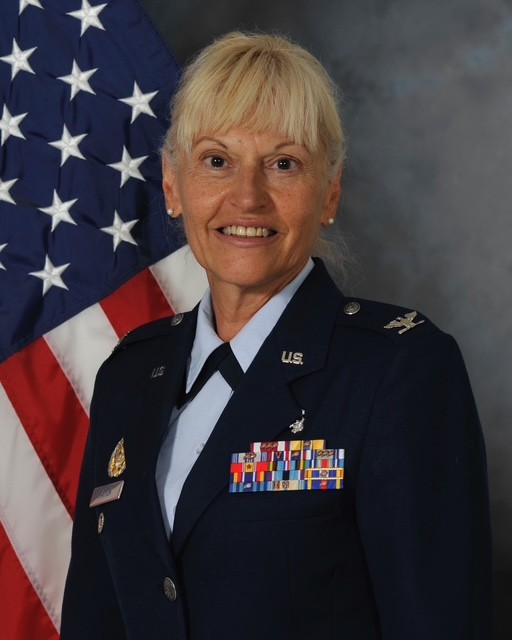
Judith Patton, 73, a retired U.S. Air Force colonel, will deliver the keynote address.
Patton has lived in Sedona for the past 21 years with her husband, John Skaneski, after falling in love with the Southwest and the red rocks.
She enlisted in 1982 and retired in 2014 after a career in the Air Force Medical Service, during which she earned the Legion of Merit.
“I worked in all the medical areas, in ground, policy and at the Pentagon,” Patton said. “The biggest part of the mission I’m going to talk about is patient evacuation. Because it’s what people relate to, with an audience of primarily veterans and their families and friends. The Air Force Reserve and Air National Guard handle most aeromedical evacuations because moving the sick and wounded is a wartime contingency mission, so it doesn’t fall as much to active duty.”
Patton is originally from Pittsburgh, but grew up in Queens, New York. Skaneski is from New Castle, Pennsylvania, a steel town north of Pittsburgh. The couple met in 1982 through the Air Force Reserve after he transitioned from active duty. They married in 1994.
“He’s also a retired colonel and a decorated Vietnam veteran,” Patton said. “In ‘82, I was enlisted, and I came into personnel. So basically, what you would think of as human resources, and then after that, I worked in public affairs, which is public relations,” Patton said. “So then I was an editor of the paper, I was a photojournalist, and then I also did civic leader tours and trips, and went all over the place with people in the community to help them understand our mission.”
From 1996 until 2007, Patton’s career focused on aeromedical evacuation operations.
“So I would just put all the missions together, pack all the equipment, get all the people out of there, and get them back,” she said.
The difficulty, she said, is mostly logistics.
“We have a medical crew that gets on an aircraft that’s not a medical aircraft,” Patton said. “It’s an opportune aircraft, which means it can be shot down. So we’re putting a five-member medical crew on the back of that plane to fly into a very dangerous war zone to pick up patients.”
“So you can imagine how much can go wrong. Aircraft can break down, aircraft being shot at, desert storms,” she said. “You have to turn around and come back because you can’t fly through a sandstorm. All types of things can happen. Patients aren’t where they’re supposed to be.”
Two deployments stand out. In 2000, she was in the Middle East on a monthlong mission to study how to set up aeromedical evacuation when the USS Cole guided missile destroyer was attacked by al Qaeda terrorists while refueling in the port of Aden, Yemen, on Oct. 12, 2000. She remembers it, she said, “because we were only over there on a training mission and didn’t expect anything like that.”
The other came during the Iraq War, when she deployed to Germany. Her first day on the job was the same day a suicide bomber attacked the mess hall tent at a U.S. base in Mosul, Iraq, on Dec. 21, 2004, killing 22 people and injuring 75.
“All of those [service members] were burnt pretty severely, and we waited for hours and hours out on the runway for them to land,” she said. “They went right to our burn center once we got them off the plane.”
Over her career, Patton supported operations across Asia, the Middle East, Afghanistan and Iraq, and completed three command assignments, concluding with her final role at the Pentagon in the Office of the Air Force Surgeon General doing mostly global strategic plans. In addition, she earned her doctorate in organization and management from Capella University in 2008.
“As you get higher up in rank, you really don’t do so much operations,” Patton said. “I was running a medical squadron. I was setting up a new medical squadron, Nellis Air Force Base in Las Vegas. I got an assignment to go out there and start up a new medical squadron. So, you know, it’s basically starting a new organization. So it’s that kind of stuff when you’re a commander. You command anywhere from 50 to 300 people.”
Patton said veterans share an instant bond, especially at events such as this.
“If you’re a veteran and you walk into a room or anywhere where there’s another veteran or a bunch of veterans, you just immediately feel a connection, even if it’s all the way across the room,” she said.