

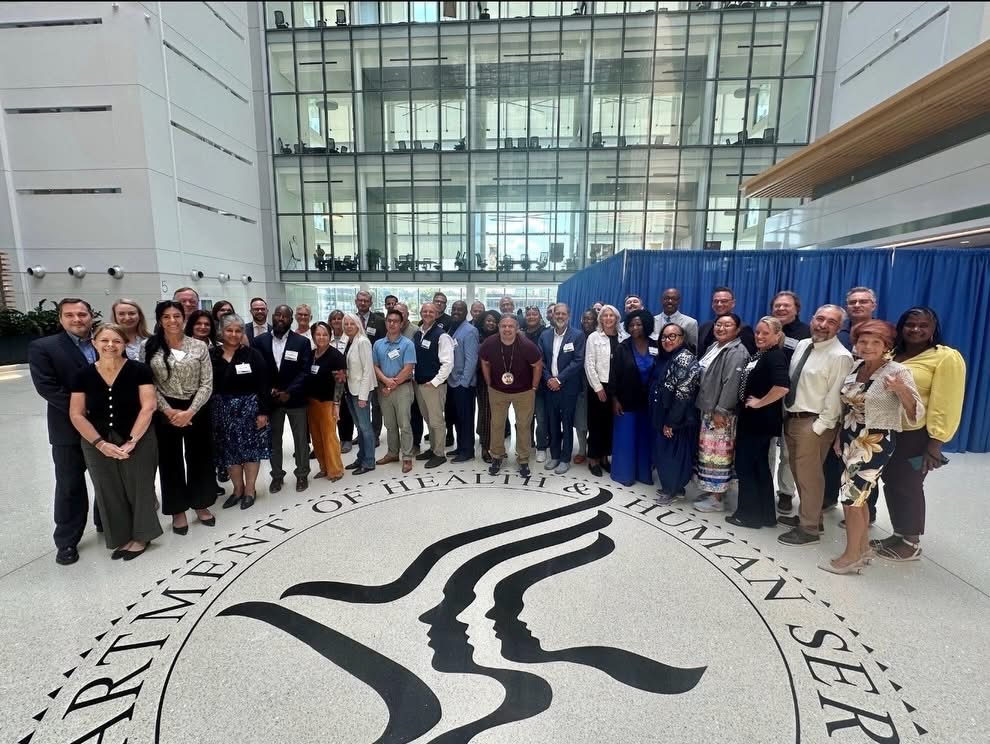

Damien Browning, CEO of the Cottonwood-based addiction recovery nonprofit Steps to Recovery Homes, was among 40 providers invited to the Substance Abuse and Mental Health Services Administration’s “Strengthening Integrity and Accountability in Recovery Housing” workshops held Aug. 27 and 28 in Washington, D.C.
“Steps to Recovery Homes is a nonprofit organization that helps people with addiction issues find recovery, addiction and other co-occurring disorders,” Browning said. “That’s anxiety, things that go along with it.”
Topics ranged from best practices operating recovery homes, oversight and the industry’s fallout from a scandal involving fraudulent operators in Arizona who billed the state’s Medicaid program $2.5 billion.
“Beginning in 2020, Arizona saw a dramatic surge in billing for outpatient behavioral health services to the American Indian Health Plan under the Arizona Health Care Cost Containment System, the state’s Medicaid program,” the Arizona Attorney General’s Office stated in May. “Investigators found that criminal enterprises — many operating unlicensed sober living homes — were recruiting Native Americans from tribal communities across the Southwest, transporting them to Valley homes, and billing AHCCCS for services that were never rendered or were provided under exploitative, dangerous conditions.”
AHCCCS suspended payments to about 100 based Medicaid providers on credible fraud allegations with losses to AHCCCS “reaching into the billions,” according to the AG’s office, with 188 people and organizations indicted. As of Sept. 2, there were 211 active organizational suspensions according to the state’s portal.
“They called it the sober-living fraud in Arizona with the AIHP… they called it the sober living fraud, but it really wasn’t a sober-living fraud,” Browning said. “It was more of a Medicaid fraud.”
While state and federal officials grapple with industry oversight, Browning said one of the primary obstacles facing his operation is beds.
“The biggest takeaway for me from the Washington trip was [that] we really need to find a way to be able to fund the people that are coming in with no money, and accountability,” Browning said.
Capacity
Steps to Recovery Homes operates Hope House, a 12-bed house with on-site supervisors in structured, sober-living fourplex. The nonprofit additionally runs an eight-bed transitional housing fourplex. Both properties are at capacity. Browning said that housing demand has caused the organization to turn away four applicants in a week.
“It’s 80 to 100 people right now, that Steps to Recovery houses annually,” Browning said. “It’s around 800 people since we’ve been open” for the last 13 years. “It went up since we started doing the outpatient services because with the outpatient program, you don’t have to be in our house. Now they get help, so people come to us. They’re in the community, and they either have a place or they have a job or they’re living at another sober-living place. They come to us and we help them out.”
Browning said its housing capacity is one of its largest challenges that Steps to Recovery is addressing.
“We just went to the city of Cottonwood, and we just got code review, so we’re trying to be shovel-ready for when Housing and Urban Development grants come out,” Browning said about expansion. “We’re getting ready to do some design review so we have a project for when grants come out so that we might be in the running.”
Steps to Recovery Homes will host the Cottonwood Job Fair from 3:30 to 6 p.m. Thursday, Oct. 29, at its Connection Room, 637 N. Main St., Suite 28. Doors open at 3 p.m. for veterans, seniors and job seekers with disabilities.
“We’re willing to continue the conversation and do training and help people,” Browning said. “It’s more about the public understanding how important sober living is and part of the process to really heal somebody and being able to do it right and get the funding. So we need people to get involved so we can actually help people the right way and help more people.”
Steps to Recovery has a job development program and has a 75% success rate on job retention. The organization also works with clients on emotional intelligence and the science of well-being, according to Browning.
“We’re trying to get them to get a job within four to six weeks, but what we’re trying not to do is have them rush out and fail,” Browning said. “We build a resume and do mock interviews with them. We pay for their haircuts and clothes. They do a fears list, a personal mission statement… We have 35 businesses that sponsor us annually, so we can talk to people that are looking for workers, and we’re trying to provide a clean and sober workforce in the Verde Valley.”
The free annual Erase the Stigma event is 9 a.m. to 2 p.m. Saturday, Nov. 21, featuring educational speakers, medical professionals and first-responders, along with information booths and refreshments.
For more information, call Steps to Recovery at 928-649-0077 or visit stepstorecoveryhomes.org.