










Southwest Wine Center bottles last of season’s grapes into future vintage
Yavapai College’s Southwest Wine Center routinely turns water into wine.
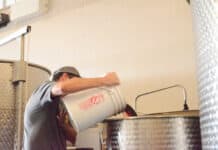
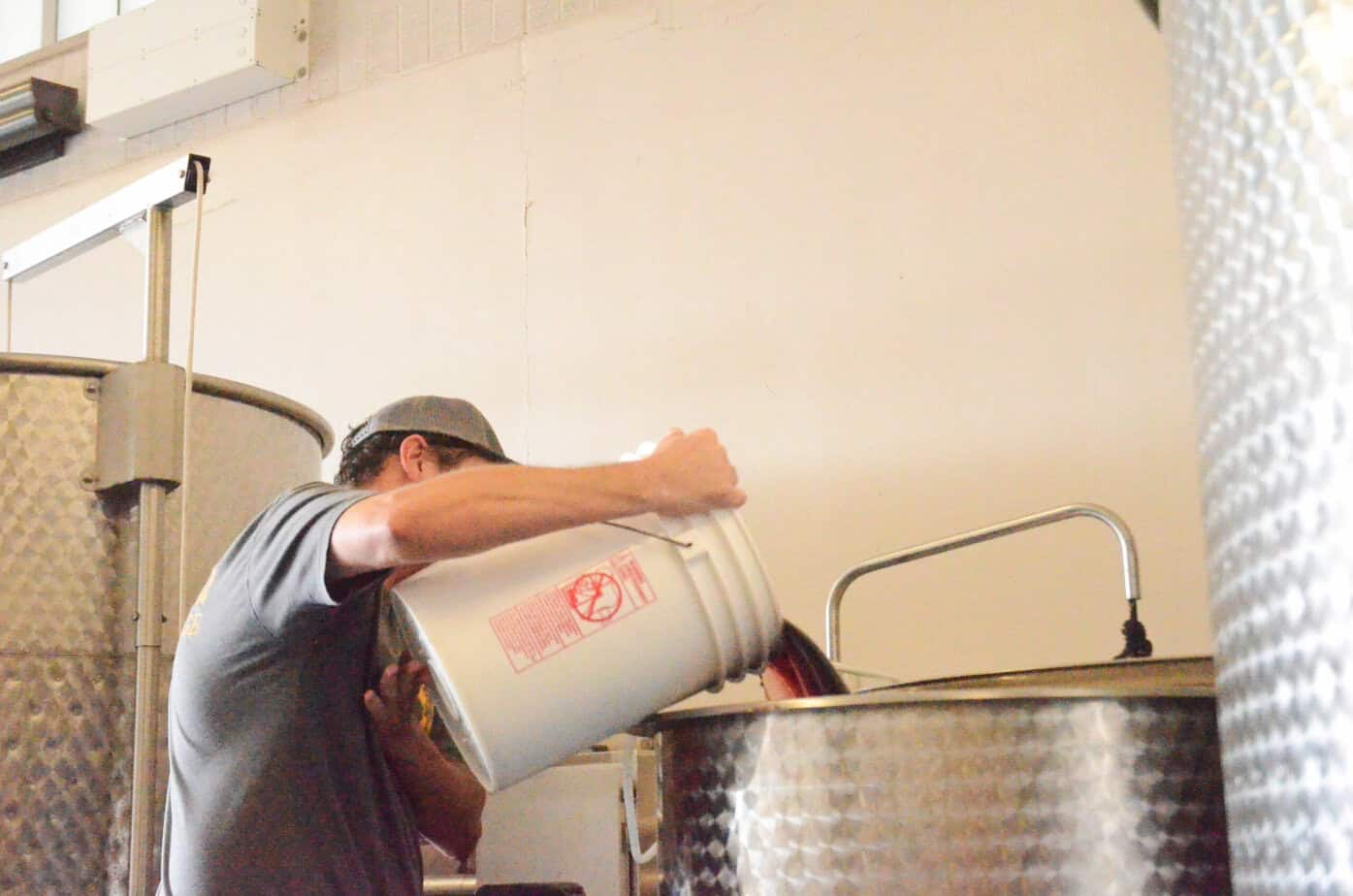
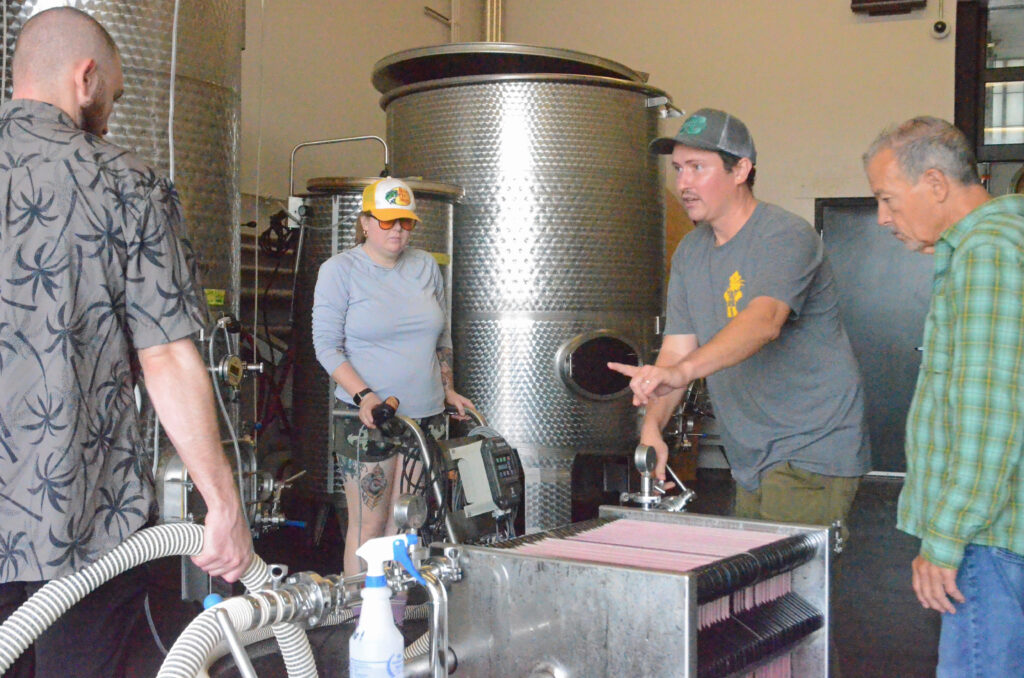
In preparation of the final bottling of its season, on July 18, Jason McCluskey took four of his students through the filtration process before bottling the wine.
“We’ve got our winewater mixture there,” McCluskey said after the first bit of wine was pumped from the watered filter into a bucket before the rest went into a clean tank. “We’ll actually taste it — and we taste wine frequently during this process, but we spit it out.”
The filtration process removes potential bits of grape or dead yeast particles in the wine.
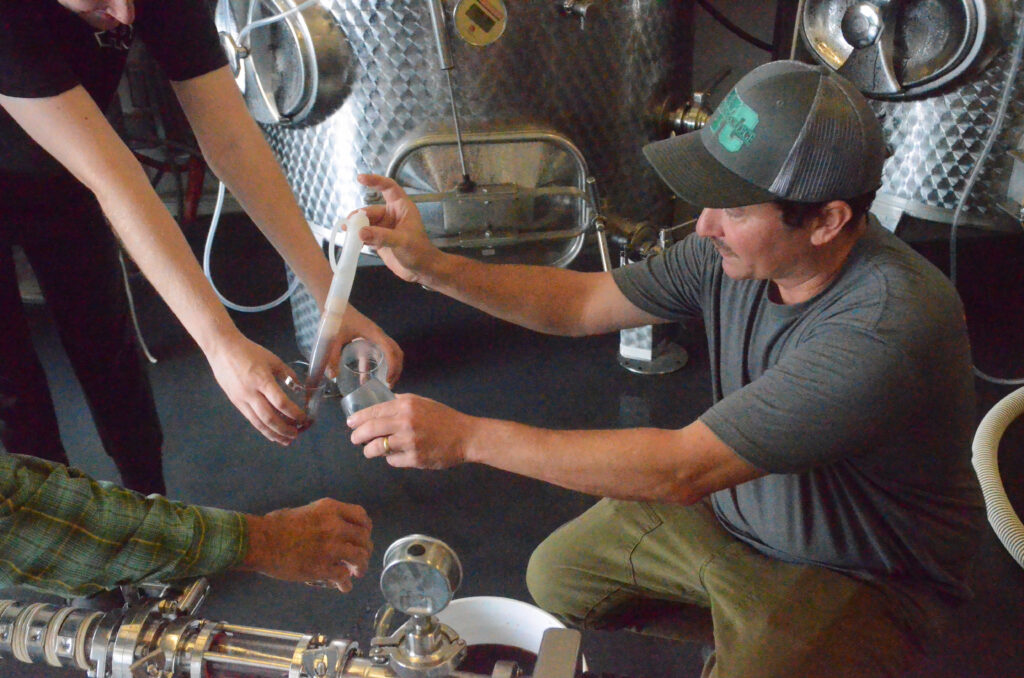
For this wine — labeled 24YCTA, which stood for the year the grapes were harvested, 2024, the college and the type of wine grape, Tannat — the water turned a dark red almost instantly.
When it looked like all the water had drained out, leaving only wine, the class tasted it. Looks were deceiving, because it was still very watery.
“I think this wine is a little more deceptive because … the color itself is so dark,” McCluskey said. “I think normally we would have ran more and then just drained [it]. But the color was so dark it looked like it was turned into wine a little prematurely.”
Bottling
Once the filtration process was complete for the about 58 gallons the college had fermented from this class, it was mixed with a small amount of sulfur to act as an antioxidant, then pumped to the bottling machine.
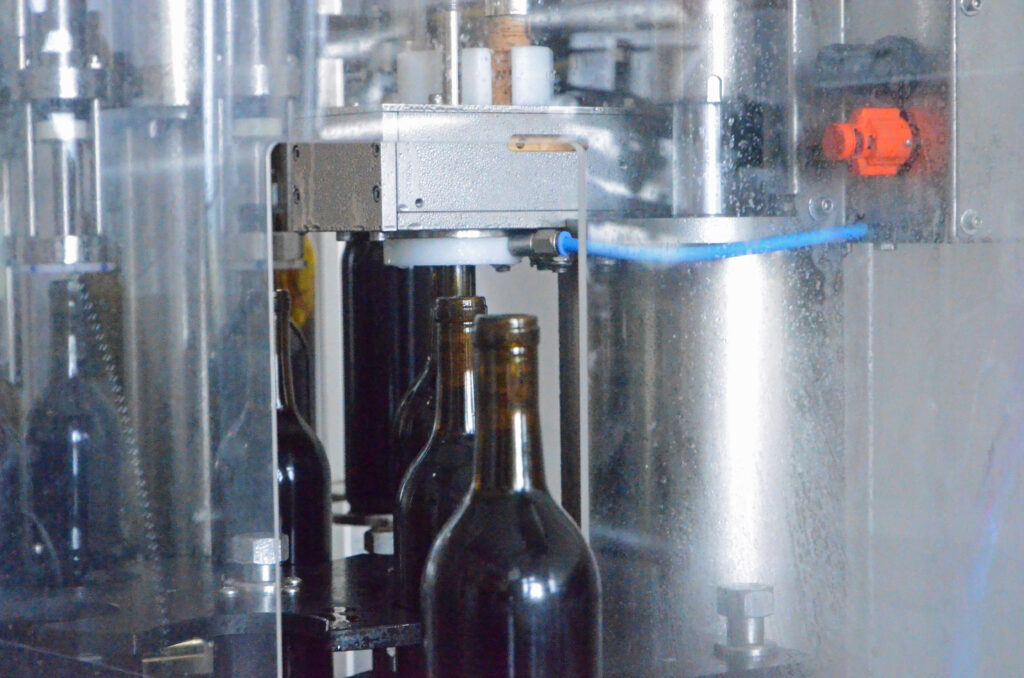
The bottling machine’s conveyor belt fed the bottles through a series of tubes. The first filled the bottle with nitrogen gas to remove as much oxygen as possible, the second filled the bottle with wine and the third created a vacuum in the bottle before pressing in a cork.
The class bottled nearly 20 cases of 12 bottles each.
“We’re not labeling today, … for this particular one, we don’t have a label this year,” McCluskey said. “But that’s not it. I wouldn’t even label today, even if we could, because of the humidity.”
On July 18, recent monsoon storms had raised the humidity significantly, which caused condensation on the outside of the bottles. The labels wouldn’t stick.
“In Missouri, when we were bottling, we always had to heat up the wine a little,” McCluskey said. “We had to get the wine to about 68 degrees before the labels would even stick.”
Once the labels are put on, the wine will be sold in the wine center’s wine club and visitors.
Teaching Viticulture
McCluskey has been in the wine business since 2008. The Phoenix native studied in New Zealand and worked at vineyards in Oregon and Missouri before beginning as an instructor for Yavapai College earlier this year.
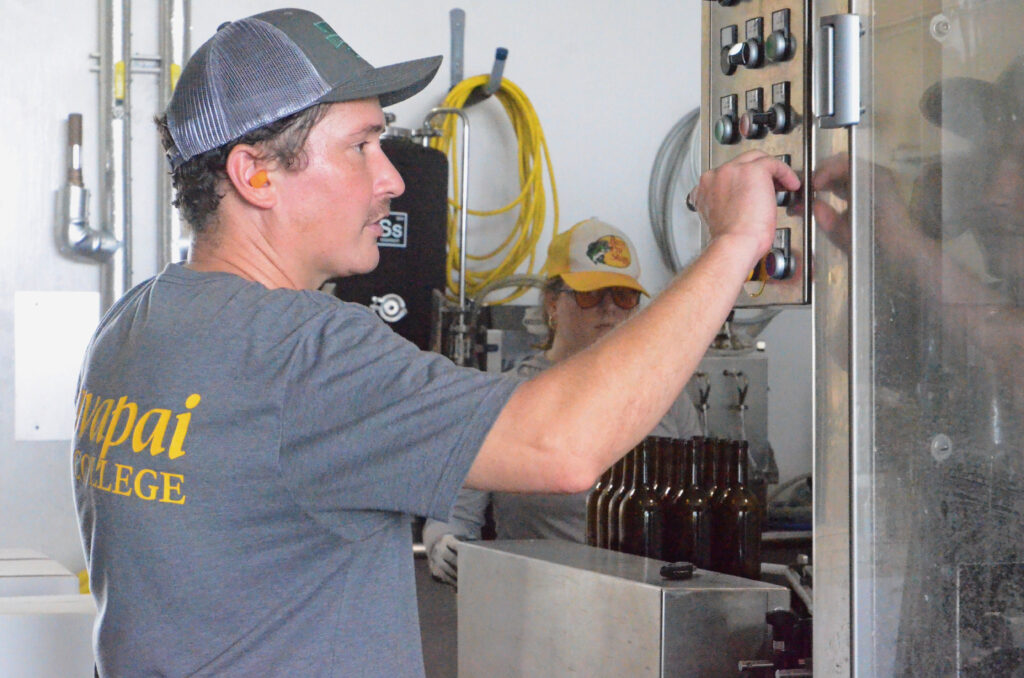
Now he’s teaching, he’s found the hands-on approach better for his teaching style.
“The students do everything,” he said. “But I’m here to make sure that they’re doing it right.”
For the class, students need 20 practicum hours helping bottle and prepare wine. Often, this involves having an internship or volunteering at local vineyards. There are 24 commercial vineyards in the Verde Valley, established as the state of Arizona’s third American Viticultural Area on Nov. 9, 2021, by the Alcohol & Tobacco Tax & Trade Bureau.
Jacob Schoen, a second-year student, helped volunteer at Cove Mesa Vineyard in Cornville for his hours. Cove Mesa has a wine team of about three, but needs extra hands on deck for its bottling days.
At the Southwest Wine Center, though, McCluskey prefers the smaller class sizes, like this summer semester, which had four students.
Classes often reach about a dozen, but the limit is 20.
“Days like this are kind of nice, though, where our workload’s pretty low, so there’s no huge rush,” McCluskey said. Often, he said, the workload on the end-of-season bottling day is lower.
“Especially ramping up towards harvest, there’s a lot to do,” he said. “We’ve gotten a lot done.”
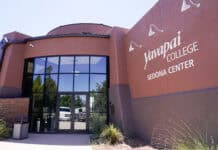
Visit southwestwinecenter.com for more information on the viticulture programs at Yavapai College and events at the Clarkdale campus.