

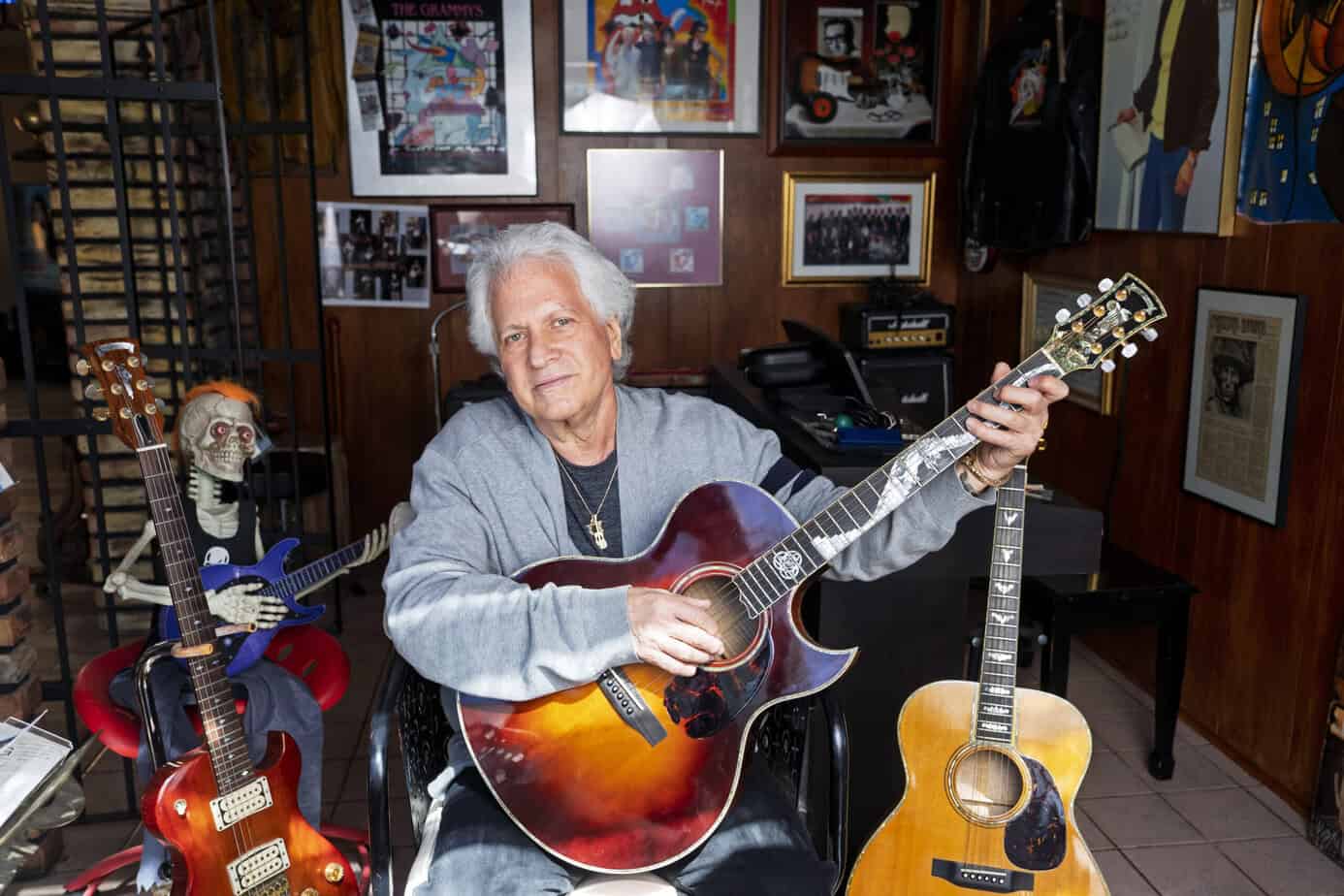
The Amphitheater Action Group, an ad-hoc group of Sedona entertainment-industry veterans, is also working to draft its own business plan for the abandoned Georgia Frontiere Performing Arts Pavilion at the Sedona Cultural Park, as the city solicits private partners to investigate bringing the 5,500-seat venue back to life.
“It’s a labor of love,” Scott Ross said. “We want what’s best for Sedona, and I have a personal interest in this, in that I wanted to be there for my daughter and her kids someday.”
AAG members include Scott Ross, a Lippman Entertainment partner with 42 years in music who is the group’s liaison to venue operators; Nick Lippman of Lippman Entertainment; Paul Fishkin, a music-industry veteran who worked with Stevie Nicks, Todd Rundgren and Natalie Cole; Talia Myers, a United Talent Agency agent who has hosted Sedona Film Festival panels; Tim Jessup, a studio co-owner and musician who has engineered for the band Chicago and leads the group’s sound, traffic and parking work; restaurateur Lisa Dahl; and hotelier Allan Affeldt, a former mayor of Winslow and 25-year Sedona resident.
The amphitheater has sat dark since 2003. The city paid $23 million in cash and bond for the 41-acre park in 2022, but the City Council isn’t interested in spending public money and instead wants partners to investigate whether reviving the venue is possible. The council issued a Request for Information on May 26, inviting any group to develop a business plan for the venue.
The Sedona Cultural Park 2.0 nonprofit, which signed a non-binding letter of intent with the city, is drafting its own plan, unaffiliated with the Amphitheater Action Group.
Ross said the group’s central asset is its reach into the entertainment industry with relationships he argued a mass solicitation will not be able to replicate.
“We have access,” Ross said. “Between Tim, me, Allan; all of the people on our team have tremendous access in entertainment, and what it’s going to take to get this done the right way. It’s a big difference [from] a blanket email.”
“I have some serious concerns with SCP 2.0 having the experience in the music business, in touring business, to take it from here on out, we are the people that have those relationships and look forward to working with the city on that,” Ross said at a council meeting on May 26.
The RFI expires Wednesday, Sept. 30. City staff will likely spend October preparing information, aim to present it to the council in November, and could return around January for a possible second discussion on whether to issue a Request for Proposal. That would be the more formal step, soliciting binding bids to lease and operate the venue.
However, nothing has been committed to — including the Sedona International Film Festival’s proposal to relocate its operation to the Sedona Cultural Park, and construct a new theater complex off of State Route 89A.
“We’re not going to be running [it],” Affeldt said. “That’s not our objective. We want to put together a team that’s capable of doing this properly.”
The members of AAG coalesced in early June and has asked the city to copy it on communications about the property.
“We’re just calling it the Amphitheater Action Group, AAG, because we’re focused on executing an actual, executable business plan,” Affeldt said. “The city’s made it clear they don’t want to put money into improvements, like they’re doing with the SIFF festival, because it’s been abandoned for 20 years and it’s going to need millions in improvements.”
Parking and traffic have been among the largest challenges cited by the City Council in discussions about reviving the venue. Jessup, who handles the AAG’s traffic and parking work, said he believes the congestion that accompanies large events can be mitigated.
“I have a vision of a parking area out at, for instance, the Dells that would serve Sedona very much like the main parking lot at the Grand Canyon serves Grand Canyon Village … if we had a parking lot out there, we could actually control traffic here all year round,” Jessup said.
For the AAG, the project is driven in part by economic diversification, a way to smooth out Sedona’s seasonal slumps and broaden a tourism economy. But Ross said the venue can’t survive on local acts alone, given the scale of investment any operator would have to recover.
SCP 2.0’s website puts the site’s repairs at a minimum initial investment of approximately $3 million.
Both touring and local acts have to be part of the mix, Ross said, acknowledging the final call isn’t the group’s.
“Ultimately, it won’t be our decision, other than to make sure it’s somewhere in the deal, in writing, to at least give local talent opening slots when it’s not booked, and to give them priority,” Ross said.
“We believe we assembled the best of the best to get this done and be successful this time around,” Ross wrote. “No more making the same mistakes, and it will be only the most experienced people involved.”


