












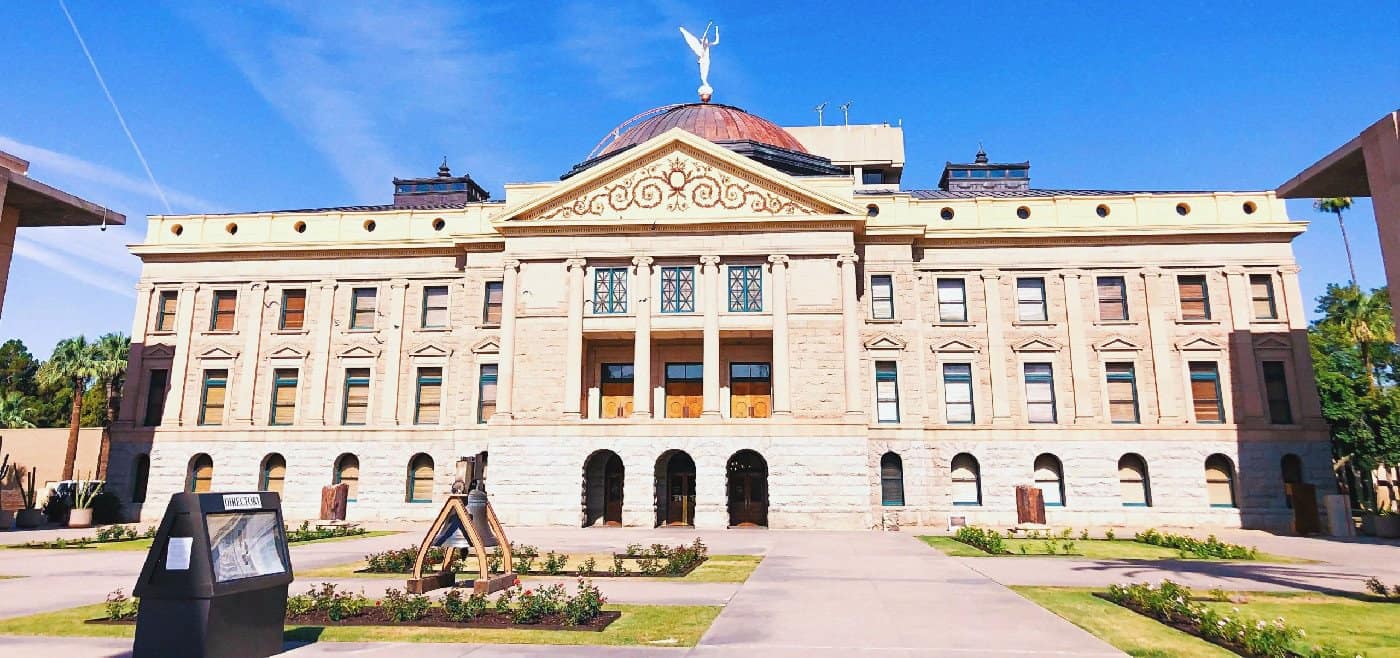
In much the same way that the United States, Israel, Iran and Lebanon are perpetually near a peace deal to end the current war in the Middle East, so, too, are Arizona’s Democratic Gov. Katie Hobbs and Arizona State Legislature’s Republican majority perpetually near a budget deal with both factions claiming they are “98%” near a negotiated settlement.
As we wrote back in January, the Republican majorities in the Arizona State House of Representatives and Arizona State Senate kicked off the legislative session with a package of 15 state budget bills, which notably passed in the House 31-0, with the vote delayed until all the Democrats went home after waiting for House leadership to bring the bills to the floor for debate.
After the unilateral vote, Republicans posted on social media that they passed the bills without a single Democratic vote, which is disingenuous to voters and not the flex they think it is as it’s not how representative governments are supposed to function. Surprising no one, Hobbs vetoed the bills when they hit her desk.
Republican lawmakers used Hobbs’ swift veto in their campaign literature and social media posts — which happened almost immediately.
On April 13, Hobbs announced a moratorium on signing any bills to pressure Republican lawmakers into publicly releasing a budget. She lifted the blockade after a week of “good-faith negotiations” and ultimately relented May 14 to signing regular bills that reached her desk. However, Hobbs vetoed a Republican-only $17.9 billion budget on May 5, calling it unworkable, with the dispute focused on federal tax conformity and Republicans’ reported unwillingness to extend the education funding measure known as Proposition 123.
After transmitting the budget to the governor, the Senate met again on May 11 before taking the rest of the month off, but the House simply voted to adjourn until June 1 and only returned last week.
The May 5 veto is fourth time Hobbs has rejected a Republican budget since her election in 2023. The Legislature is required by the Arizona Constitution to pass a budget by July 1, however, the enforcement of a constitutional requirement for the legislature is the legislature, and there’s no penalty so it’s more a suggestion than a requirement with an attachment punishment.
The only thing the July 1 vote really does is mandate that any bills — not including budget bills — still floating in committee or without the requisite number of floor votes to pass out of the legislature to the governor’s desk simply die automatically on June 30.
When the Arizona Legislature passes the budget matters beyond just financing state services. Bills with an “emergency clause” in the text become effective immediately upon the governor’s signature while other bills become law based on the “effective date” written into the language. Usually these are bills that take effect on Jan. 1 of the next calendar year. Other, more complex bills that require significant reshaping of the economy, state government or state agencies and need time for those government workers, corporations and businesses, nonprofits, school districts, fire districts or private citizens to prepare can be set months or years out so the infrastructure to absorb the changes can be in place.
But most legislative bills become law on the “General Effective Date,” marked as 90 days after the legislature adjourns “sine die,” a Latin that4 means “without a day” but means after the legislative session ends. This usually is sometime in late summer or early autumn. However, if the legislature and governor are still arguing, the start date of most bills hang5 in limbo until the budget gets signed.
Towns and cities are also required to have their budgets finalized by the end of the fiscal year.
The city of Cottonwood has a tentative budget of $151 million, up from $132 million last fiscal year.
Sedona’s tentative budget is $97.9 million, down from last year’s $103 million.
Clarkdale is eyeing a $48 million budget, up slightly from $47.3 million last year.
Camp Verde is still looking at its budget in the weeks to come but had budget of $64.3 million last year.
Jerome’s budget is $2,849,700, down about 6% from last year. The budgets are still up in flux until they are finalized in council votes expected this month.