

Lawmakers are cracking down on deed fraud scams with a new law set soon to take effect.
Arizona Gov. Katie Hobbs signed Senate Bill 1479 into law on April 9. The law combats title and deed fraud and additional safeguards on private property and will take effect 90 days after the legislature adjourns.
“With a forged signature and fraudulently recording property documents, criminals can unlawfully transfer ownership or attempt to leverage property that doesn’t belong to them, oftentimes before the true owner even realizes that their property has been sold, leaving them with costly legal battles to reclaim what they already own,” Maricopa County Assessor Eddie Cook wrote in an April 20 press release. “It’s a crime that can target anyone — first-time homebuyers, seniors, and families.”
Six major reforms will be introduced to Arizona’s property system through SB 1479:
- Each county must create a new opt-in alert system by Friday, Jan. 1, that will notify property owners whenever there are record changes to their land. Yavapai County currently has this with its Eagle Fraud Guard program.
- Submitting false property documents will be upgraded from a Class 1 misdemeanor to a Class 5 felony, meaning stiffer penalties including jail time rather than fines.
- To record a document in person at a county recorder’s office, individuals must present valid photo identification. However, there are limited exceptions for industry professionals such as escrow officers, attorneys and financial institutions.
- In order to better confirm legitimate transfers of land, buyers and sellers will provide their contact information on an Affidavit of Legal Value.
- For most real estate documents including deeds notaries will be required to take a thumbprint. Online notarizations will require a video recording which will be retained for at least seven years.
- “SB 1479 repeals the law at the center of the recent Arizona Supreme Court Case, Dominguez v. Dominguez, which could allow a forged deed to stand as valid if it went uncontested for five years,” Cook wrote. “This fixes that issue and helps ensure forged documents cannot gain legitimacy through legal loopholes.”
While there has not been any confirmed cases in Yavapai County, scammers in recent years have attempted to make illicit profits on land they do not own. Typically scammers focus on vacant land, since the rightful owners may not be keeping as close of an eye on it, according to Stewart Title manager Natalie Kurz told the Sedona Red Rock News in a September 2023 story.
“The scammer begins by asking the agent to provide a market analysis of the property and then immediately list it for them,” the Yavapai County Sheriff’s Office wrote in a 2023 press release. “In most cases, immediately means either a ‘short sale’ or a cash only sale with a quick close. The ‘seller’ has been reported to have a heavy middle eastern accent.”
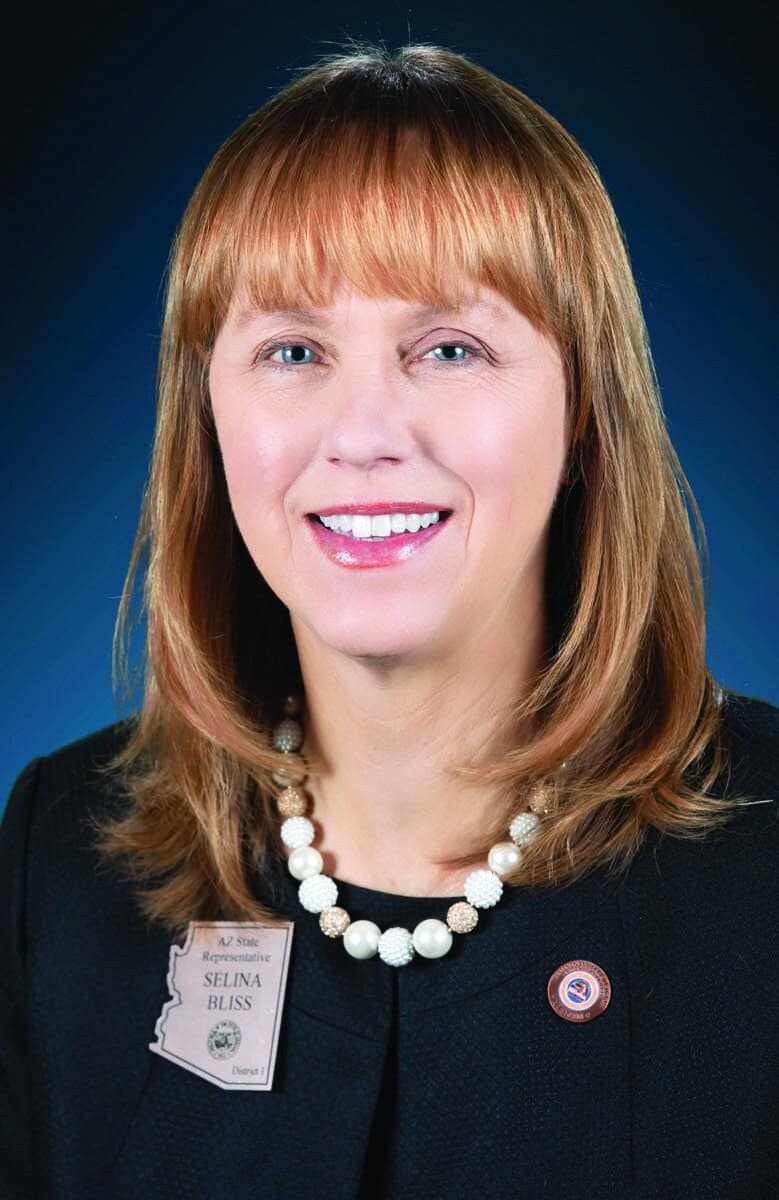
“My father, [Donald Sieh], passed away a year ago, and while I was in office, this is the thing he kept telling me I had to do something about,” Bliss said. “So when I testified in committee, I said, ‘This is for you, Dad,’ because people are so afraid of their property being stolen.”
Bliss and SB 1479’s primary sponsor, Arizona Sen. Frank Carroll [R-District 28], ran mirror bills, with Bliss sponsoring House Bill 2952. Bliss said identical legislation moving simultaneously through both chambers that elevates a bill’s importance and moves it faster to Hobbs without repeating the full legislative process.
“We were able to fast-track it and get it signed into law before the governor started her moratorium on signing bills,” Bliss said. “We were one of the lucky few that got signed into law before the moratorium, which has since been released. So I hope to see a lot of bills being signed in the next couple of weeks.”
Budget Woes and Roads
On April 29, the House Republicans along party lines passed a $17.9 billion, that Bliss referred to as a “skinny budget.”
“Because of our revenues and expenses at the state, we only have $10.1 million left to spend. So if you think about it, no one got anything,” Bliss said. “We were told by leadership, … that there were no legislative asks. … It’s disappointing, but no member gets to take home a legislative ask because there’s just no money.”
Because of the tight budget, Bliss said she is not optimistic that infrastructure funding for the city of Sedona will be approved by the legislature this session. Bliss sponsored House Bill 2201, which seeks $8 million from the state General Fund for the Ranger Road extension and Sedona in Motion 5E, and House Bill 2225, co-sponsored by Rep. Quang Nguyen [R-District 1], which seeks $10 million for the expansion of the Northern Arizona Regional Training Academy at Yavapai College that currently graduates two classes of law enforcement annually. She does not believe either spending will be approved this session.
Bliss said that “there’s still a chance of getting the road projects done,” and the legislature is working through the Arizona Department of Transportation “because they have their funding for road projects,” for the Sedona road projects.


