










Colonial Dames of the 17th Century presented award
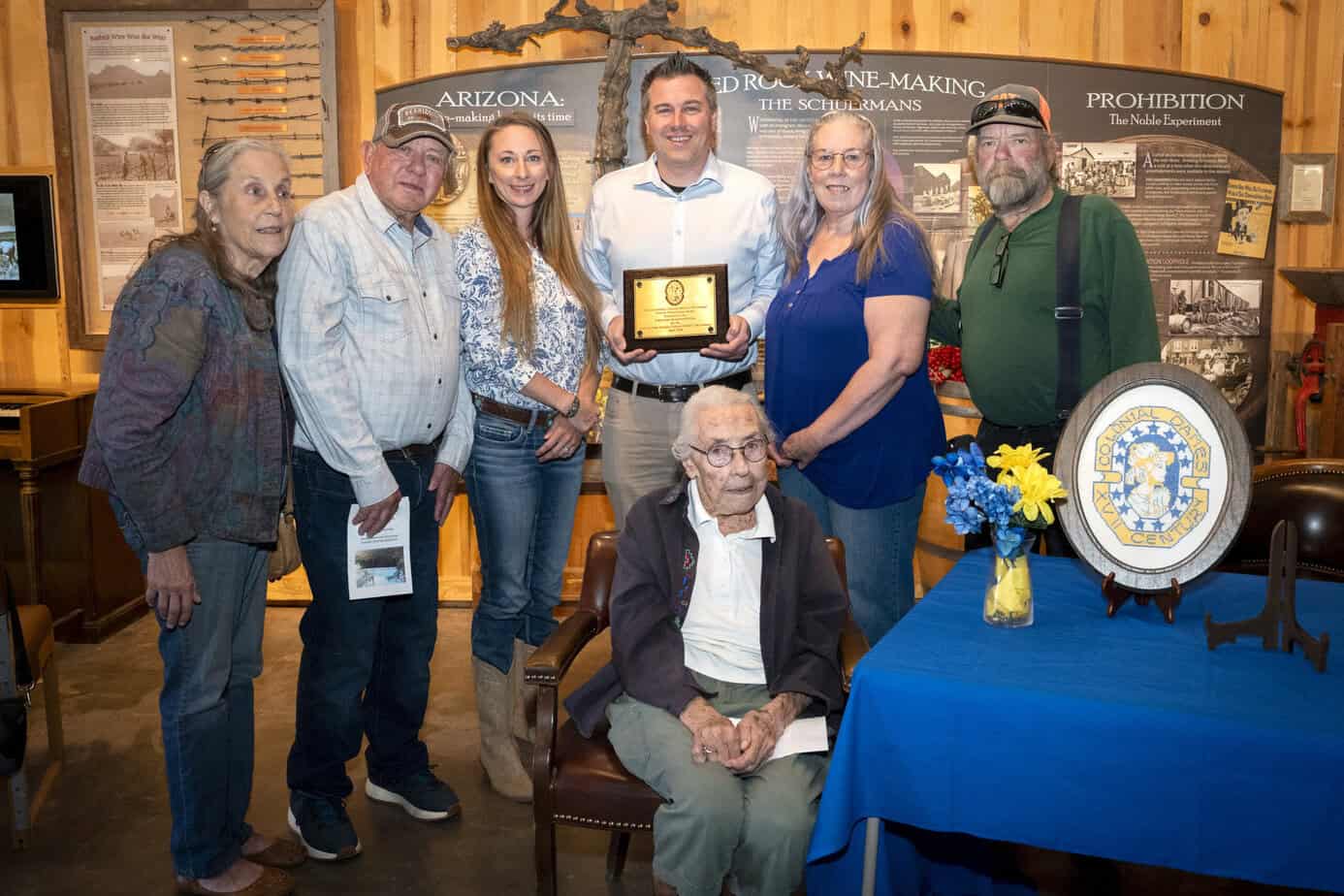
The Schuerman Homestead House added another accolade to its historical significance when the Arizona State chapter of the Colonial Dames of the 17th Century presented the Sedona Heritage Museum with the group’s Historic Preservation Award and a $300 donation with about 40 attendees on hand — including several descendants of Sedona’s pioneer families.
“CDXVIIC has several objectives,” Sonora Chapter President Pamela Miller said, using the group’s acronym. “One of the primary objectives is to aid in the preservation of the records and historical sites of our country. This does not simply refer to historical sites of the U.S. colonial period, but it also includes territorial sites on historical significance of our state and nation. Arizona was still a territory in 1908 when the homestead was built,” by Johann Georg Heinrich “Henry” Schuerman and his wife, Dorette.
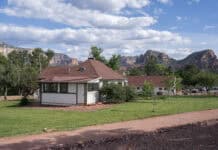
Situated on 0.8 acres at 120 Loy Lane off of Upper Red Rock Loop Road, the homestead earned a place on the National Register of Historic Places in March 2023. Since then, the museum has done significant restoration work including replacing the roof, updating the electrical system and reinforcing both the foundation and chimney.
The property is the only surviving local residence built to satisfy the requirements of the Homestead Act and is mostly original in its form and details.
The Schuermans were prominent contributors to their community, the museum wrote. They built the first school in the area in 1891 and established the Schuerman Red Rock Cemetery, which was the area’s first cemetery and was built in 1893.
“Henry was a Yavapai County Justice of the Peace and served on the local school board and worked building local roads,” the museum wrote. “The couple had six children and successfully raised cattle, horses and had a dairy herd. In addition, they cultivated strawberries, melons, apples and peaches. The Schuermans are most noted for establishing the first commercial vineyard and winery in Arizona.”
Schuerman was born March 17, 1852, in the mountain town of Melle in the Kingdom of Hanover — now in modern-day Germany — and immigrated at the age of 17, arriving in Prescott by 1884. The wild grapes he discovered growing along the banks of Oak Creek — on 160 acres he received in payment for a debt — inspired him to plant Zinfandel grapes at the homestead.
“I have learned a lot about the winery business since I got here three years ago,” Sedona Heritage Museum Executive Director Nate Meyers said. “Zinfandel grapes, according to every professional who grows grapes in the Verde Valley today, should not have worked, but the Schuermans’ did.”
“The house then passed to Martha Loy and Martha donated it to SHM in 2018,” Meyers said.
Meyers estimated the current phase of work at the Homestead at about $20,000 to $25,000, with long-term dreams including bringing Schuerman’s Zinfandel grapes back to the homestead in partnership with a local winery. A long-term master plan for the site is also currently in development however he did not have an estimate on when that will be finalized by the the museum’s board of directors.
“In the near term, in order to allow the public in, we’re going to have to do a lot of upgrades for safety and bring up the code in a few elements like fire suppression” and Americans with Disabilities Act compliance, Meyers said. “It’s a long way off before we can welcome the public in. But for now, the exhibit that we’re working on is going to be inviting people to walk around the building, look inside and there will be exhibits for them to see through the windows, so they can get a sense for it without yet being able to go inside.”
Outdoor amenities at the homestead will include picnic tables and outdoor seating, Meyers said.
Samuel Albert Thompson was among the old timers on hand. He is the youngest grandson of John James “J.J.” Thompson who established a residence in Indian Gardens in Oak Creek in 1876 making him the first permanent white settler.
“I was on the board here for 16 years and it got too far from me to come to the meetings, but I still come,” Samuel Thompson said. “All the old timers are dying. I’m [coming up on] 80 and I’m one of the younger ones — and the newer people are going to have to take on the work to make this museum work. So far they’re doing a pretty good job. And like the Schuermans, there’s very few of them even left.”