


Thursday, Jan. 15, marks the 97th anniversary of the birth of Martin Luther King Jr., one of the great civil rights leaders of American history whose birthday has been a federal holiday since 1986, and observed in all 50 states since 2000.
Locally, Volunteer Sedona & the Verde Valley expanded its MLK Jr. Day of Service into a full week of community projects running from Tuesday, Jan. 13, through Monday, Jan. 20, building on last year’s inaugural event. You can still sign up for service activities at vsvv.org.
King began his journey into the American consciousness first as a preacher in Montgomery, Alabama. Like any community-minded leader, he began by working to better the conditions of his flock and his city, until his cause for equal treatment under the law and in the eyes of his God compelled him to work on a larger scale. The Montgomery Bus Boycott of 1955 elevated King from local pastor to national figure.
As a leader of the civil rights movement, he lent his personal and political weight to causes that has made America a more diverse, more integrated and more tolerant nation. King was a leader and a figurehead, but he was not alone in his efforts and relied a network of pastors, black churches and both black Americans and white activists motivated to end segregation and Jim Crow laws in the South.
King also borrowed from other leaders and writers to fuel the movement. Nationally famous poet Langston Hughes and father of the Harlem Renaissance wrote his “Brotherly Love” poem about the boycott that concluded with “Now listen, white folks! / In line with Reverend King down in Montgomery — Also because the Bible says I must — I’m gonna love you — yes I will! Or BUST!” In turn, King read Hughes’ poem “Mother to Son,” from the pulpit on Mothers Day in 1956. King and Hughes maintained a friendship until Hughes’ death in May 1967, even traveling together to Nigeria in November 1960.


Photo courtesy of Robert W. Kelley/The Life Picture Collection,/Getty Images
Hughes wrote about King’s civil rights efforts in at least 40 articles in the Chicago Defender and penned several poems about King’s activities. King quoted or paraphrased at least seven Hughes poems in various speeches before he was assassinated in April 1968, according to W. Jason Miller’s book, “Origins of the Dream: Hughes’s Poetry and King’s Rhetoric.”
Hughes had written his poem “Harlem” in 1951. It begins “What happens to a dream deferred? / Does it dry up / like a raisin in the sun?,” which Lorraine Hansberry turned into the immensely popular Broadway play “Raisin in the Sun” in March 1959, which placed the idea of failed dreams of something better, but out of reach, both in the national zeitgeist and in the imagination of civil rights activists.
A month later, King delivered the sermon “Unfulfilled Hopes,” echoing Hughes’ “Harlem” and using the word “dream” some 15 times, often preceded by words like “shattered,” “unrealized” and “unfulfilled.”
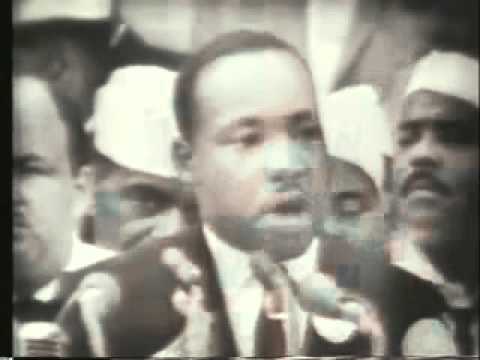
King’s thoughts on dreams coalesced in his 1963 March on Washington and famed “I have a dream” speech, that begins small, close and personal: “I have a dream that my four little children will one day live in a nation where they will not be judged by the color of their skin but by the content of their character” before it too “explodes” — as Hughes wrote — onto a national level to change America: “I have a dream that one day this nation will rise up and live out the true meaning of its creed — we hold these truths to be self-evident: that all men are created equal.”
The crux of King’s civil rights movement was not simply to end racial discrimination but to also treat outsiders whose ancestors spoke a different language or who have a different hue of skin, or who pray in a different way as we would treat our friends, family and next-door neighbors.
As Americans, whatever our background or how we arrived on this soil, we have become one people, unique in the world that we are not united in our language or faith or national origin but by our ideals, enumerated in a Constitution blind to race, class, sex, identity or background. We are part of a grand experiment to see if such if a nation, or any nation, conceived and dedicated toward to the proposition of equality, can long endure.
King taught that to realize dreams and bend the arc of history toward justice, you must to put in the work and be willing to labor no matter the risk. King faced risks of violence but continued to dream of a better America. For that dream, he paid with his life in 1968.
But King also taught if you’re going to change the world, it helps to have a poet.


Photo of Langston Hughes courtesy of Carl Van Vechten/Carl Van Vechten Trust/Beinecke Library, Yale
Photo of Rev. Martin Luther King Jr. courtesy of Marion S. Trikosko
“Brotherly Love”
By Langston Hughes, 1956
A Little Letter to the White Citizens of the South
In line of what my folks say in Montgomery,
In line of what they’re teaching about love,
When I reach out my hand, will you take it
Or cut it off and leave a nub above?
If I found it in my heart to love you,
And if I thought I really could,
If I said “Brother, I forgive you,”
I wonder, would it do any good?
So long, so long a time you’ve been calling
Me all kinds of names, pushing me down –
I been swimming with my head deep underwater,
And you wished I would stay under until I drown.
But I didn’t! I’m still swimming! Now you’re mad
Because I won’t ride in the back end of your bus.
When I answer, “Anyhow, I’m gonna love you,”
Still and yet, you want to make a fuss.
Now listen, white folks!
In line with Reverend King down in Montgomery –
Also because the Bible says I must –
I’m gonna love you – yes I will! Or BUST!
“Mother to Son”
By Langston Hughes, 1922
Well, son, I’ll tell you:
Life for me ain’t been no crystal stair.
It’s had tacks in it,
And splinters,
And boards torn up,
And places with no carpet on the floor—
Bare.
But all the time
I’se been a-climbin’ on,
And reachin’ landin’s,
And turnin’ corners,
And sometimes goin’ in the dark
Where there ain’t been no light.
So boy, don’t you turn back.
Don’t you set down on the steps
’Cause you finds it’s kinder hard.
Don’t you fall now—
For I’se still goin’, honey,
I’se still climbin’,
And life for me ain’t been no crystal stair.
“Harlem”
By Langston Hughes, 1951
What happens to a dream deferred?
  Does it dry up
  like a raisin in the sun?
  Or fester like a sore—
  And then run?
  Does it stink like rotten meat?
  Or crust and sugar over—
  like a syrupy sweet?

  Maybe it just sags
  like a heavy load.

  Or does it explode?


