


It took a few hours for the rain to clear up after the Nature Walk at Red Rock State Park as part of Arizona State Park’s First Day Hikes on Jan. 1 was scheduled to begin.
While the nature walk was cut a little short and the rain made it hard to see anything in the park, the free First Day Hike pass gave me access to come and go until 4 p.m., which gave me plenty of time to see some of the things guide Charlotte Guorley talked about. Normally, the adult day passes are $10.


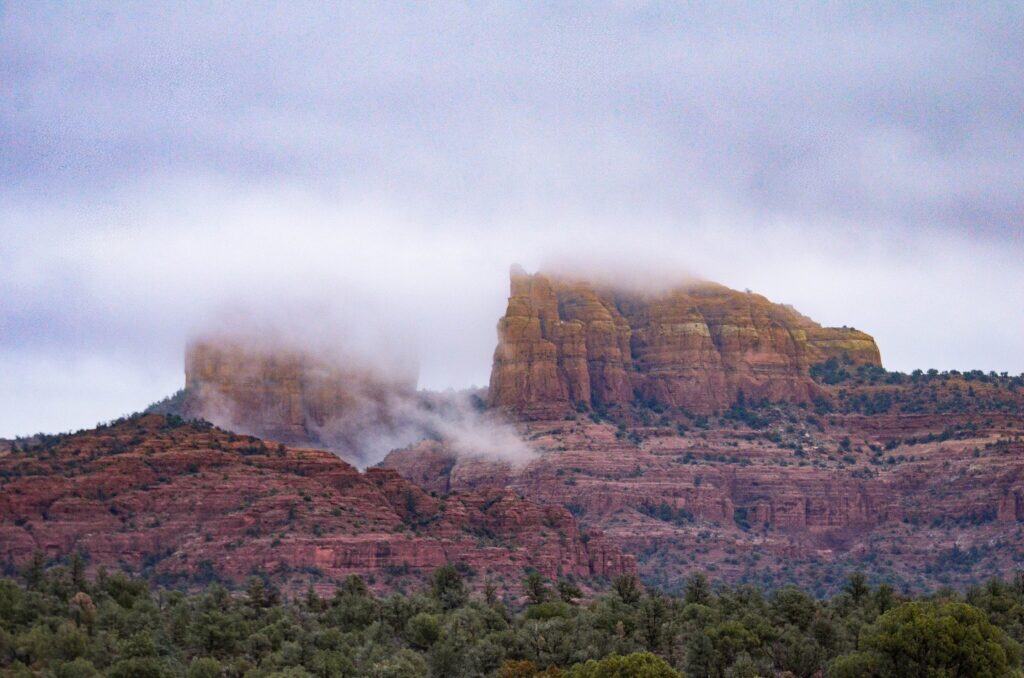
Sedona locals don’t always do the “touristy” things, so after living here for the better part of six months, it was my first time at the park. I’ve always appreciated the red rocks, but walking those trails was definitely the best way to start off the new year.
When you drive into the park and get to the parking lot at the Visitors Center, one of the first things you see is the red house built into the side of the hill across the field.
Guorley said Jack Frye, the then-president of Trans World Airlines, is the main reason The House of Apache Fire exists as the structure in the hillside of the park seen clearly from the Visitors Center.
“He and his wife, Helen, in 1940 had purchased over 800 acres here, the old bunk house that we have down there are remnants of that old ranch,” Guorley said. “They’re the ones that built that house that you saw up on the hillside.”
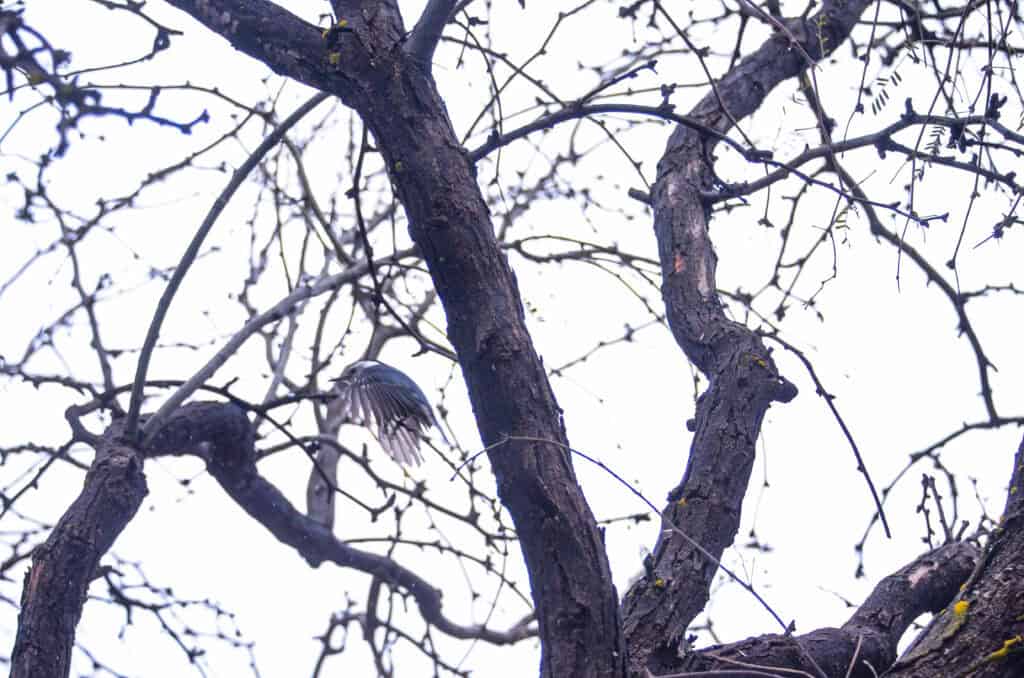
The First Day Hike began at the visitors center where Guorley explained a bit of the local ecology.
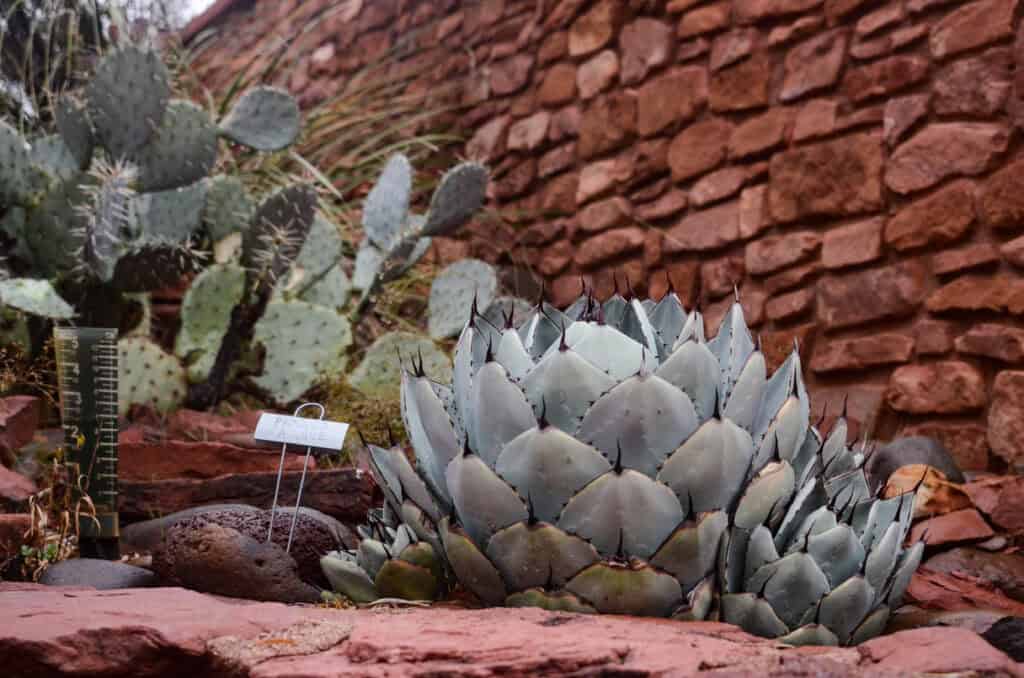
“There are about 30 odd species of agave,” she said, gesturing to a Parry’s agave [Agave parryi] along the walkway to the Visitors Center. “This is the one that kind of likes it here. Fantastic source of food … and the native peoples knew that, and they took advantage of that.”
But the work required to make it edible was tenuous, she said. A common name for an agave plant is the century plant, because of how long it takes to bloom.
“You’d have to dig up this whole plant,” she said. “You’d end up with this thing that looked at something like a pineapple, then you had to bake it for four days.”
After baking, it would become very sweet, like sugar. But the plant was full of fiber, and people would often spit that out.
“Modern day archeologists come along and they say, ‘goody, goody, goody, we’ve got organic material. We can carbon date it,’” she said. “It’s been proven that it’s been used as a food source for at least 8,000 years.”
To anyone asking, no, you can’t make tequila from Parry’s agave.
“There are two reasons,” Guorley said. “It’s not the blue agave, and we’re not in some [west] coast state down in Mexico.”
Another plant that’s common around the park are the big spiky plants about the size of a bush, the banana yucca [Yucca baccata]. Yucca fibers are very strong and have been used to make rope, tools and sandals for thousands of years.
Guorley passed around a sandal made out of yucca. It had been hardened by age, but it was still very strong.
“I took some of those fibers and I braided them into this little [strand],” she said. “I want you to yank on it. So far, nobody’s been able to break it. There was one young man one day that tried to but all he got was red in the face.”
No one in the group of nearly 20 onlookers could break it either.
As the rain began coming down a bit harder, she moved to the covered picnic area near the parking lot to talk a bit about the park’s features.
The state park itself is 286-acre park with several miles of trails, although at least half the trails are half a mile or shorter.
The House of Apache Fire is an impressive sight; it sits overlooking Oak Creek and a large field surrounded by red trails.
Another impressive feature at the park that Guorley spoke about was the Eagles Nest formation on the western side. A sheer wall of red stone on the other side of Oak Creek.
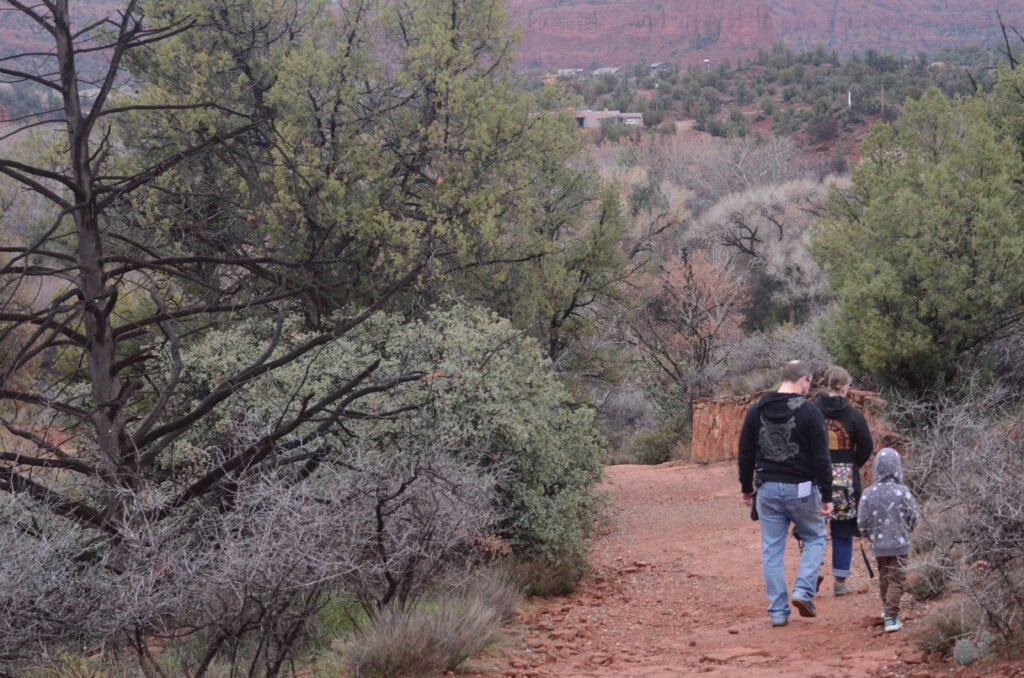
“There are no eagles there,” she said. “It got its name because Walt Disney made a movie back in the ’50s. It was called ‘The Boy and The Eagle,’ and this was used as part of the scenery.”
Guided Nature Walks take place daily at Red Rock State Park at 10 a.m., except June through September. In June and September, they’re at 9 a.m. and July through August, they’re 8:30 a.m.
“We have different people do the hikes on … each day of the week, and everyone has their own slant,” Guorley said. “It’s not just one set.”
That gives every park visitor the opportunity to learn something new, which is always her favorite part of the job — and certainly my favorite part of mine.