














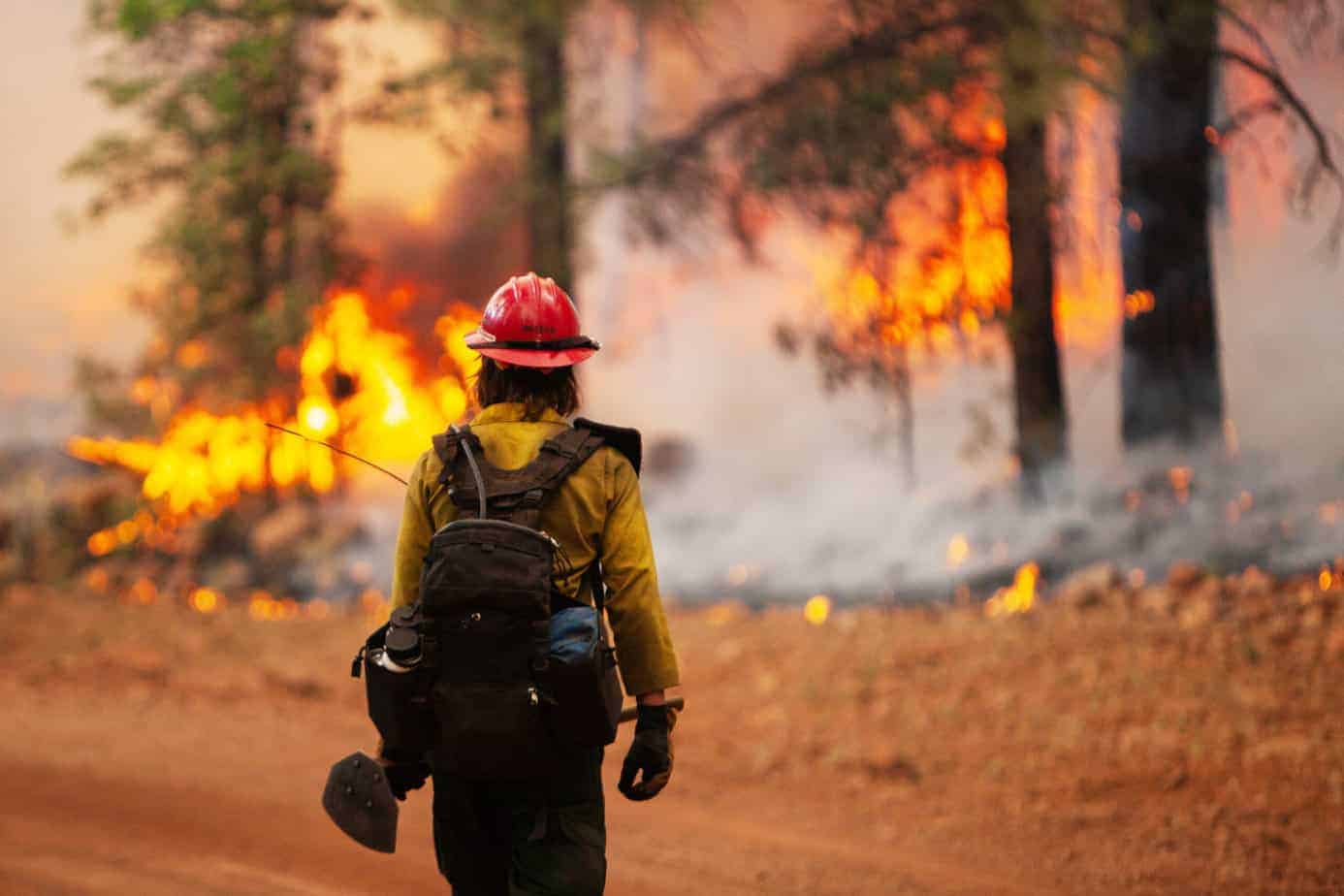
The Arizona Department of Insurance and Financial Institutions and the Arizona Department of Forestry and Fire Management released a new report on Dec. 1 warns that homeowners in wildfire-prone areas are facing increasingly expensive insurance.
The report is from the state’s Resiliency and Mitigation Council, formed last December.
Arizona’s average HO-3 premium, the most common U.S. homeowners insurance policy, increased about 20% from 2018 to 2022, the report states. This is below the increases in all neighboring states and lower than the national rise of roughly 25% during the same period. The report cites natural disasters, inflation, reinsurance costs and underwriting restrictions among the drivers of premium increases.
The 10-month investigation, included presentations from insurance companies, fire districts and utilities found that the property and casualty insurance sector has incurred cumulative underwriting losses of $47.3 billion over the past decade, meaning that “insurance companies have received less revenue in premiums than they have paid out in claims.”
In Arizona, homeowners insurance companies reported overall under writing losses in 2021, 2022 and 2023, however, the report did not provide exact figures for those years.
The American Property Casualty Insurance Association “indicates that development has increased in fire-prone areas, with more than half of homes built nationally in the last decade being located in these areas,” the report reads. “Globally, eight of the top ten costliest wildland fires have occurred in the United States just since 2017. Further highlighting the dramatic increase in wildfire-related losses is that from 1981 through 2010, adjusted for inflation, there were less than $10 billion in global losses from wildfires per decade, but from 2011 to 2020, global losses from wildfires reached nearly $60 billion.”
In Yavapai County, 12.6% of properties are at risk of higher insurance prices, Axios reported in January. Sedona is turning to the only mitigation tool widely available.
“The only thing we have right now is Firewise mitigation, and we hope that that’s going to be enough, but we don’t know that as far as the insurance companies go,” Sedona Assistant Director of Community Development Steve Mertes said. “The more properties that we get Firewise compliant, the better they’re going to be if there ever is a wildfire, and the better the city will be.”
Firewise USA is a voluntary National Fire Protection Association program, administered in Arizona through DFFM, that helps neighborhoods reduce wildfire risk by organizing a committee, completing a risk assessment and mitigation plan and educating homeowners on defensible space and home-hardening.
In Sedona and the Village of Oak Creek, wildfire insurance issues are already playing out. Canyon Mesa Country Club Home Owners Association, which received Firewise USA recognition in May, joined the program after several homeowners saw their insurance policies canceled due to rising wildfire risk; particularly homes along the community’s perimeter along the Coconino National Forest. However, this problem is not limited to properties at the forest’s edge.
“I’m seeing [premium increases] even in the middle of town,” Sedona Fire District Deputy Fire Marshal Kirk Riddell said.
The Cottages HOA became the first community in SFD’s jurisdiction to achieve Firewise certification, in December 2020, citing wildfire as the most likely emergency.
Since April, Riddell said he hasn’t heard about many new home insurance policy cancellations, but he said more homeowners report higher insurance rates. He noted that insurance companies are increasingly requiring residents to implement firewise landscaping.
Mertes said Sedona has received calls and emails from “three or four property owners” who have either lost their insurance policies or are in danger of losing them due to wildfire risk. His own home insurance policy in Clarkdale increased by almost 50%.
“People are starting to reach out more; Sedona Fire does do Firewise assessments of homes,” Riddell said. “If they call and schedule it, we will come out and look at their property and advise them and give them recommendations to be fire wise and it’s in everybody’s best interest to mitigate the fuels between your home and your property and forest.”
SFD is doing “one to two a week right now,” he said. “Earlier in the summer, it was three to five, probably a week.”
The Cotalaity data research firm reported this summer that more than 2.6 million homes across 14 Western states face a moderate or higher wildfire risk — with 123,906 homes with an estimated $39.2 billion in potential reconstruction costs in Arizona.
Included with the final report, a letter by APCIA Assistant Vice President for State Government Relations Laura Curtis states Arizona should prioritize broad wildfire mitigation, emphasizing that isolated, house-by-house efforts are not enough, and urged support for community-scale hardening, fuel reduction, and Arizona state-backed financial programs— such as grants, low-interest loans and tax credits to help homeowners and neighborhoods afford and carry out fuel mitigation.
Homeowners can take immediate, low-cost mitigation steps such as removing combustible materials within the “Home Ignition Zone” around their homes, installing ember resistant vents, clearing and enclosing underdecks, maintaining debris-free yards and ensuring a 6-inch noncombustible clearance at exterior walls. The report also notes that 90% of homes that ignite in a wildfire become total losses.
The city of Sedona has certified 10 employees to conduct property assessments and is working to secure up to $3,000 per acre in grant funding through Yavapai Firewise to help homeowners pay for mitigation, according to Mertes.
For more information, to schedule a free wildfire assessment by SFD, call (928) 204-8926. For more information about Sedona’s Community Development Firewise program, contact (928) 282-1154. The full report is available online at difi.az.gov.