

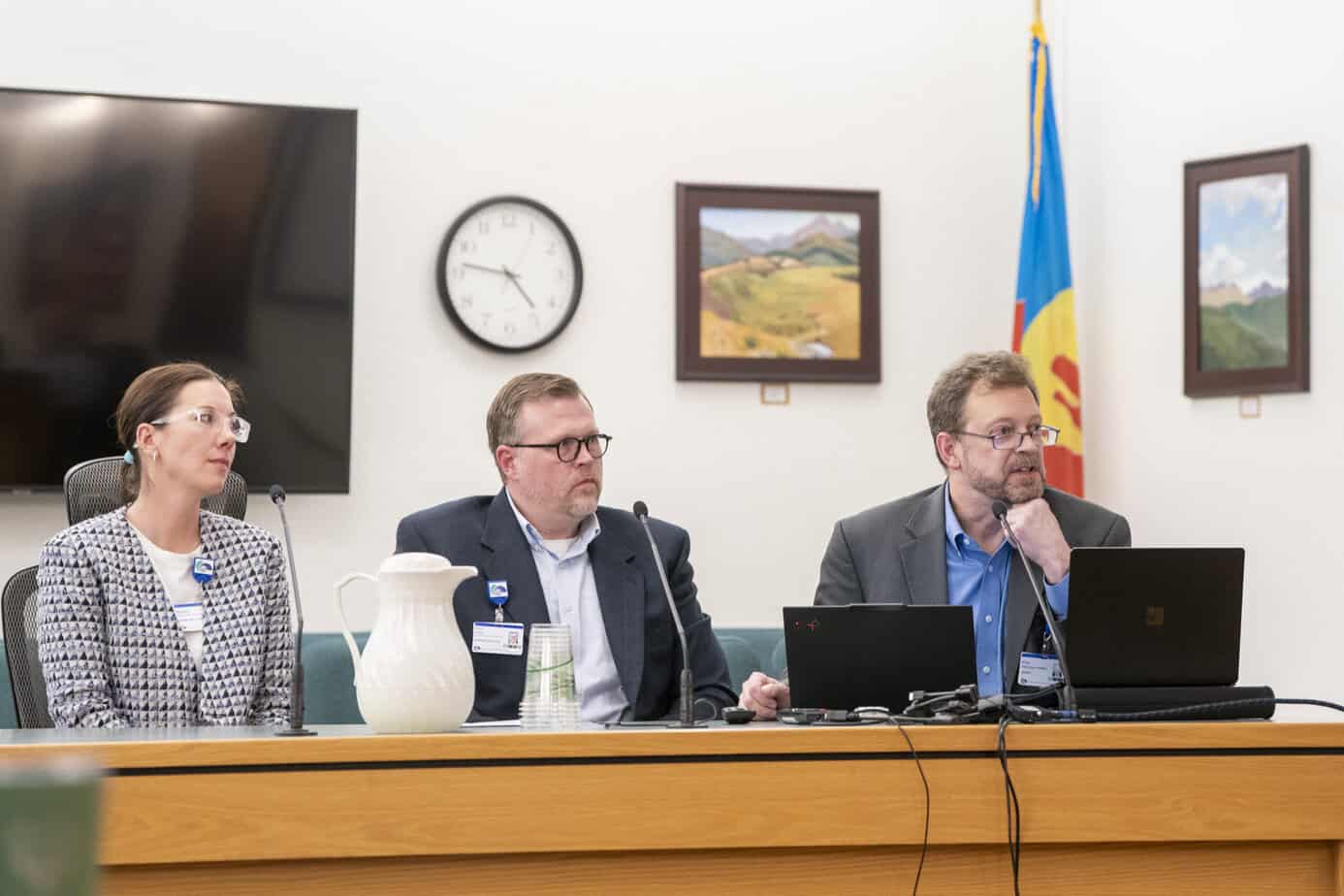
How President Donald Trump’s sweeping Big Beautiful Bill that was signed into law on July 4 could affect Northern Arizona Healthcare’s operations in Sedona and the Verde Valley were discussed by the Sedona City Council during council’s Friday, Oct. 28 meeting.
NAH is the area’s largest health care provider that has over 4,000 employees and serves 700,000 people in Northern Arizona.
“From looking at legislation, whether it’s on the local, the state or the federal level, the words that start out in the legislation are not always what shows up in the actual impact,” NAH Chief Legal Counsel Kyle Lathrop said, reiterating a common refrain from NAH that much is unknown about how the bill’s 33 different provision will affect health care. “A lot of this is going to come to light in the next year to 18 months, when the government comes back to work, we’ll know more.”
However, five major changes Lathrop outlined in the legislation include the termination of subsidies for health care plans that are sold through the Affordable Care Act marketplace.
“A lot of those subsidies were put in place during the COVID pandemic to make health insurance more affordable,” Lathrop said.
Arizona could see between a $26 billion to $43 billion decrease in Medicaid funding over the next 10 years, according to an analysis published in July 23 by KFF, a nonprofit health policy research and news organization.
“There’s also an approximately 20% reduction in Medicaid funding,” Lathrop said. “That’s the loss that’s coming from the federal side, with the expectation that the states, including Arizona, will make up in terms of making that funding still work. There’s also a lot of new requirements for Medicaid eligibility. These include you have to show active employment or active seeking of employment. And there’s also some qualified volunteer activity that will get you over the threshold for qualification.”
Potentially 109,686 people in Arizona could lose their ACA coverage with another estimated 190,993 people losing their Medicaid coverage in the state by 2034, according to a May analysis by the Joint Economic Committee’s minority members.
The bill’s effect on NAH is “it’s going to be in the millions of dollars,” Vice President & Verde Valley Service Area Administrator Rick Gray said. “A lot of that money that we [use] for providing care comes from Medicaid.”
In 2023, NAH took in $84.8 million in net patient service revenue from Medicaid that is 12% of its $712 million total net patient service revenue according to NAH’s financial statements and supplementary information for 2023 and 2022.
The bill also removes entitled bridge access which allows people “who if they had a sudden life change, something drastic … you could enroll and get coverage the next day,” Lathrop said.
“There could be legislation before the end of the year that changes on that,” Lathrop said. “There are also elections coming up in 2026 and 2028 so the political landscape could make a difference on what the impact is. So [there’s] lots of uncertainty.”
Adding to the uncertainty, the bill authorizes a $50 billion appropriation for the Rural Health Transformation Program with all 50 states applying for funding to support their rural populations. States must submit applications by Wednesday, Nov. 5, and the Centers for Medicare & Medicaid Services are expected to announce the awardees by the end of the year.
“The $50 billion program funding will be allocated to approved states over five years, with $10 billion available each year beginning in federal fiscal year 2026. Half of the funding will be evenly distributed to all states with an approved application,” a Sept. 15 CMS press release reads. “The other half will be awarded to approved states based on individual state metrics and applications that reflect the greatest potential for and scale of impact on the health of rural communities.”
That money does not pay for health care directly, but makes investments in health care delivery like using more telehealth or career training in rural areas.
“NAH along with other hospitals in the state, have let the state know what we think would be a good use of those funds,” Lathrop said. “It doesn’t do anything to define rural. So we’re going to be optimistic and hope that all of NAH in our coverage area is considered rural and we’re eligible for those funds. It also does not address any coverage or care for under or uninsured patients. So that’s still a big gap that we know is coming in the future.”
“With the anticipated cuts in Medicaid reimbursement; what have you been able to identify as far as what demographic groups are most at risk of being impacted by those cuts?” Vice Mayor Brian Fultz asked.
“I don’t want to speak the exact numbers,” Lathrop said. “[But] there will be people who are not aware until they show up for care that their coverage is either not there or they get the notice in the mail that says ‘you’re no longer covered.’ It’s going to be significant.”
Fultz followed by asking if immigrants will be especially affected by changes in medical policies or funding.
“If you’re not a citizen then you’re not qualified to get Medicaid coverage,” Lathrop said. “Now we’re a hospital. We have to treat whoever shows up at the emergency room. But the actual number of people who are not here legally getting health care through Medicaid I don’t think is significant, that’s not where the real impact is going to be.”
Cottonwood Cancer Center
The new facility will be fully operational in the fall of 2027 at which point the Cancer Centers of NAH in Sedona will be closed and all of its staff will be transferred to Cottonwood. Gray announced that NAH will be holding community forums on the topic but he did not announce dates.
NAH Community Relations Manager Jessica Drum said she’ll be helping lead the outreach about what will be done with the space in Sedona once the new cancer center opens and how the bill will affect area health care.
“There is a … constant concern, in our community, about the [Sedona] emergency room,” Councilwoman Kathy Kinsella said and asked to hear NAH’s plans and commitment to the ER.
“The plan is to keep the emergency department here,” Gray said.


