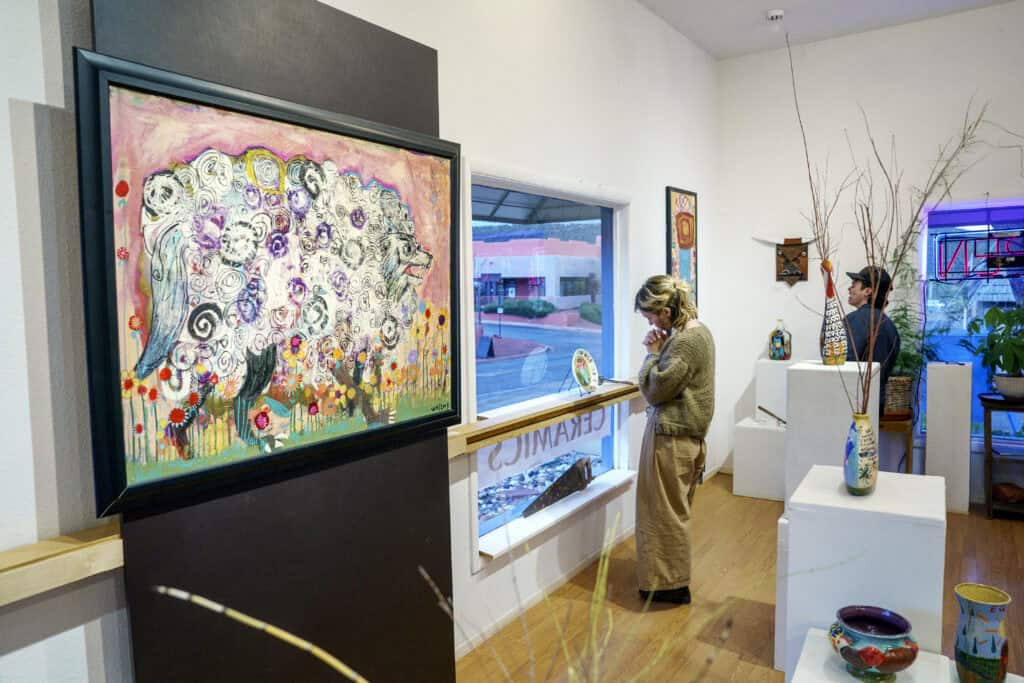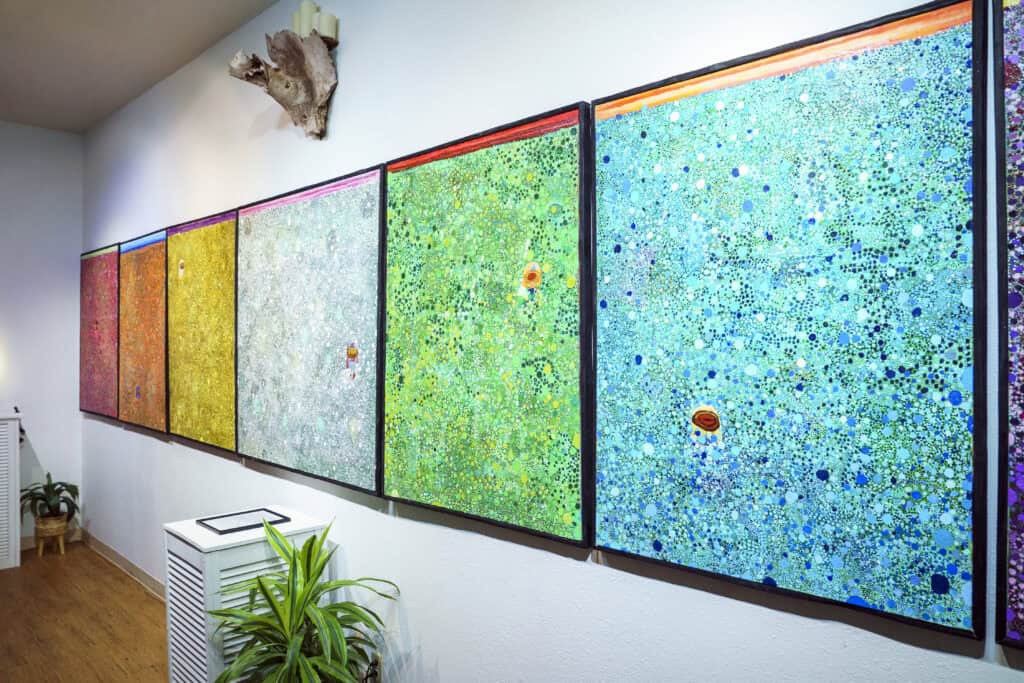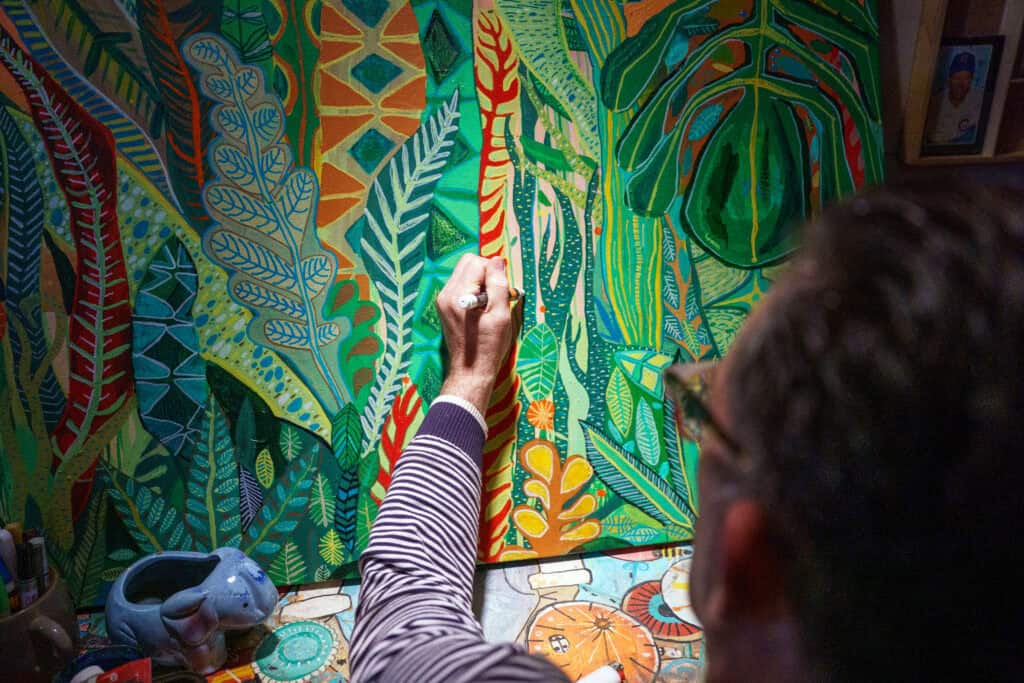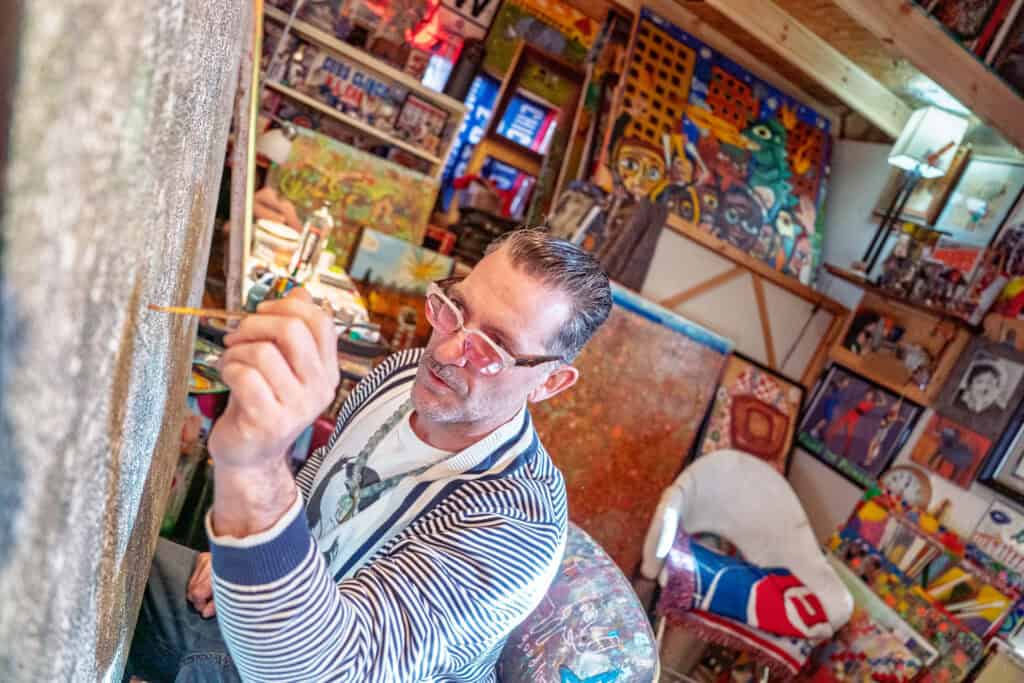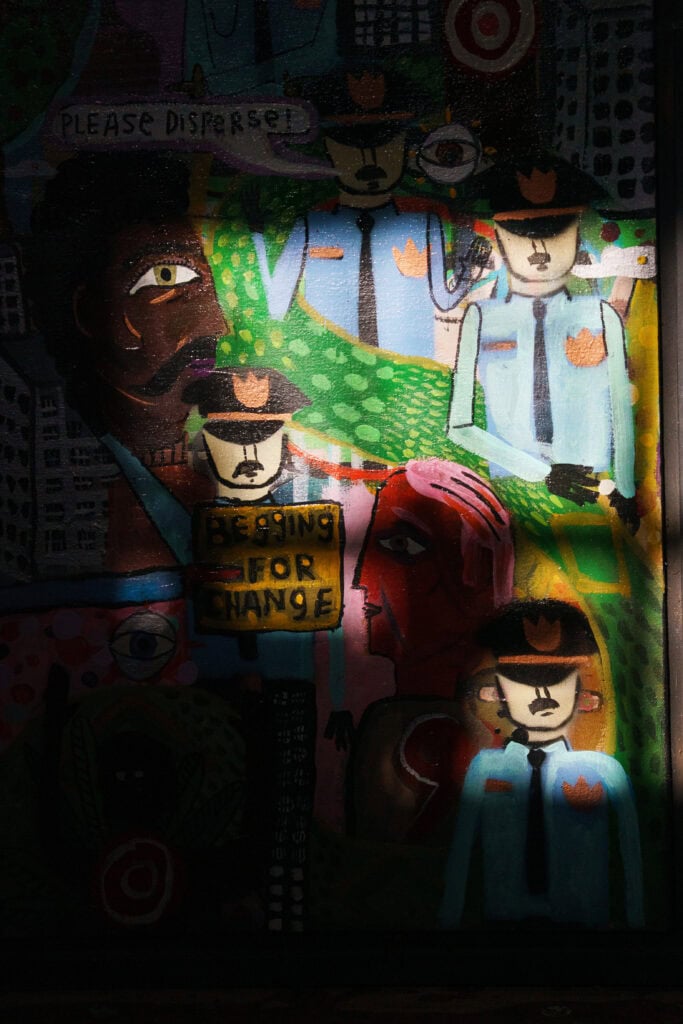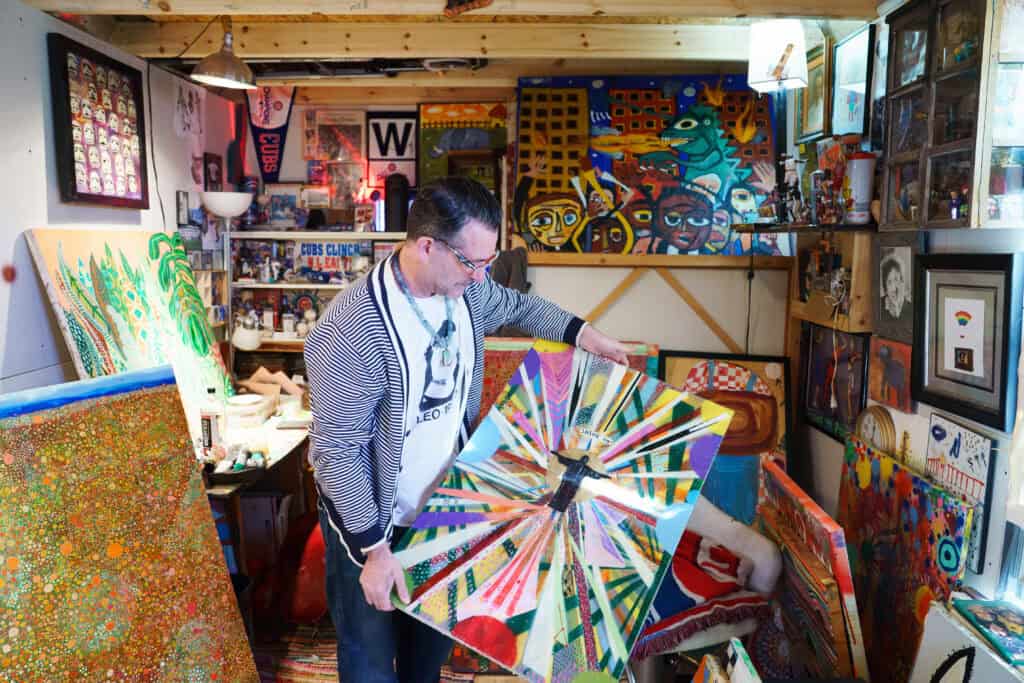

Frenetic Sedona artist Brian Walker has been painting and creating in Sedona since 1997.
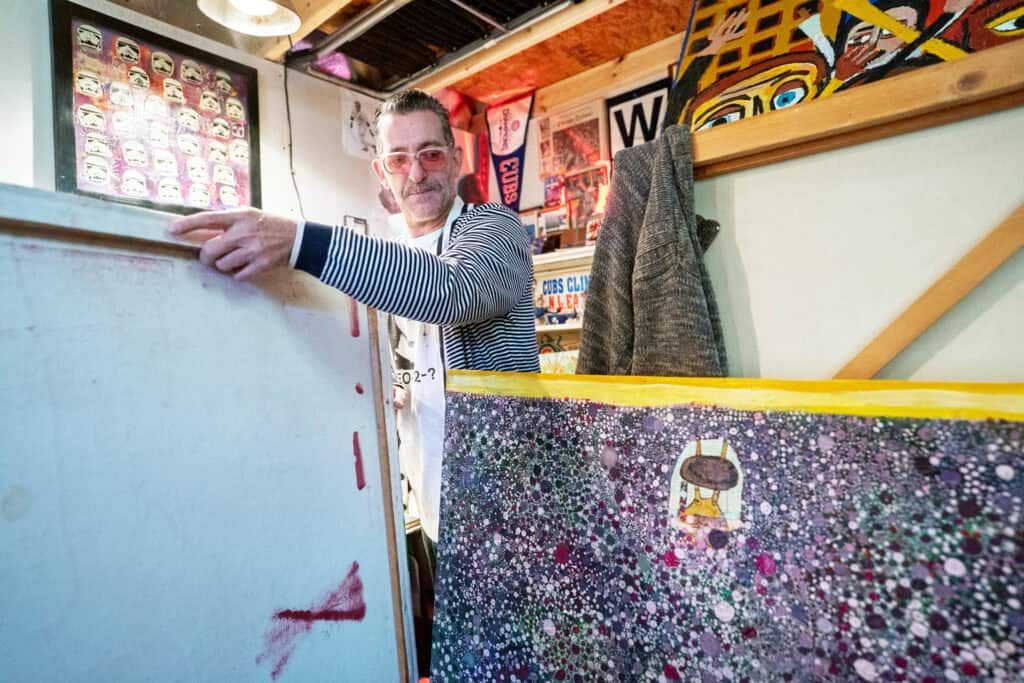
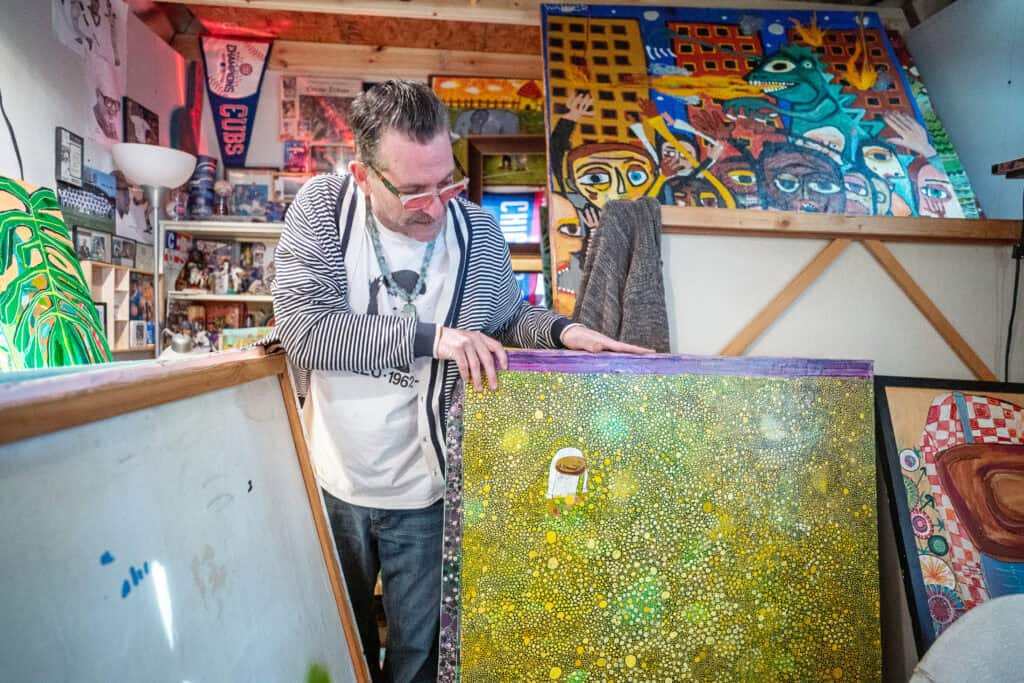
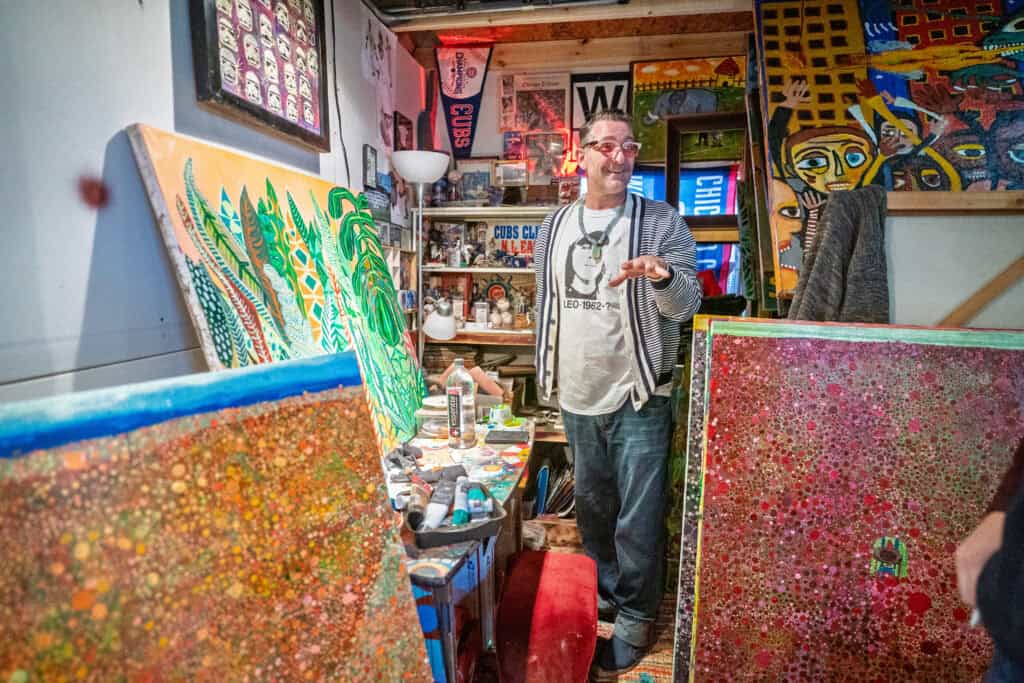
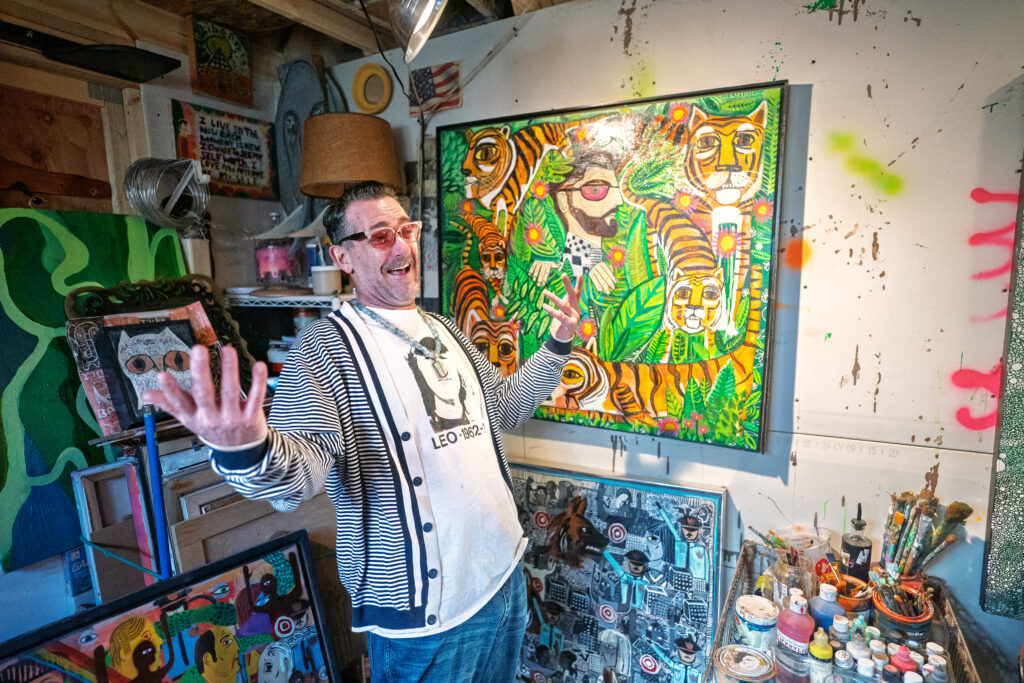
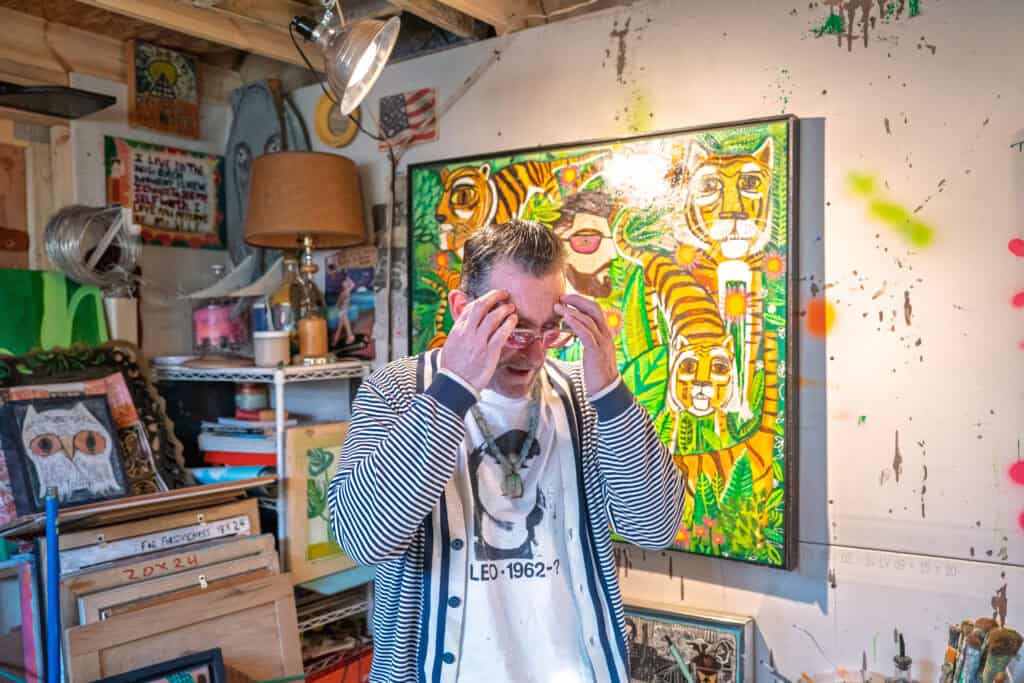
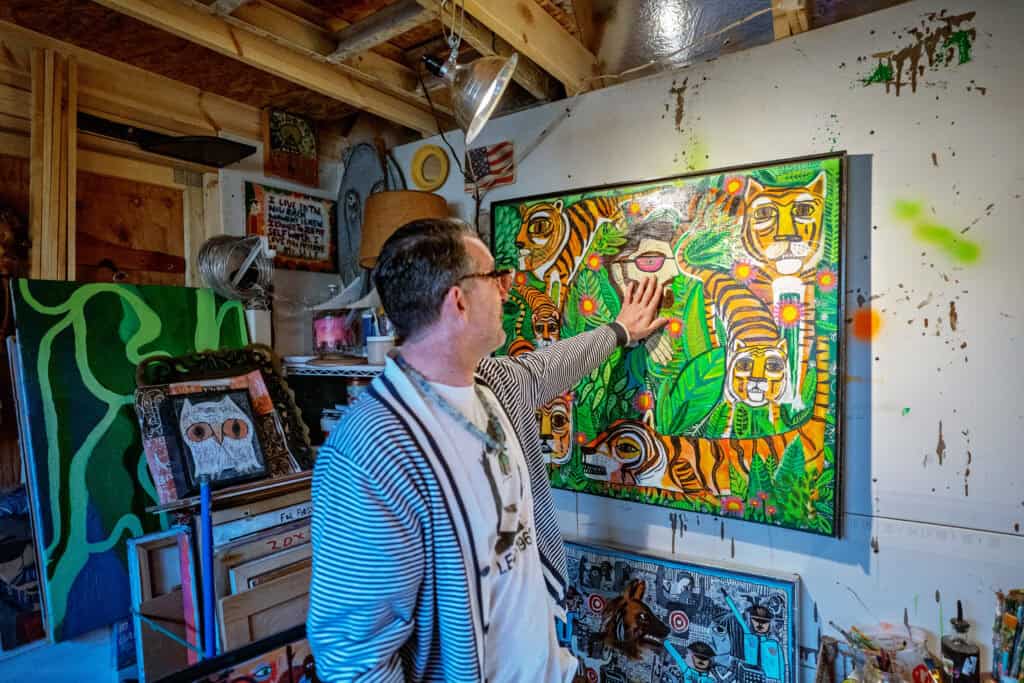
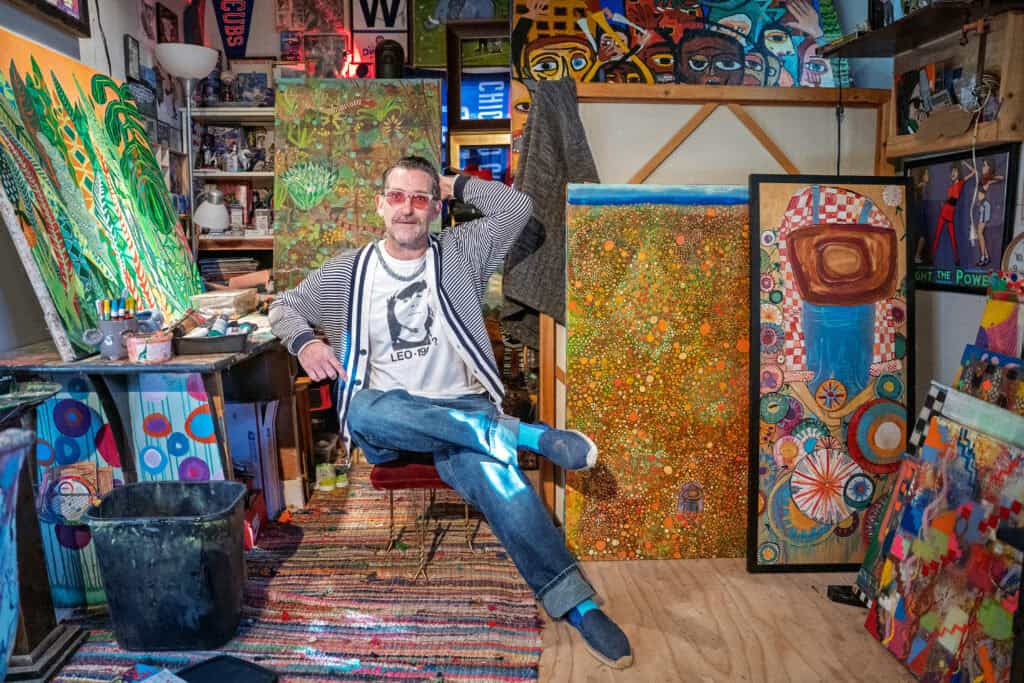
In West Sedona, artist Brian Walker has created his own world in his home studio, dubbed “The Bungalow.” Describing it as being reminiscent of Francis Bacon’s chaotic but inspired studio, Walker said he was able to build it in part thanks to the absence of a homeowners’ association and its constraints, enabling him to work on projects involving bottle walls, salvaged wood and other repurposed materials, as well as his paintings in a style he termed “Future Folk.”

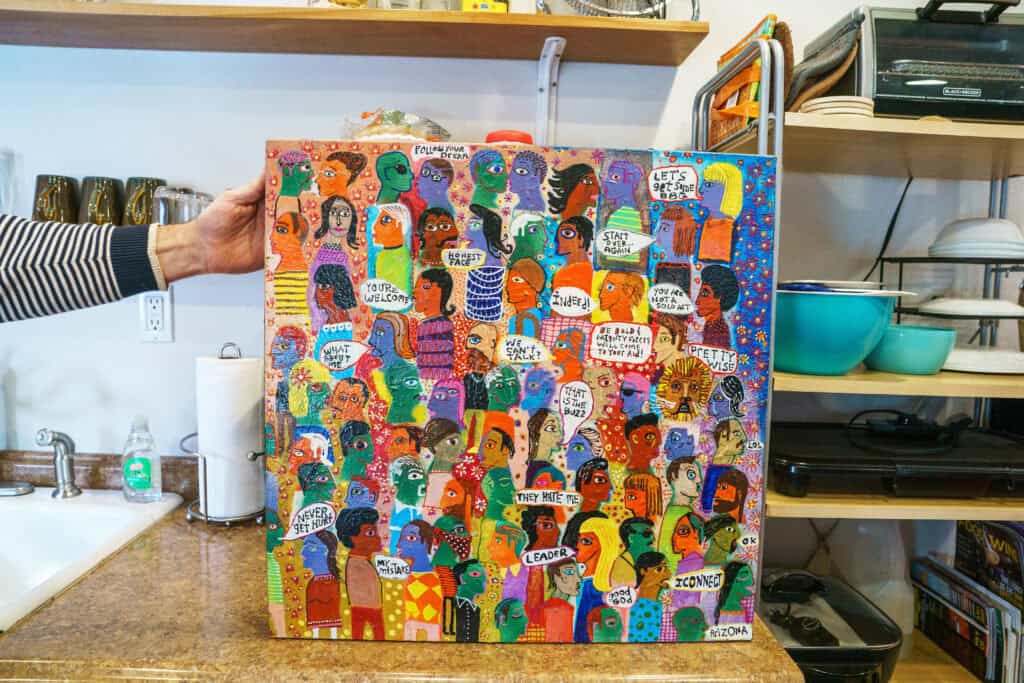
“Future Folk, to me, is going into the digital age ignorant,” Walker said. “Understanding everything has a pattern, has a formulaic structure in design to it without really doing the research or the practice to try to make it direct. Kind of choosing the passion and the calling over the technique … I never really thought I wanted to be a fine artist, but I wanted to be a creative force.”

That attitude also inspired a personal mantra that he has painted on his studio walls: “Energy Over Technique.”
Walker is a self-taught painter from Chicago who moved to Sedona in 1997. He first visited the area in 1983 with his uncle, Steve Trout, a retired MLB pitcher who was with the Chicago White Sox, Chicago Cubs and the New York Yankees before retiring from the Seattle Mariners in 1989. His grandfather, Dizzy Trout, was also a pitcher with the Detroit Tigers from 1939 to 1952.
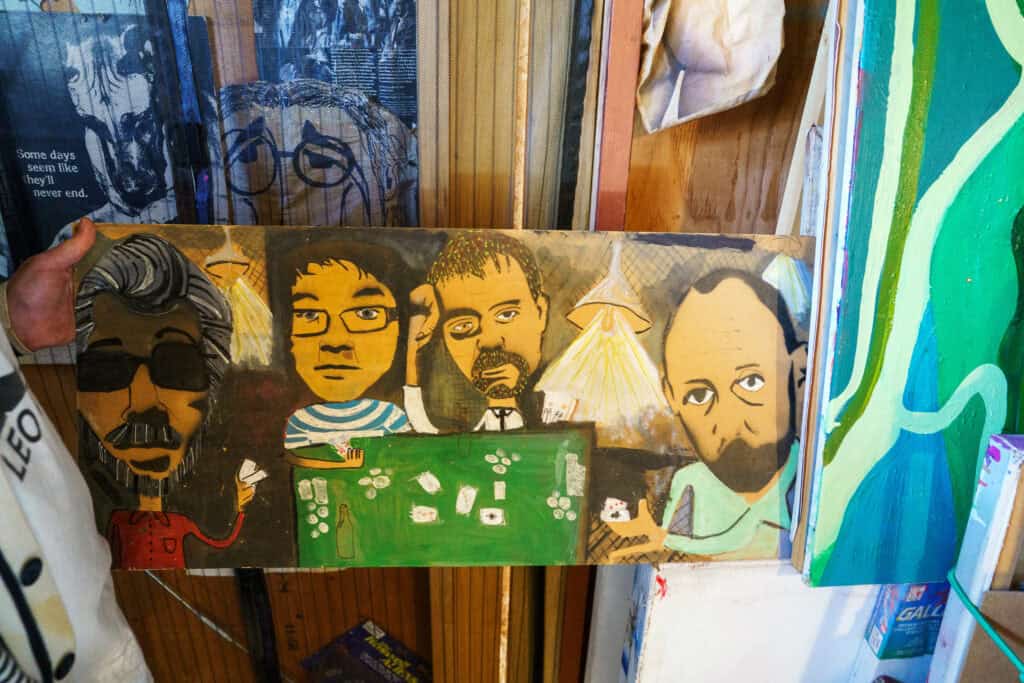
“When I’m in creation, the anxiety of life, the anxiety of the future, the remorse or regret of the past is gone and I’m in the now,” Walker said. “That’s important to me because I can’t do [expletive] about either.”
Walker has worked at various service jobs in Sedona, including a stint at the Circle K in West Sedona, during which he met longtime friend and fellow painter Terry Israelson. Walker said that Israelson stopped in regularly for cigarettes and coffee in the late 1990s and that Israelson eventually asked him, “Hey, are you an artist?”
“He said, ‘I want you to come over to see my work,’” Israelson said. “After seeing him for a couple weeks and getting this invite from him, I finally went over … and it blew my mind.”

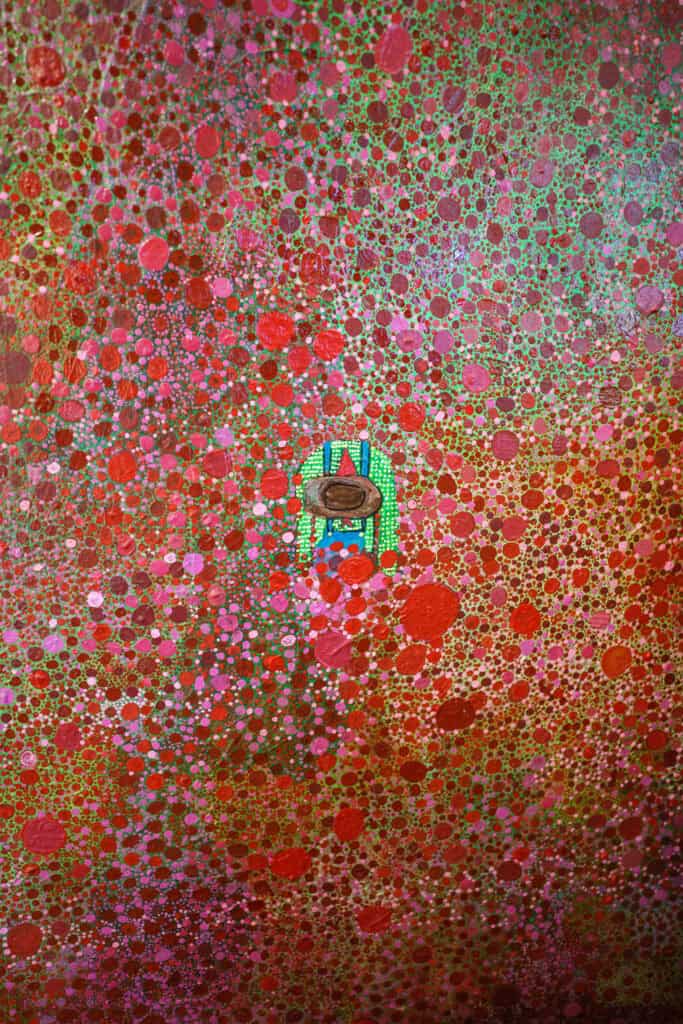
David Jolkovski/Larson Newspapers
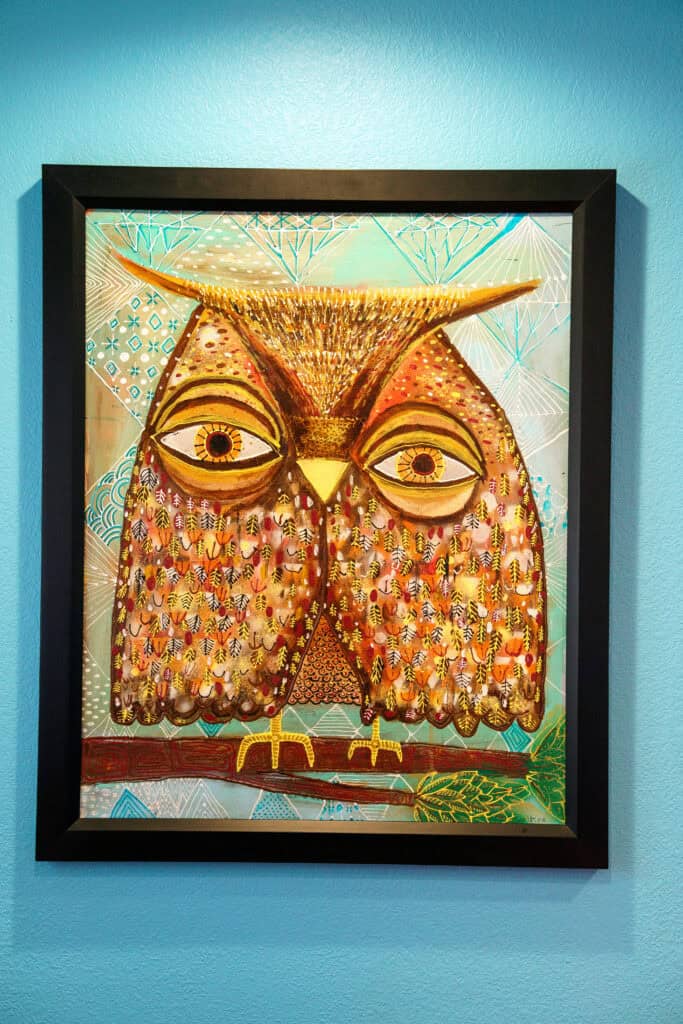
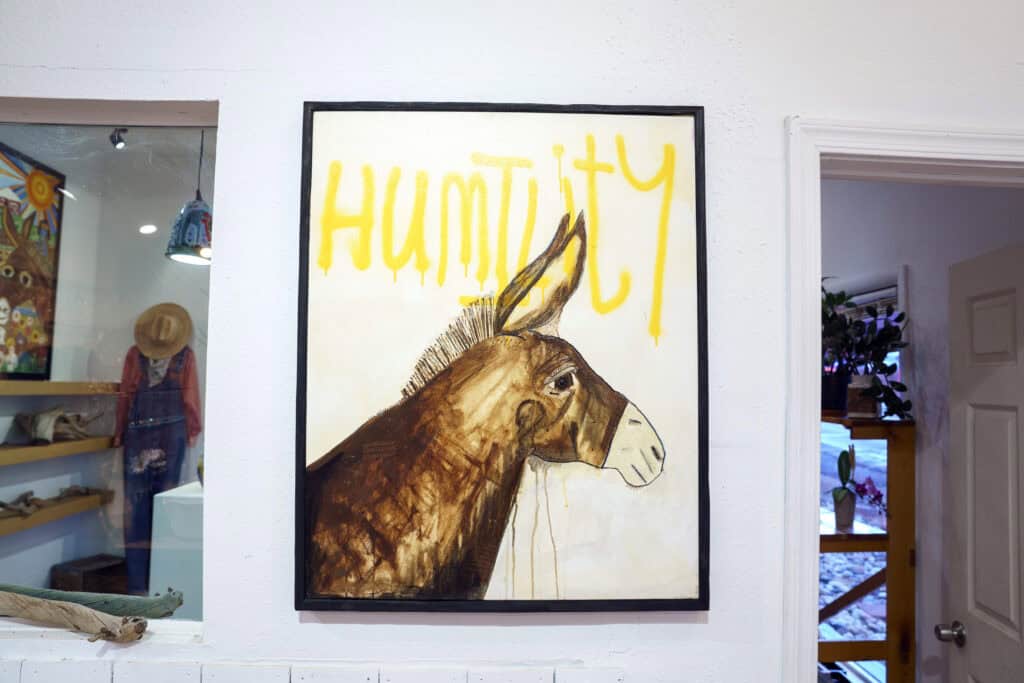
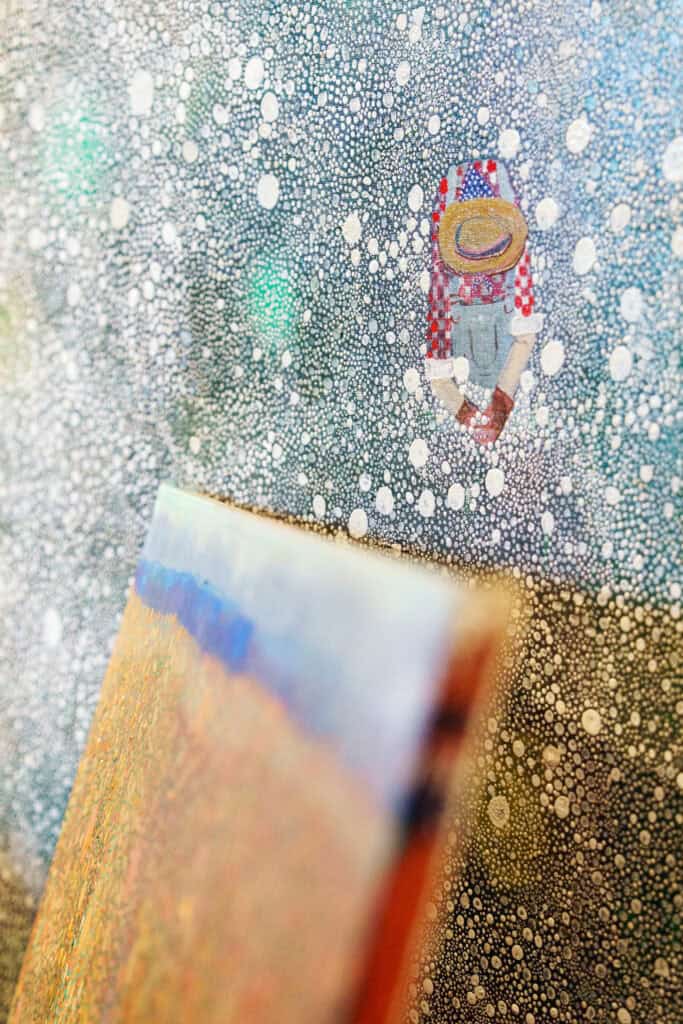
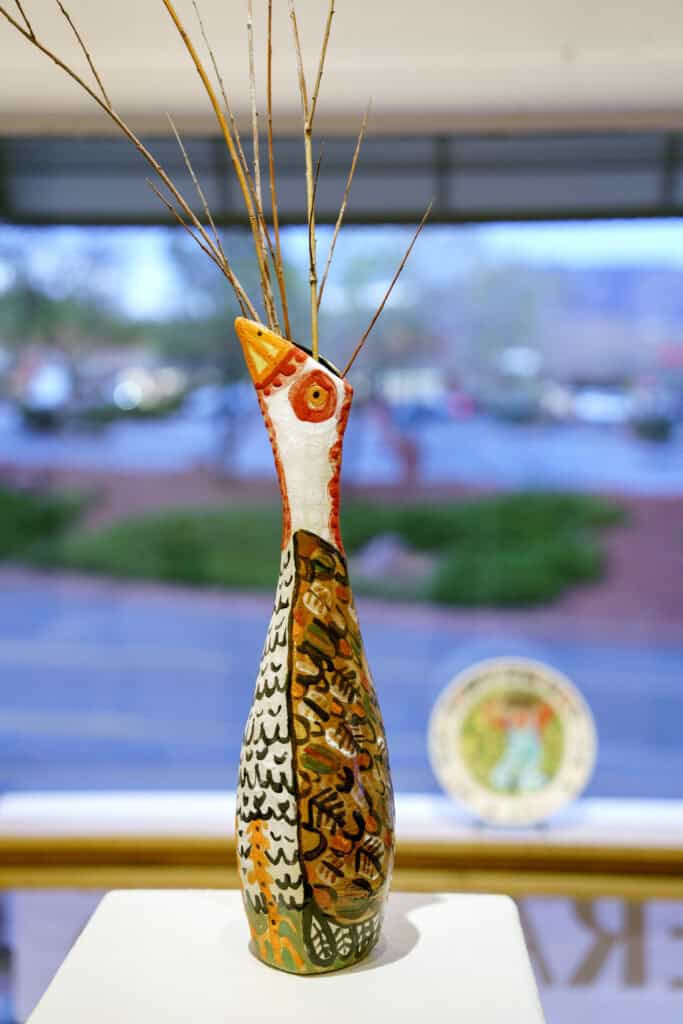
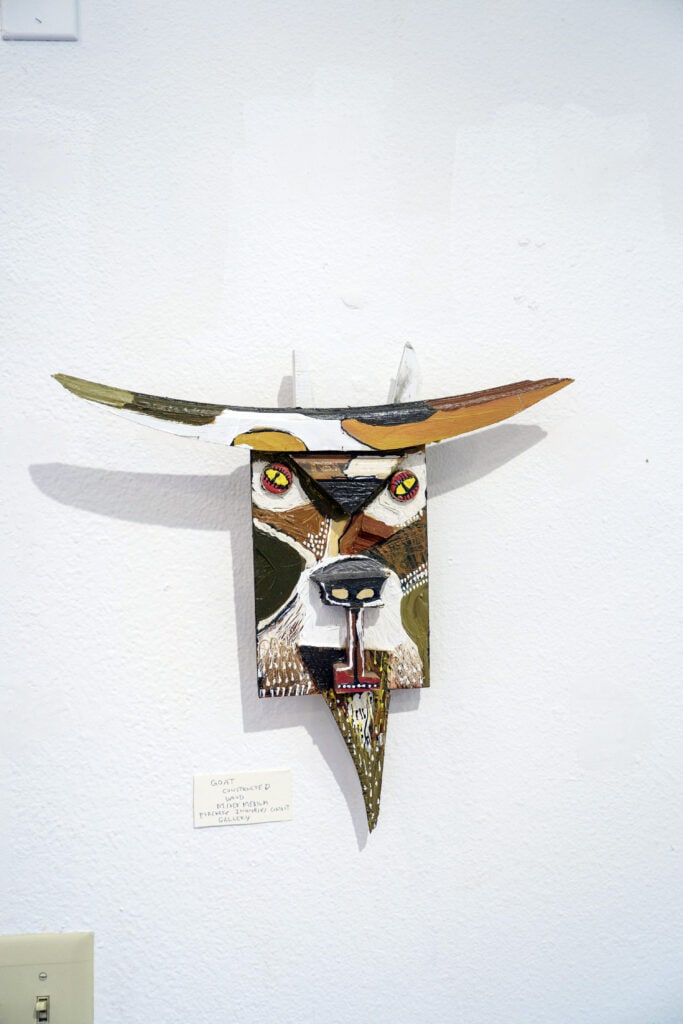
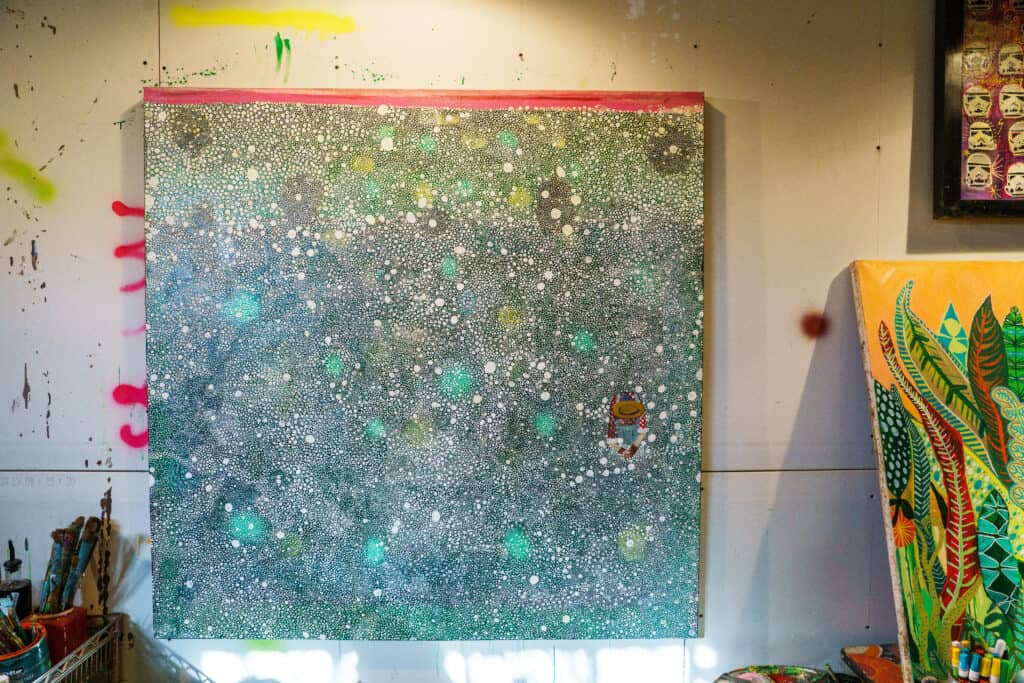
Israelson said that Walker’s work reminded him of the neo-expressionist Jean-Michel Basquiat.
“Basquiat was a famous painter in New York City in the 80s [who used] simple shapes, bright colors, almost very childlike, and Brian’s work at the time when I met him was very similar, and people would point that out, and he didn’t know anything about Basquiat,” Israelson said. “When he realized he was painting like somebody else, he stopped and shifted his painting style … and his art totally softened and got more garden instead of these angry paintings he had been doing before.”
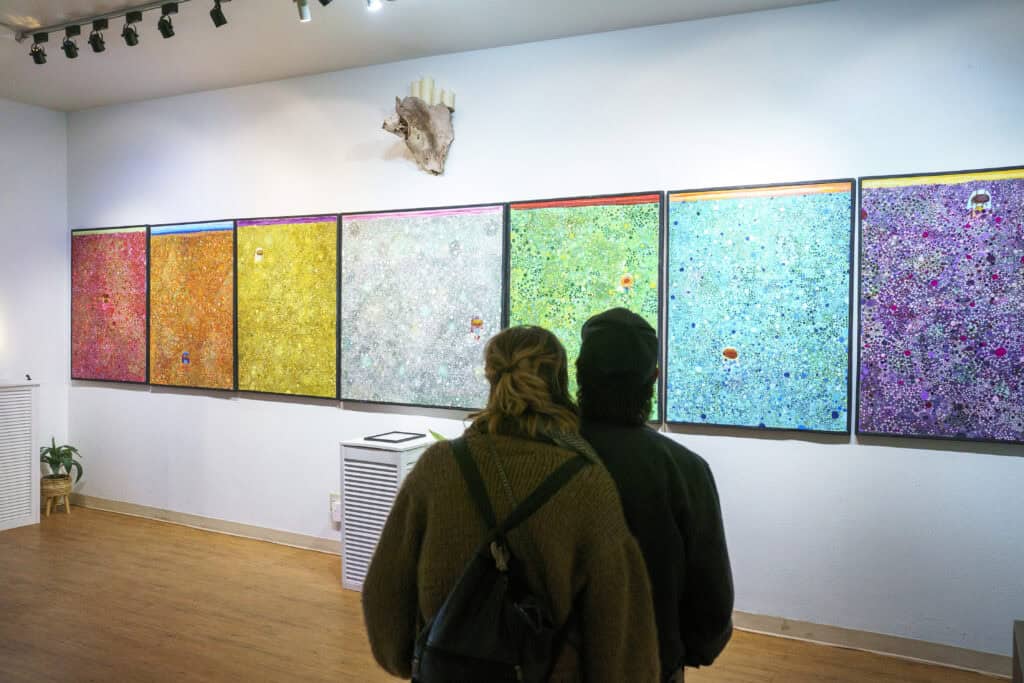
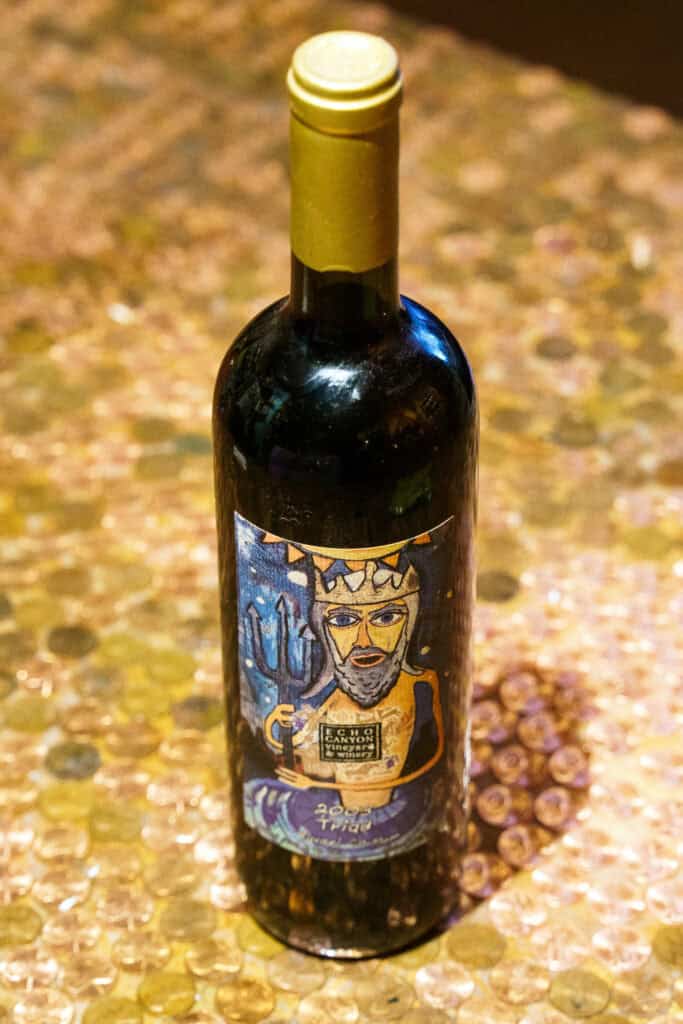
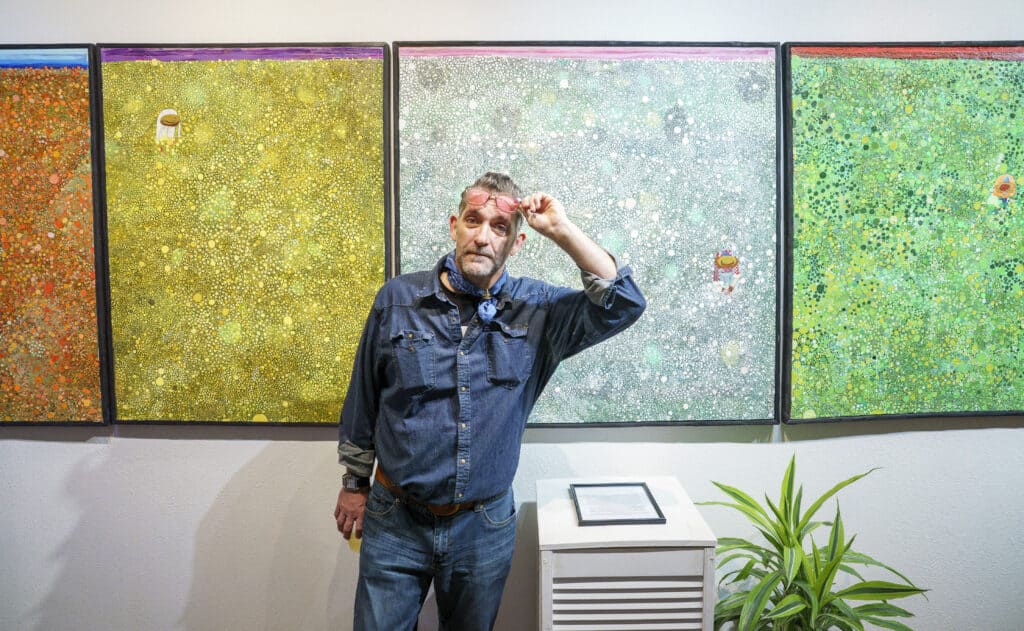
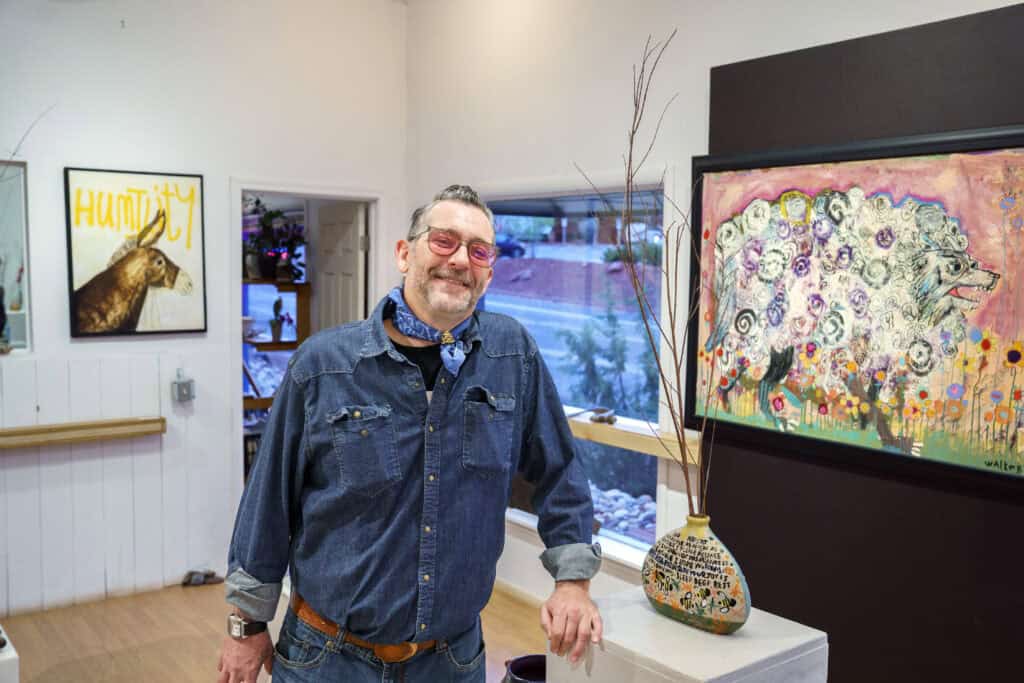
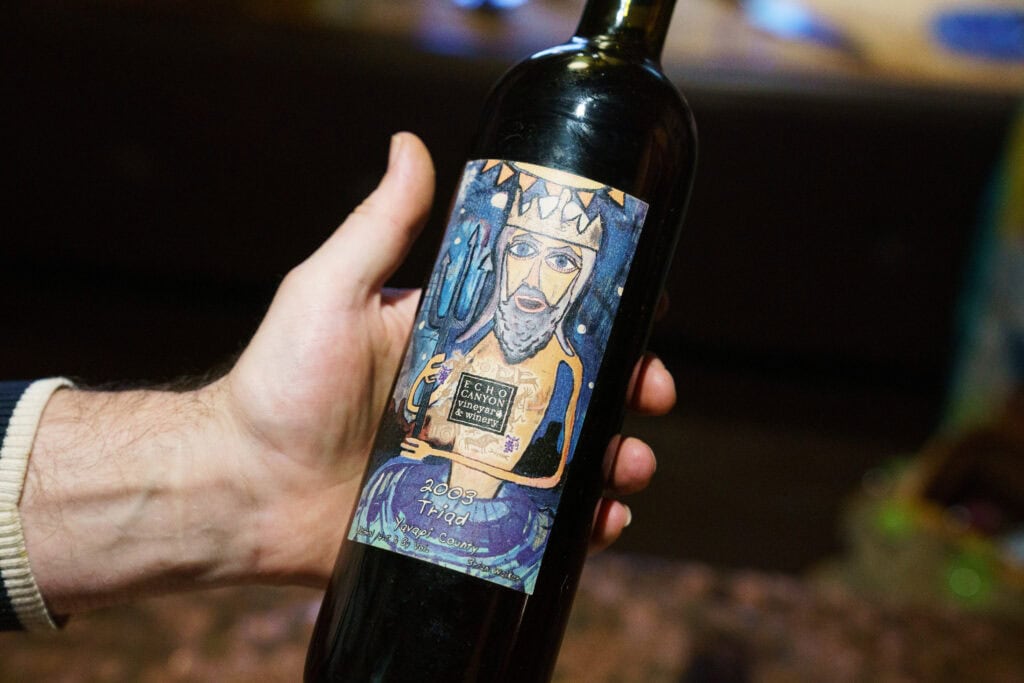
Although he has no formal art education, Walker has exhibited his work in galleries in Sedona, Malibu, Calif., Asheville, N.C. and Nashville, Tenn., and he has also taught art and art history at Southwestern Academy. He has also provided art for the Sedona Emergency Center and designed wine labels for John Marcus’ Echo Canyon Winery.
Driven by curiosity and passion that he admits borders on obsession, his life has been dedicated to creative exploration.
In Chicago, Walker was a singer-songwriter for a punk band called The Rodmans, named after iconic Chicago Bulls player Dennis Rodman. He eventually left the band to pursue art, an experience that he partially credits with developing his “do-it-yourself” ethos, which is central to his creative approach.
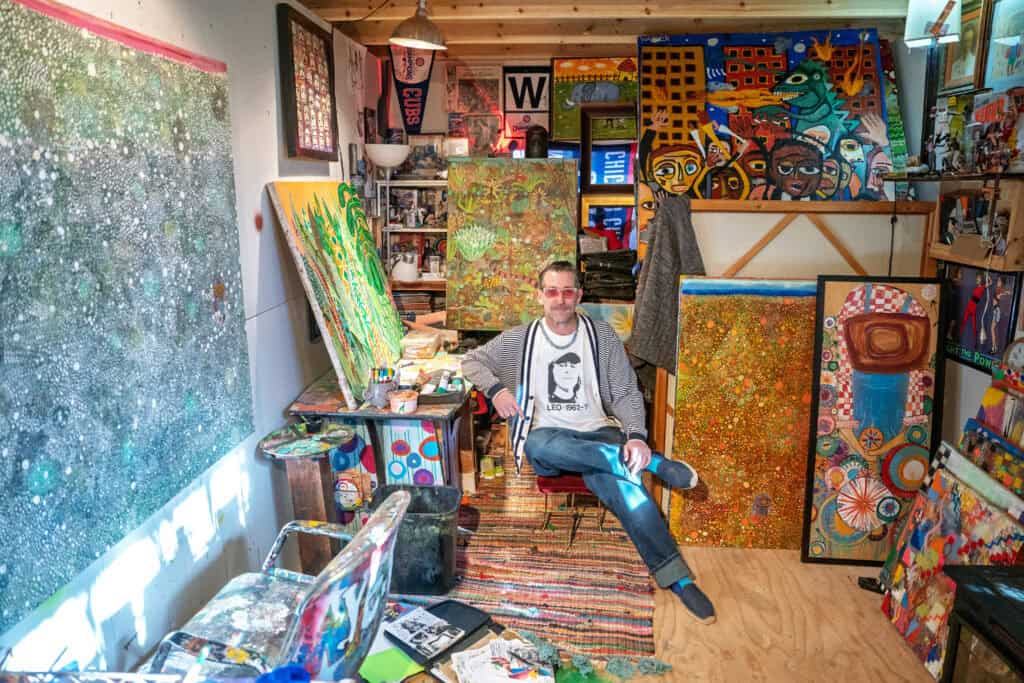
“I got into painting, because I was a messed-up kid,” Walker said. “Like most people, I had a tough childhood, and like most kids, I thought I was the only one going through it. In my teens, I started screwing around with art. I was always skateboarding and skateboard magazines always had cool artwork. … Then I got into [The Rodmans] and I got stuck kind of being that guy, even though I still had anger, but I didn’t want to be that angry, but I still wanted to have a little fire.”
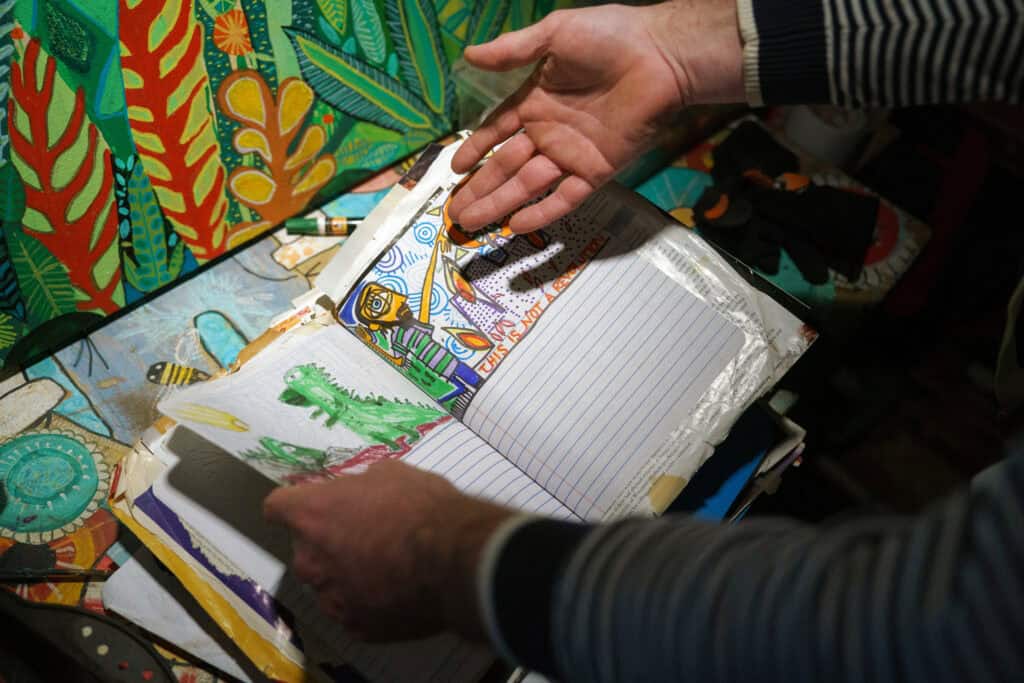
Walker said he decided to take his creative spark to Sedona because he could develop that in a place with “a quiet energy” and sought to immerse himself in modern art, focusing primarily on American movements from the 1940s onward.
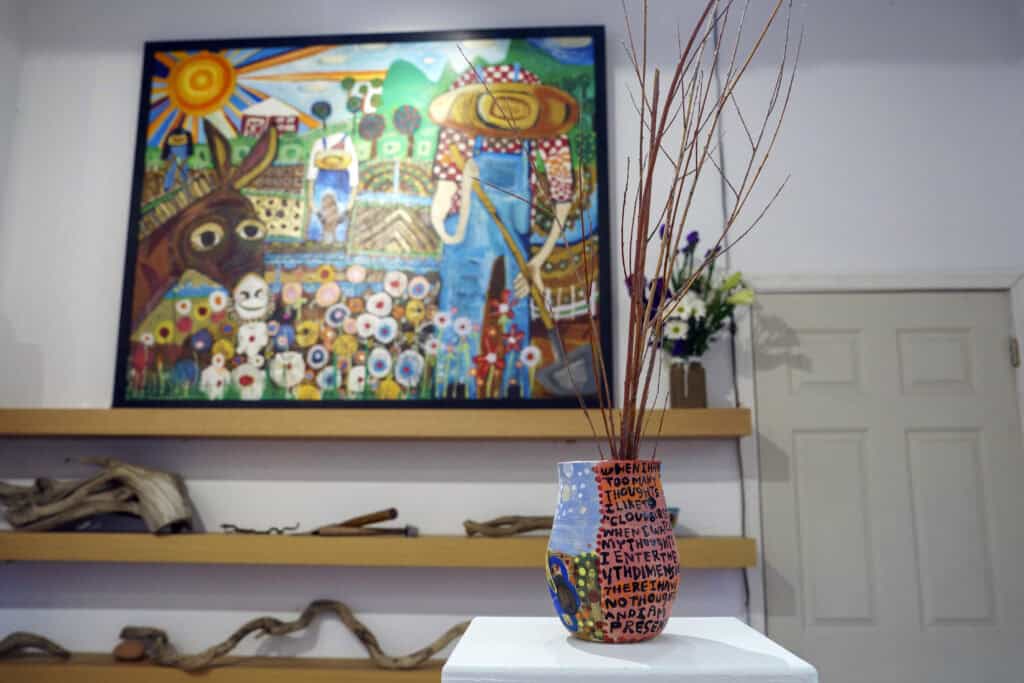
“Music and art have a symbiotic relationship, because even in the paintings I do now, I’ll hear a lyric in a song from Bob Dylan or Sturgill Simpson song, and I’ll feel that and try to paint it visually,” Walker said. “When you [sing] something lyrically it’s not as open for interpretation. But with painting, you can layer that meaning and make it abstract. But it still comes from the same place. It’s producing a picture or an image in your mind.”
Walker said he was helped by many people who “didn’t put the paint brush in my hand but had a hand in keeping the paint brush in my hand.” Foremost among them is Israelson, who provided Walker with studio space and supplies during his early days at Scottsdale’s Art One Gallery.
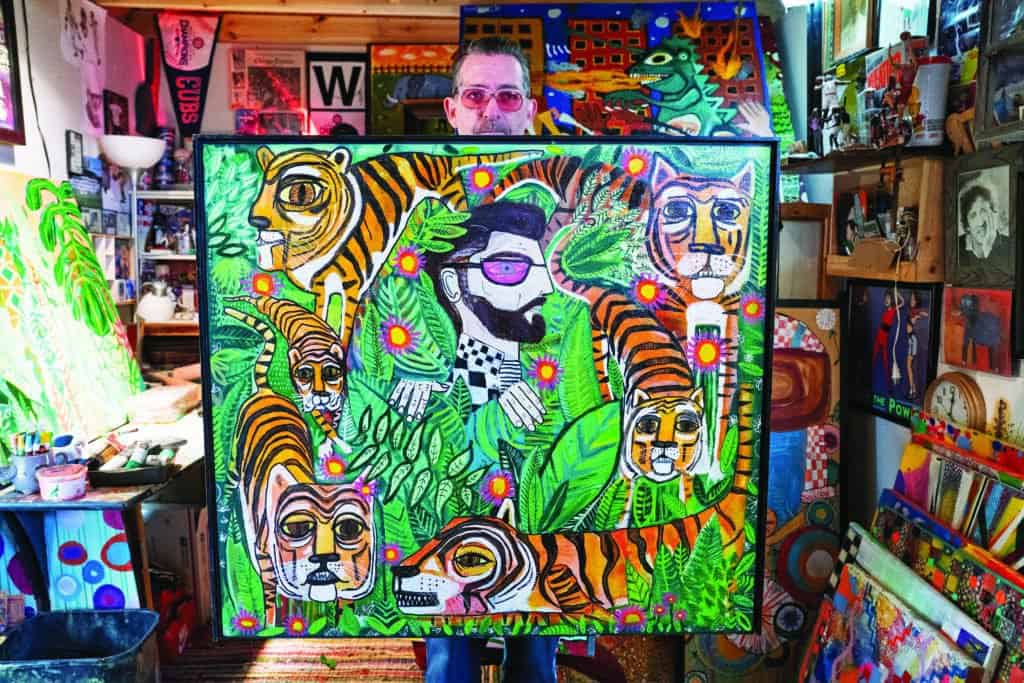
“I was drawn to his charisma and his advocacy for the arts in Sedona, especially for younger, more outsider art,” said Alex Rovang, who hosted Walker’s work on April 4 at Rovang Ceramics for the monthly First Friday in the Galleries. “Some of his friends and he would host events at people’s houses called Art House, which was amazing. It was a combination of music and local artists. I’ve always been a huge fan of his style and of him as a person.”
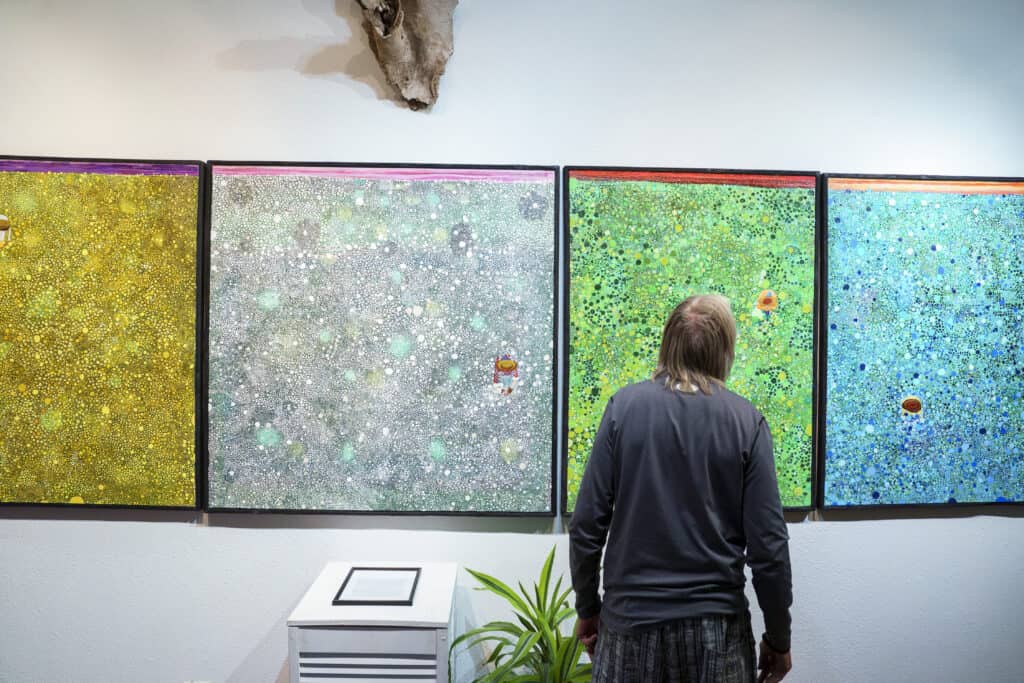
“He’s got a tremendous commitment to his kids, his art, his friends,” Israelson said. “He is probably the most amazing male I know because of his integrity and where his heart is … He’s a good example of what grace is and he’s creatively powerful. Even when he’s working as a restaurant server, he’s the best server in town.”
David Jolkovski/Larson Newspapers
Walker reveals a philosophy of living in the now through art and his personal interactions.
“Recently, I served a blind man and had to describe the food to him, painting a picture with words,” Walker said. “Or when I meet elderly guests who come to Sedona after losing someone, sharing a special moment despite their grief. I get to be part of that experience. That’s what I hope for in my paintings. I want people to connect with something that comes from my most vulnerable yet intentional place. It’s a powerful feeling to know that my work is in homes around the world, bringing some small joy to others.”