

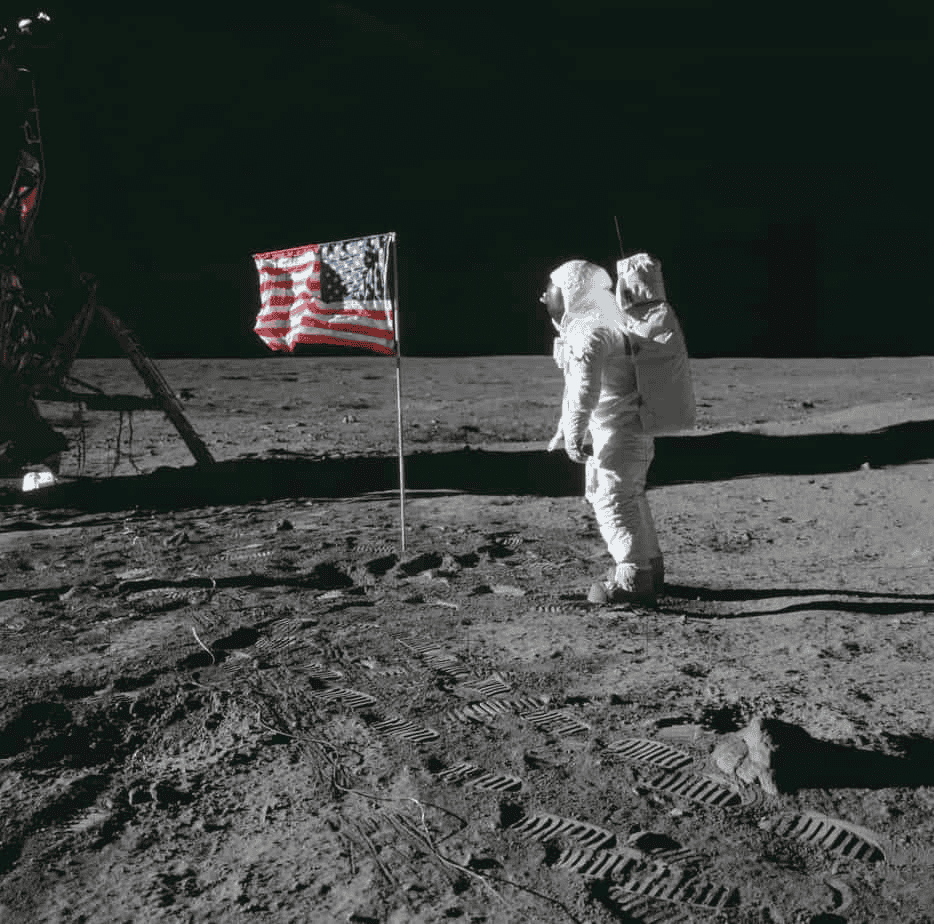
Sunday, July 20, marks the 56th anniversary of the first footsteps on the Moon. Neil A. Armstrong, Michael Collins and Edwin E. “Buzz” Aldrin, Jr. launched four days earlier on a journey to reach our nearest planetary body, set foot on its surface and return safely home.
The giant-impact hypothesis theorizes that a Marssized body, named Theia by astrophysicists, collided with the proto-Earth during the formation of our early solar system and the ejecta of the violent collision accreted into the Moon and Earth, explaining the similar stable isotope ratios of lunar and terrestrial rock, and differing compositions of the Earth and Moon’s cores and mantles.
Theia might have brought water and carbon material from the outer solar system to Earth, influencing the eventual formation of life and its evolution by natural selection.
The desire to reach the Moon may be burned into our bones and our own evolutionary history: The Moon’s gravity affecting Earth’s oceans may also have agitated tide pools and coastal areas leading to the formation of prokaryotes and microbialites from non-living proteins in carbon-rich mud about a billion years after Theia’s impact, creating early life. So the moon may not just be a celestial body affecting life on Earth — but our cause.
In 1969, some 600 million humans around the globe watched a grainy telecast of Armstrong and Aldrin walking down a short ladder and leaving their footprints on the surface. When Aldrin and Armstrong landed on the Moon and returned to Earth with moon rocks and lunar samples, it was the first time our two spheres touched again after 4.5 billions of years apart.
Armstrong came to Flagstaff in July 2012 to speak at the dedication of the Discovery Channel Telescope — now called the Lowell Discovery Telescope — a month before he died in what would be his last public appearance. I was in the audience with photojournalist Tom Hood and about 500 other guests as he discussed the Apollo 11 mission and the progress of science since that historic mission. I have since interviewed International Space Station astronaut Nicole Stott and commercial astronaut Alan Stern, who led the New Horizons probe mission to Pluto, but meeting and hearing Armstrong tell us in his own words what it was like be the first man on the Moon still ranks as the best story I’ve been able to cover for this newspaper.
Astronaut Neil Armstrong’s last speech on July 20, 2012, on the 43rd anniversary of the Apollo 11 landing on the moon.

The Apollo missions — the largest peacetime project in our nation’s history — involved the work of more than 400,000 scientists, engineers, technicians and construction workers who helped build the rockets, modules, components and technical equipment and plan the mission.
Eternally humble, Armstrong minimized his involvement: He said that the Apollo 11 mission was simply to place some mirrors on the surface of the Moon so astronomers on Earth could bounce a laser off them and measure the exact distance to within inches. Armstrong said he was just a “technician on the project” whose job was to install the mirrors — though wagering his own life on the 50/50 odds of a successful mission and return.
A plaque Aldrin and Armstrong left behind sums up the mission for us all: “We came in peace for all mankind.”
On Nov. 16, 2022, NASA’s Space Launch System rocket carried the Orion spacecraft on the unmanned Artemis I flight test, which orbited the Moon, taking 10 days to arrive, six days in a distant retrograde orbit at two Lagrange points on the far side of the Moon and then a return trip, splashing down on Dec. 11.

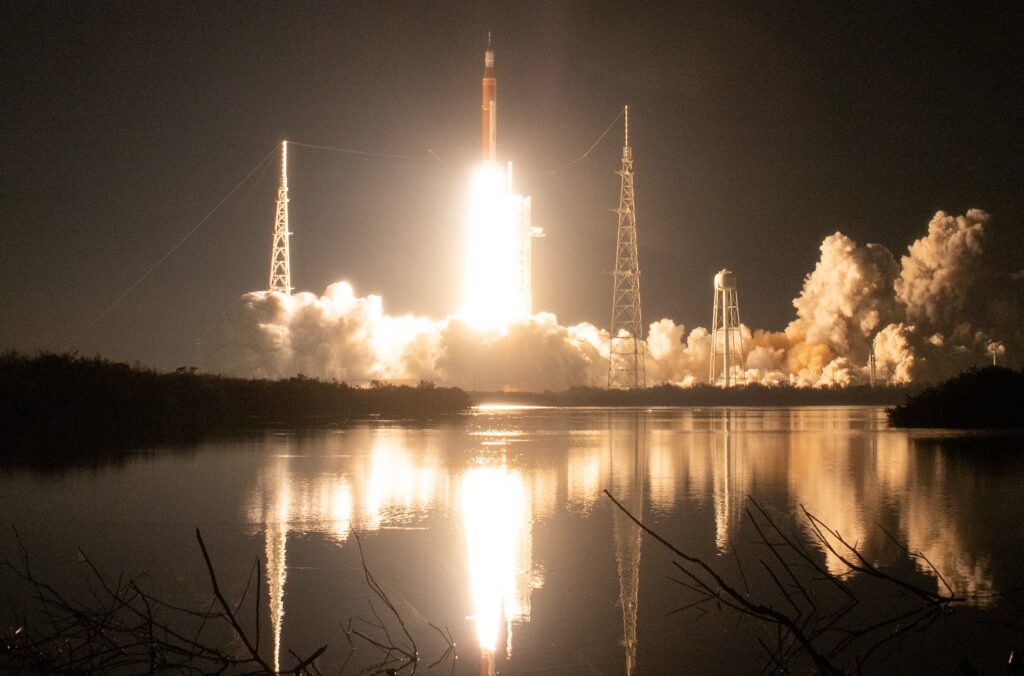
Delayed for several years, Artemis II is now planned for launch no later than April 2026, and will be taking four astronauts on an identical test run around the moon.
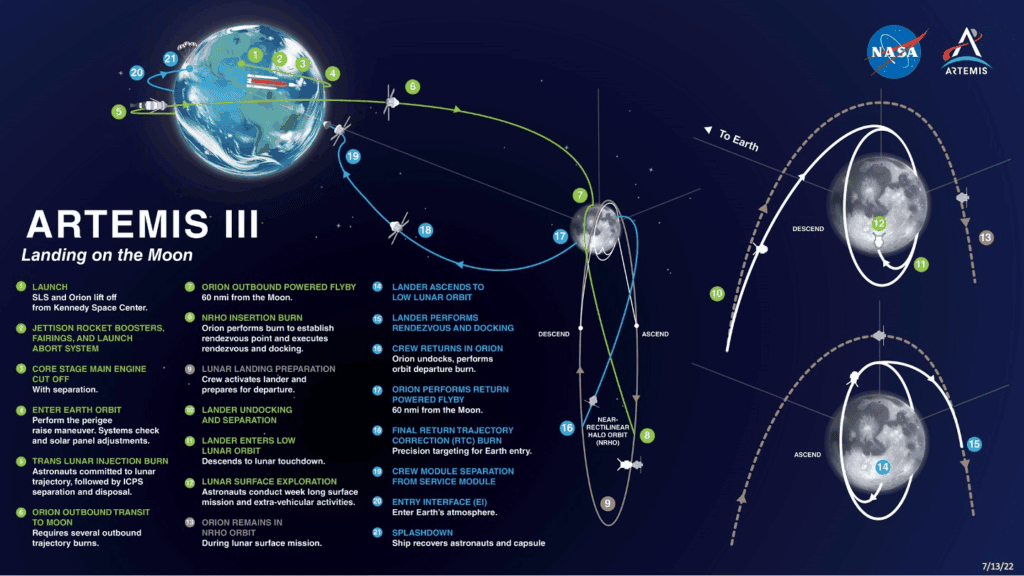
In December 2024, NASA officially delayed Artemis III to no earlier than 2027, which will land astronauts on the moon for the first time since the Apollo 17 mission in December 1972.
Federal budget cuts mean Artemis III may be the last American mission to reland on the Moon. But other nations and private companies will strive to land on the moon even if the United States gives up its aspirations.

A temporary and eventual permanent lunar base is inevitable — national pride, instinctual curiosity and human desire to explore and expand is part of our constitution and as been since the first prokaryotes left tide pools to colonize the ancient seas.
The Moon does not care under what flag we return or which language we will speak in celebration — Earth’s borders can’t even be seen from out there, something lunar astronauts have tried to teach the rest of us since 1969. This Sunday, July 20, gaze up and remember that human footprints on that sphere are still untouched and “there is some corner of another world that is forever mankind.”


