

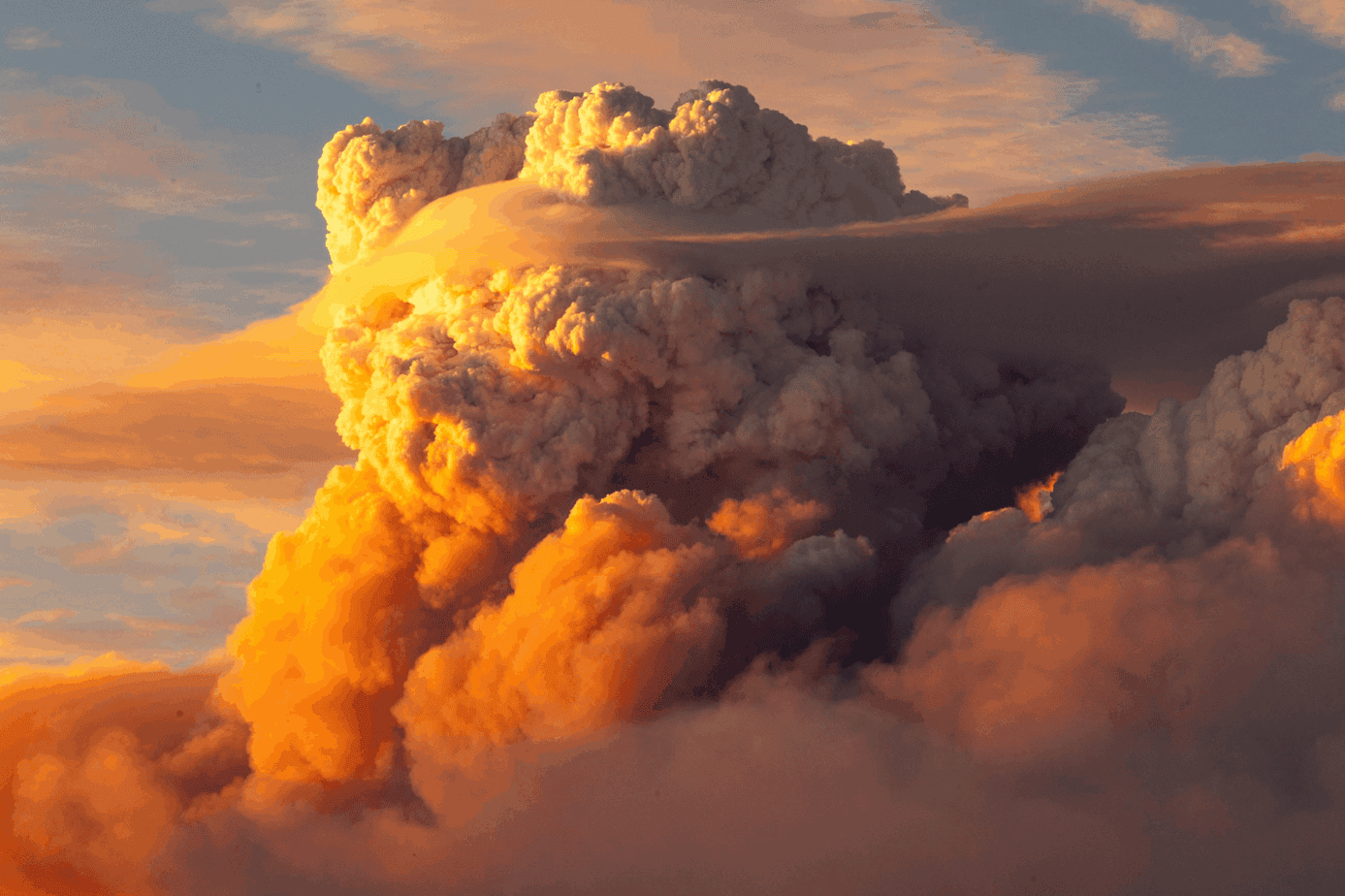
Over the weekend, Sedona and Verde Valley residents were worried about smoke in our skies and took to social media to voice their fears that wildfire was near us — due in part because of a reported evacuation order affecting the “Cottonwood Campground” and closure of a portion “89A,” which was shared without providing the exact location.
Fortunately, for us at least, the source of the smoke is from a fire 91 miles to the north, the 5,716-acre Dragon Bravo Fire, that is burning heavily wooded areas on the North Rim of Grand Canyon National Park.
Another 45 miles north of Dragon Bravo, the White Sage Fire has burned 49,286 acres, first the chaparral of the Kaibab Plateau, then the heavily wooded Kaibab National Forest.

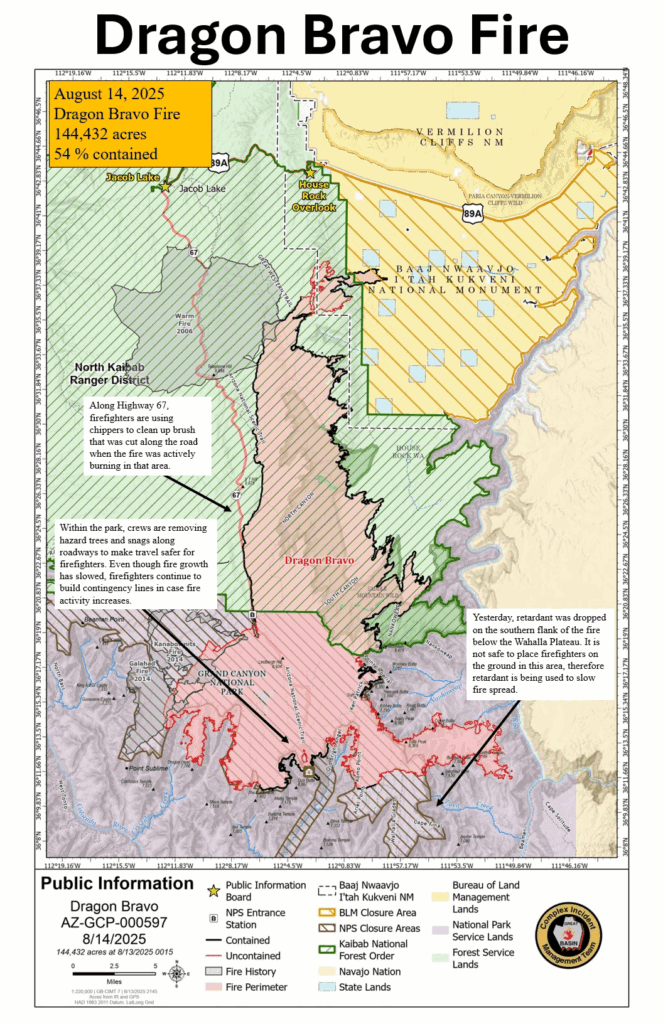
Daily Update for August 14, 2025
Acres: 144,432 Start Date: July 4, 2025
Location: Grand Canyon North Rim Cause: Lightning
Personnel: 978 Fuels: Mixed conifer, aspen regeneration
Containment: 54% ponderosa pine, pinon-juniper, and sage
The aforementioned “Cottonwood Campground” is not near the city of Cottonwood, but rather a campsite near the North Rim of the Grand Canyon. The aforementioned “89A” is not the State Route 89A that goes from Prescott through Jerome, Clarkdale, Cottonwood and Sedona to Flagstaff, but rather a northern spur of US 89 that breaks off at Bitter Springs on the Navajo Nation, heads west around the southern rim of Vermilion Cliffs National Monument, cuts across the Kaibab National Forest and turns north before breaking west toward Fredonia.
Both the Dragon Bravo and White Sage fires are lightning-cause blazes that began on July 4 and July 9, respectively, according to the U.S. Forest Service, though both were discovered on July 9.

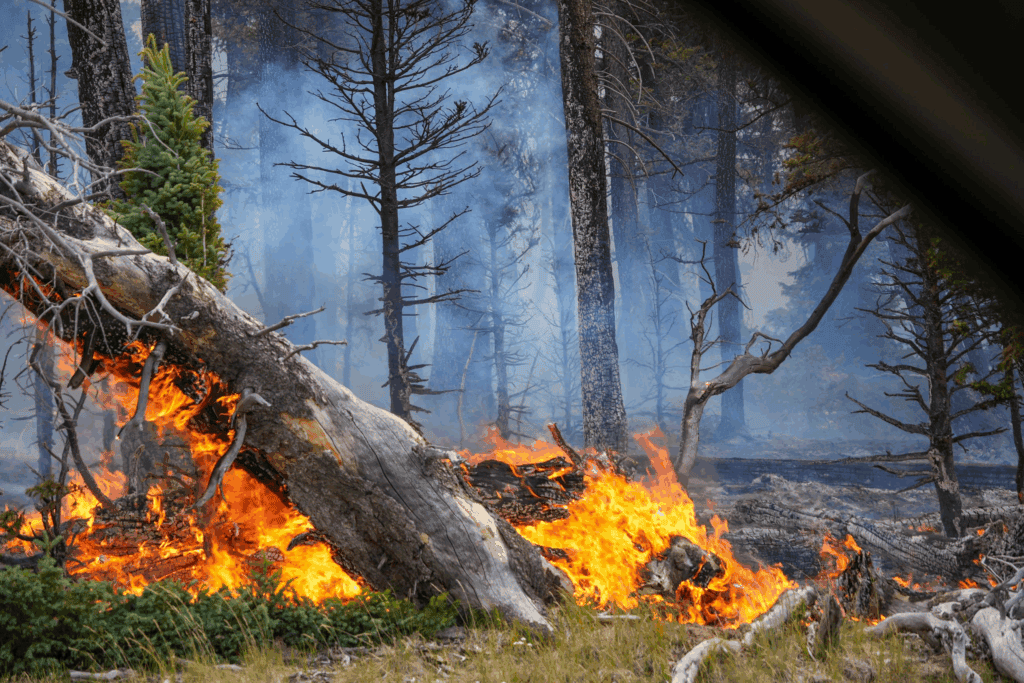
The Dragon Bravo Fire was about 5,000 before this weekend, when it exhibited extreme and volatile fire behavior due to winds of 20 mph and gusts reaching up to 40 mph on around 10:30 p.m. on the evening of July 12, expanding another 500 acres. Aerial bucket drops aimed to slow the fire’s growth near the Grand Canyon Lodge and Transept Canyon. However, a chlorine gas leak at the water treatment facility lead to firefighters evacuating the area and canceling aerial retardant operations. On Sunday, July 13, the fire burned down the historic Grand Canyon Lodge at the North Rim, a National Historic Landmark at Bright Angel Point built in 1928.
The fire also burned down or severely damaged 50 to 80 of the 140 historic cabins in the area — many of which were also built in the late 1920s — National Park Service’s administrative buildings and visitor facilities.
Fortunately, guests, residents and NPS staff were evacuated before the fire escalated.
The USFS resumed aerial drops on July 13, but the cabins and buildings are lost. Major hiking trails from the bottom of the canyon to the North Rim are closed so firefighters can focus on the fire without having to worry about visitors wandering into the burning areas.
The Bureau of Land Management, USFS, NPS and news outlets have published photos of the wildfires and smoke, which is eerily drifting through the Grand Canyon and reaching us here in the Verde Valley.
Locally, lightning ignited a vegetation fire on Mingus Mountain around noon on July 2, near Yavapai College in Clarkdale. It grew to approximately 65 acres, and was later downgraded to 51.5 acres. Verde Valley Fire District crews and USFS helicopters helped contain and extinguish the blaze.
Wildland fires are tricky and unpredictable and their growth and intensity are governed by terrain, winds, weather and ground conditions. Being in the Verde Valley, we’re sheltered and largely spared from the high winds that can grow over hundreds of miles and cause relatively small wildfire to turn into massive wildfires like what we see on the Kaibab and Coconico plateaus to our north.
Yet that relative safety from infernos should not be taken for granted, especially for homeowners and property owners on the wildland-urban interface that surrounds our communities. Take precautions, plan ahead, clear defensible space around your home so that if local firefighters have to use your yard to create a firebreak they have space to move around and prevent wildfires that may be burning nearby from jumping the fence into your property.
Monsoon storms will hopefully soon arrive to alleviate immediate fire risk, but take precautions to protect your home and property year-round.


