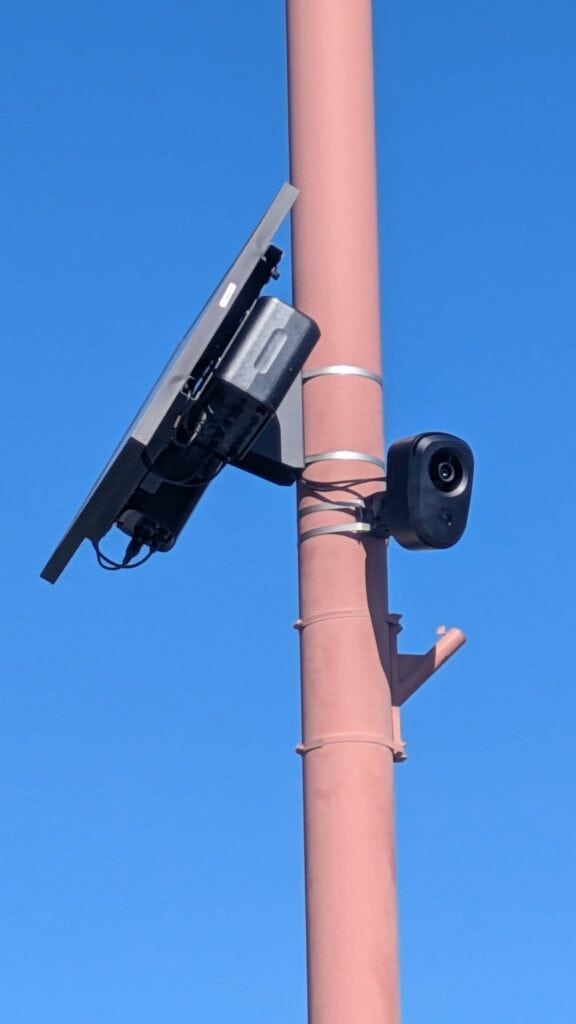













Sedona is creating a surveillance program by installing up to 12 new license plate tracking cameras around the city.
The city’s Facebook post on June 12 stated that camera “locations will not be disclosed due to operational and security considerations;” however, City Communications Manager Lauren Browne wrote in an email to the NEWS on June 11 that four cameras had been installed at the intersections of Dry Creek Road and Garnet Hill Drive, Dry Creek Road and Thunder Mountain Road, Sanborn Drive and Rodeo Drive and at the Jordan roundabout on State Route 89A.
Browne said that eight more cameras are planned but the locations for those have not been determined. Installations began around June 2.
Browne said that the up-front cost, paid for out of the General Operating Fund, was $47,600 for all 12 cameras, while the recurring annual cost would be $36,000. “The license plates are put into a database that scans them to identify any matches related to potential crimes,” Browne wrote, such as stolen vehicles, vehicles associated with investigations and vehicles associated with individuals against whom a court has issued a warrant or Amber Alerts. “The data is stored for 30 days, after which it is automatically purged unless it becomes part of an active investigation.”
“It will help with making response times faster, as officers will receive an instant alert if a vehicle of interest is detected,” she wrote.
When asked what the trigger point had been for the installation of the cameras — crime in Sedona has been virtually flat for the last decade and declined about 32% in the past 15 years — Browne wrote, “The police department always seeks continuous improvement, and this is technology that can make Sedona even safer.”
Flock to Surveillance
The new Sedona cameras are manufactured by Flock Safety, which maintains an integrated network of cameras sharing data in more than 5,000 communities across the country and will be operating the cameras for SPD as well as using the data to train its own artificial intelligence algorithms — “our connected public safety platform,” the manufacturer’s website reads.
According to Flock’s promotional materials, the cameras create a tracking profile for each vehicle based not only on the license plate number but also on “the make, vehicle type, color, license plate [full, partial or missing], state of the license plate and the unique features of the vehicle, including damage and aftermarket alterations.”
The public interest law firm Institute for Justice is currently suing the city of Norfolk, Va., for installing 172 Flock cameras, with the suit stating that the system “uses those images to create a ‘vehicle fingerprint’ that enables any Flock subscribers to both track where that vehicle has gone and identify what other vehicles it has been seen nearby … Every city officer can search the database when ever they want for whatever they want — no need to seek advance approval. All of this is done without a warrant. No officer ever has to establish probable cause, swear to the facts in a warrant application and await the approval of a neutral judge. The camera take photographs and store the information of every driver that passes them — subject or not.”
“Flock is the first to create a nationwide mass surveillance system out of its customers’ cameras,” American Civil Liberties Union senior counsel Chad Marlow stated in 2023. “Unlike a targeted ALPR camera system that is designed to take pictures of license plates, check the plates against local hot lists and then flush the data if there’s no hit, Flock is building a giant camera network that records people’s comings and goings across the nation, and then makes that data available for search by any of its law enforcement customers. Such a system provides even small-town sheriffs access to a sweeping and powerful mass surveillance tool, and allows big actors like federal agencies and large urban police departments to access the comings and goings of vehicles in even the smallest of towns. And every new customer that buys and installs the company’s cameras extends Flock’s network, contributing to the creation of a centralized mass surveillance system of Orwellian scope.”
Browne confirmed that the data collected by Sedona would also be shared with county, state and federal enforcement agencies, “greatly enhancing multi-agency cooperation,” and that the city purposefully selected Flock “due to its extensive use across the county and its strong system compatibility with partner agencies.”
Browne wrote that the system “is not used for general surveillance or monitoring lawful behavior” but did not explain how a network that would capture and retain information on individuals for 30 days or more would not be considered to be conducting general surveillance.
“The data is accessed only for specific, legitimate law enforcement purposes — such as identifying stolen vehicles, wanted subjects or missing persons — and is strictly governed by policy, audit trails, access logs and required case numbers,” Browne wrote.
In terms of safeguards, Browne stated that “residents cannot review footage of themselves, because it’s not open for public review. This is only for law enforcement.”
When pressed to provide hard data from neighboring communities that the cameras have been shown to increase public safety, Browne did not provide data, but instead wrote that cameras had “been shown to increase public safety,” and added that Cottonwood, Prescott and the Yavapai County Sheriff’s Office had provided only anecdotal reports of successfully using such cameras to recover stolen vehicles and locate suspects.
Transparency?
The city never agendized the installation of the cameras for discussion by City Council and the public and instead mentioned an indefinite plan to acquire such cameras only briefly during the city’s most recent budget work sessions on April 30 and May 1, without providing either written or verbal specifics.
Browne stated that a discussion of the program had not been considered necessary by staff as they considered it “routine police department programming.”
The city purposefully did not provide any information to the public regarding the installation of the cameras in advance of their installation, with Browne stating on June 11 that the city intended to put out information regarding them on social media, rather than through official channels like press releases, public notices, public meetings or contacting the NEWS, and that an advance announcement had not been considered necessary because “these cameras are standard in our neighbor communities.”
As of June 16, primary comments on the city’s June 12 Facebook post announcing the trackers’ installation that expressed an opinion about the cameras were running 39 to 9 against the installation as of press time.
The Public Chimes In
“George Orwell strikes again,” Jared Lagemann wrote.
“What will you do to prevent illegal access to this data from other states? Will you show us your policies and procedures as well as security measures?” Roberta Armstrong asked.
“I spoke with our chief of police and our police commander,” Sedona City Councilman Pete Furman wrote. “These are license plate readers only. No facial recognition. No traffic enforcement. No real time viewing.”
“‘For safety.’ What a joke. Now with bored cops on every corner and cameras on every street light, I sure do feel ‘free’ here in Sedona,” Nate Richards wrote. “I love this country and town, I just don’t love an increasingly corrupt and controlling government slowly stripping away our rights while you slaves stand by and cheer them on.”
“Spyware,” Cassie Marie Christos wrote.
“All I can say is ‘Big Brother is watching,’” Veronica Wilding-White commented.
“Do we really have this much crime in Sedona to warrant the police reading our license plates? Really?” Sue Gorney asked. “Or, are our noble councilors afraid we are becoming a hotbed of crime? Stop trying to make Sedona a big city … It’s sad that in our small community there are government officials that believe they must have power over the citizens. Too bad and bad show.”
“Yet another erosion of our Fourth Amendment rights,” Summer Egland wrote. “These cameras have been in Cottonwood for quite a while already. I understand they are AI-connected in real time. Big Brother knows where you are even if you don’t have a phone.”
“Whenever someone says they are doing something for your safety, you can be certain their real motivations are something much darker,” Brian Walter stated. “I am completely opposed to my tax dollars being used for this Orwellian surveillance state tech being deployed here in my hometown. I hope somebody sues the pants off you over this. Lots of other city governments are seeing those results from this kind of mistreatment of the trust placed in them by the citizenry.”
“Kinda bad timing,” Nena Barlow wrote.
“I know a number of people driving without valid drivers licenses, let alone registration. Just follow the law or stay off the road,” Martin Ebel wrote.
“Wow, folks don’t get it,” Scottie Martinus wrote. “This modern technology has been in use in all over by major cities and making an impact daily. How else do the cops seem to mysteriously be in the right place to nab violent offenders[?] As someone stated, if you are a honest person, you have nothing to fear. Your license plate is a drop a water in the ocean of cars it sees every day. Get upset over some thing worthy.”
“I’m pro-LE [law enforcement] and license plate readers on patrol cars, but this activity has been shot down in multiple states due warrantless government surveillance because it violates the Fourth Amendment of the U.S. Constitution, which protects against unreasonable searches and seizures. It parallels stop and frisk, which is also illegal,” Tony Smith wrote.
Comments in support of the cameras repeated the argument that those not engaged in criminal activity would have nothing to fear from the cameras or SPD, and that if the technology allowed police to arrest more individuals accused of crimes, its use would be justified regardless of any invasion of privacy.
When asked if the city’s official position was now that it values security over liberty, paraphrasing Benjamin Franklin’s 1755 quote “Those who would give up essential liberty, to purchase a little temporary safety, deserve neither liberty nor safety,” Browne wrote, “The city of Sedona does not engage in unlawful surveillance and does not sacrifice liberty in pursuit of security.”
Update, June 27: Three Additional Cameras Located
■ One north of Owenby Way entering Sedona from Oak Creek Canyon with the reader facing southbound traffic, which was being installed the morning of June 27:
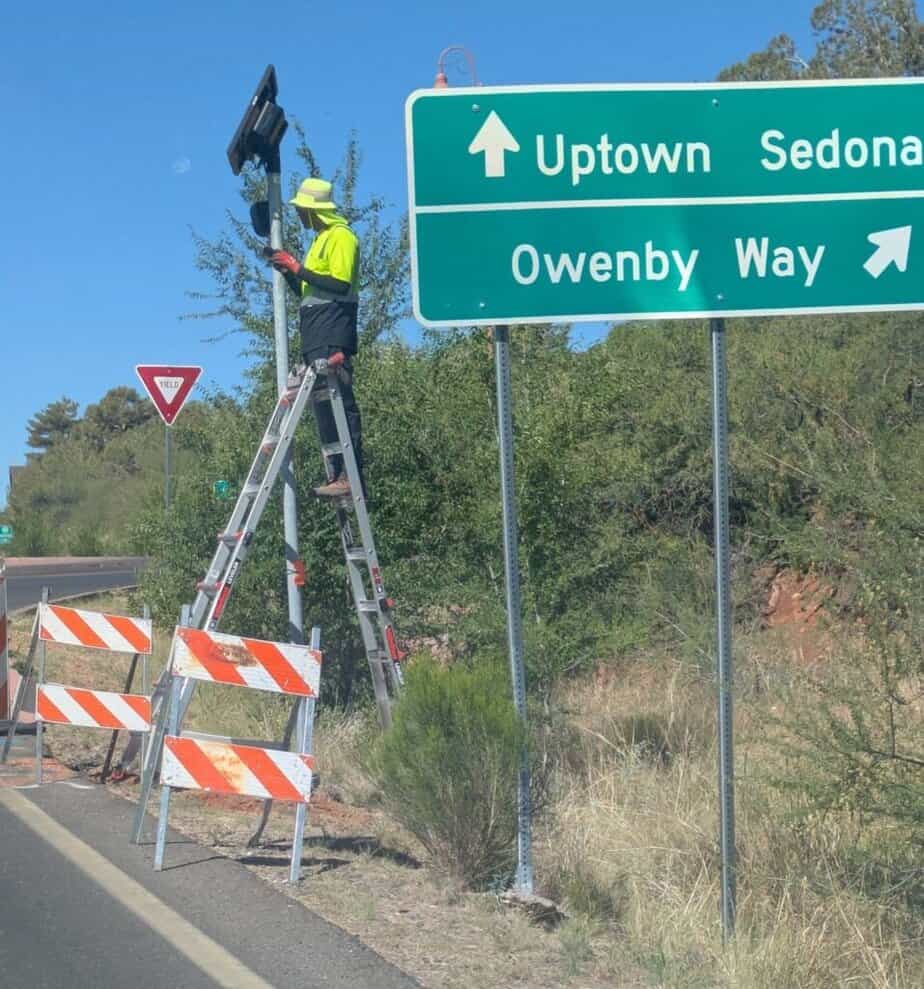
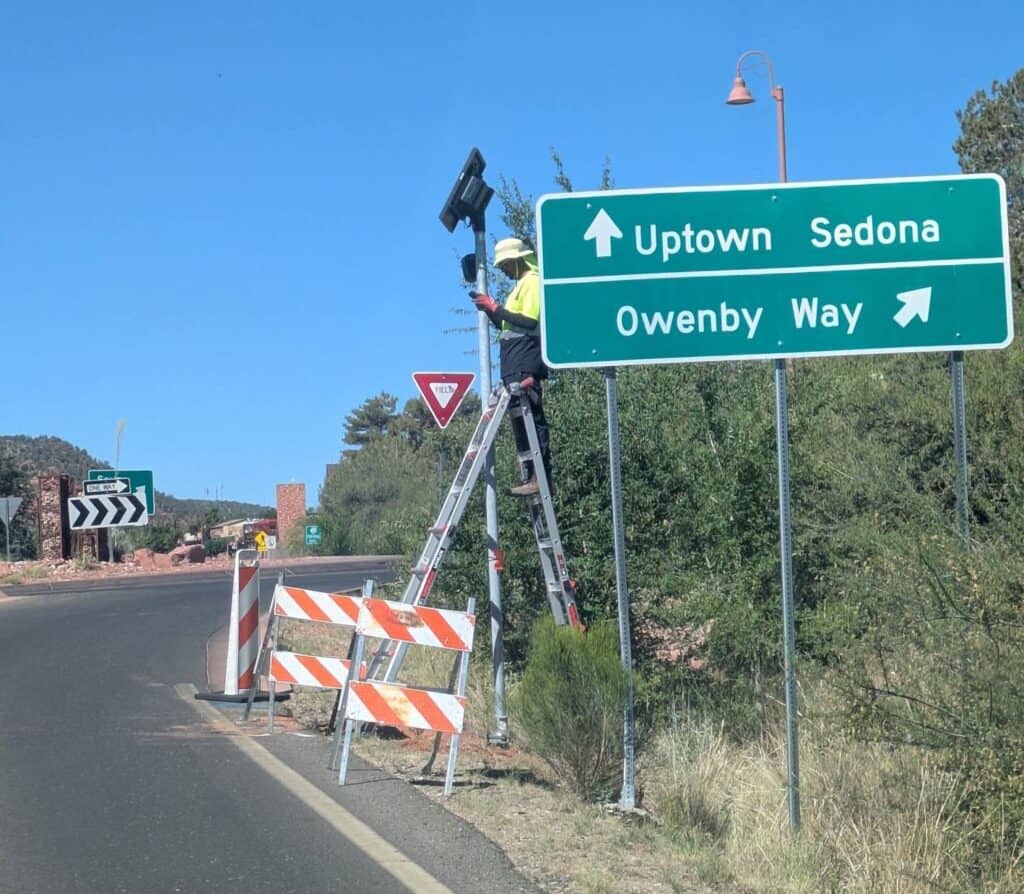
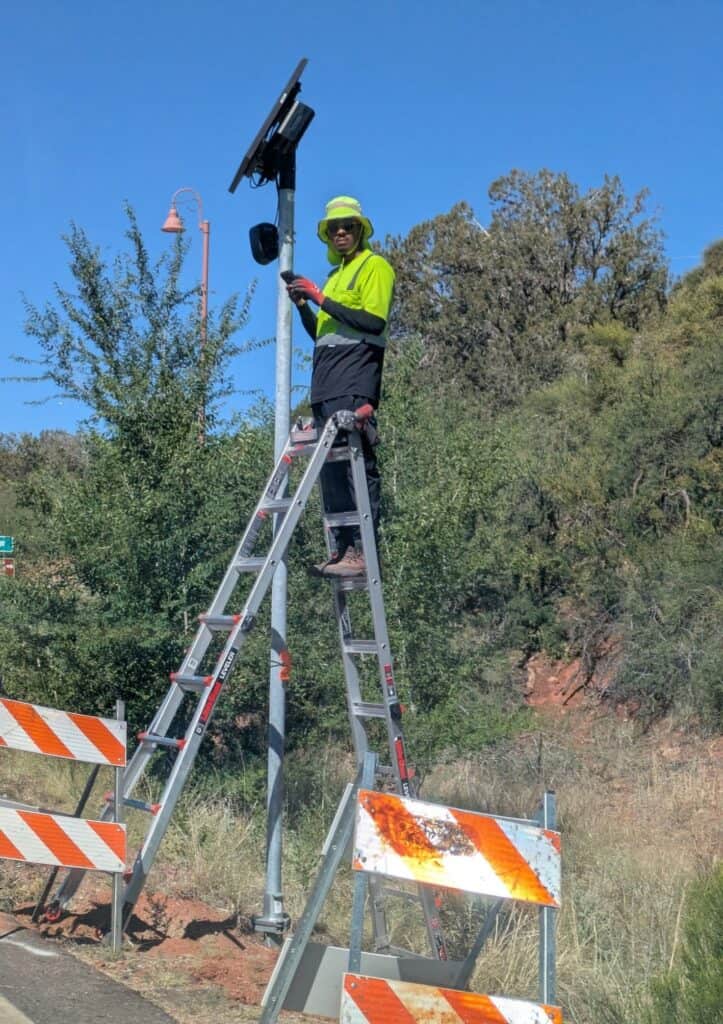
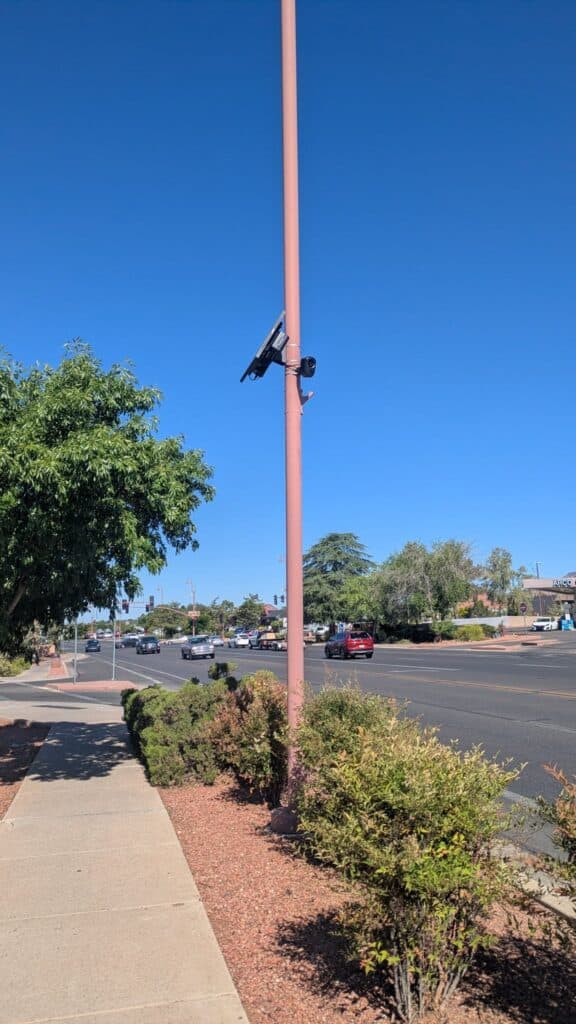
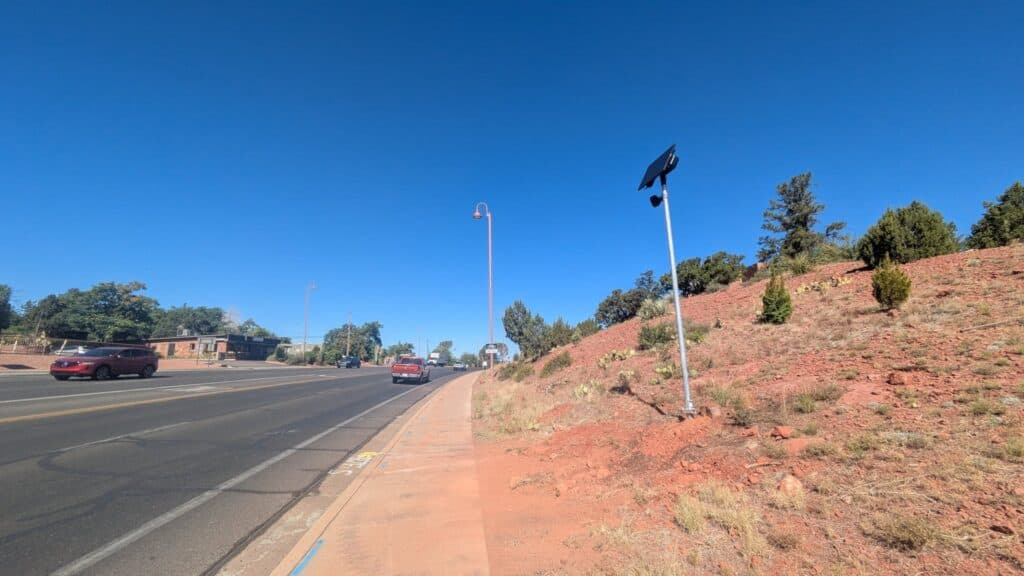
■ One just west of N. Airport Road, with the reader facing westbound traffic:
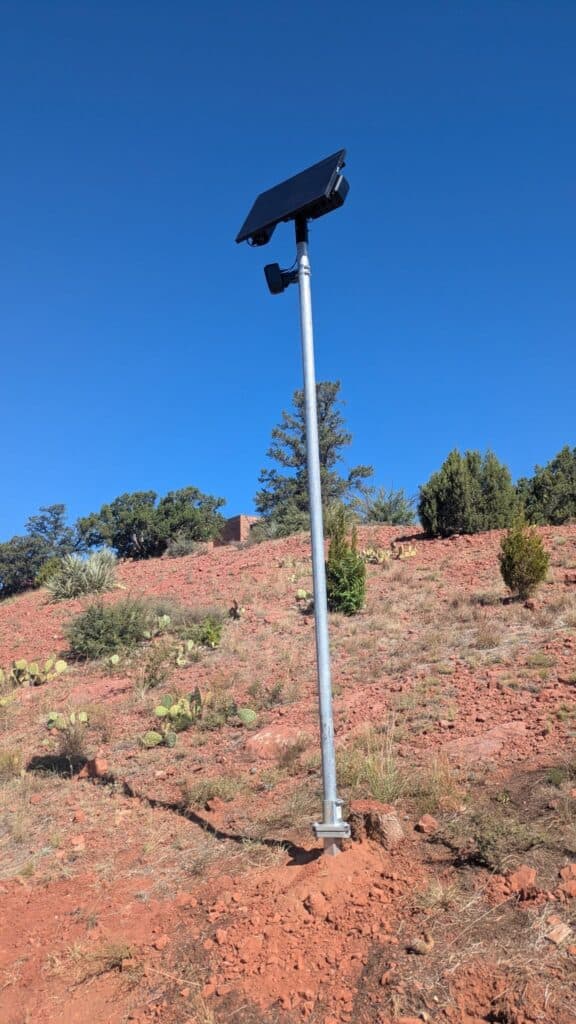
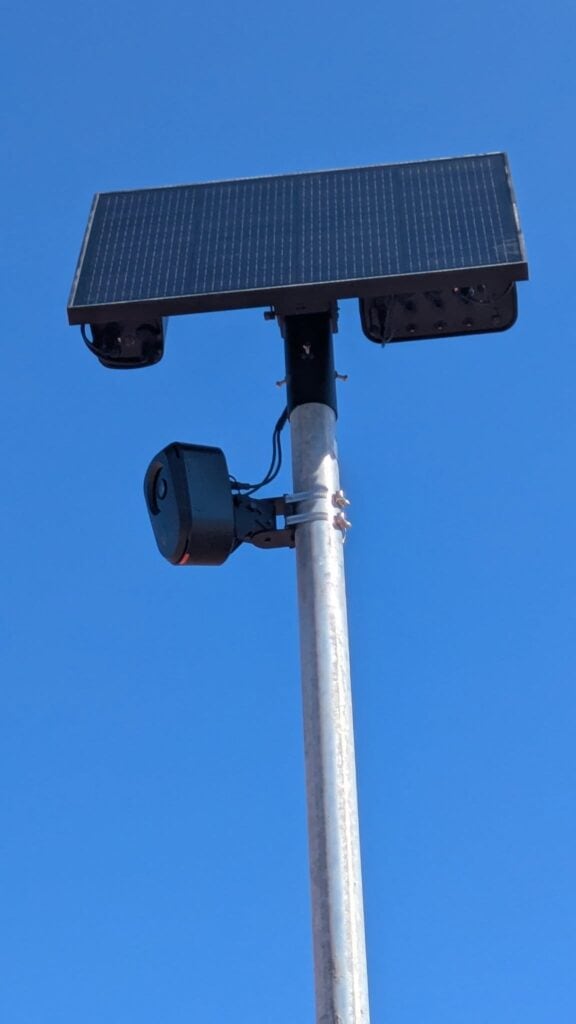
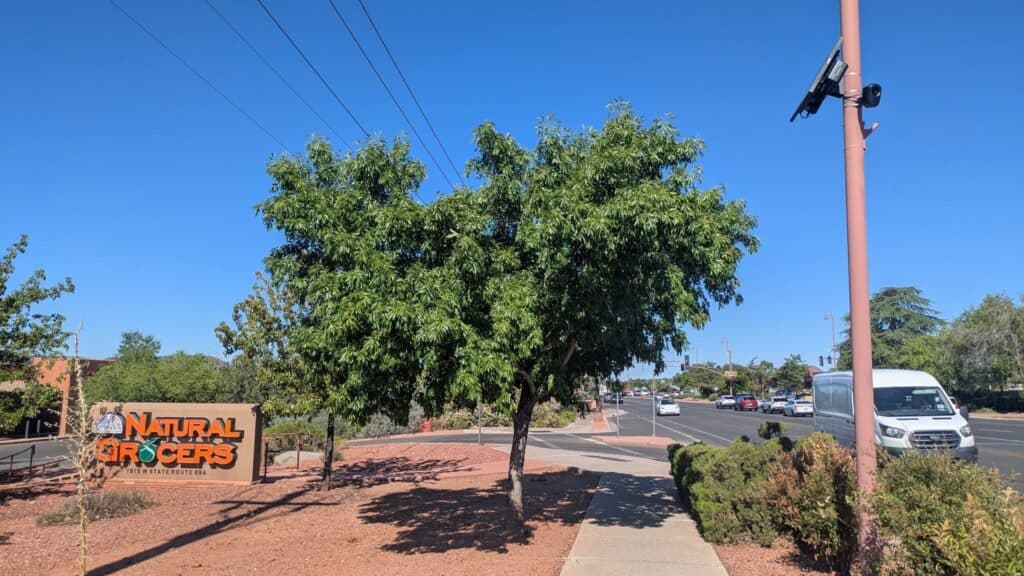
■ One immediately north of Natural Grocers with the reader facing eastbound traffic: