















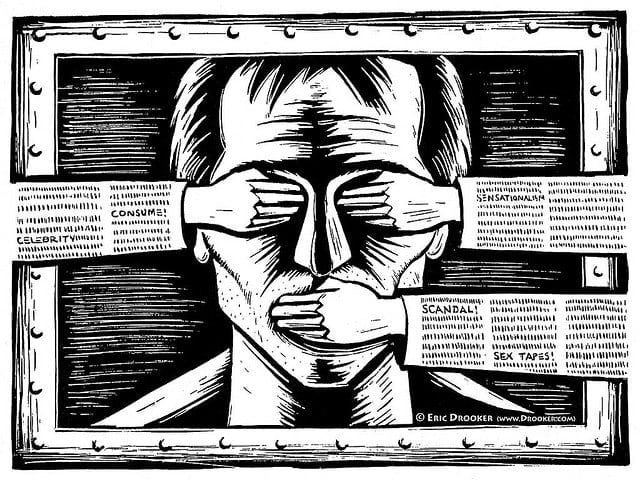
While the First Amendment is fundamental to American life and the operations is perhaps one of our most understood fundamental laws especially as it relates to public discourse.
The amendment reads: “Congress shall make no law respecting an establishment of religion, or prohibiting the free exercise thereof; or abridging the freedom of speech, or of the press; or the right of the people peaceably to assemble, and to petition the Government for a redress of grievances.”
In a nutshell, that means that Congress and all the layers down — whose existence and powers are derived from acts of Congress — cannot censor nor regulate the content of people’s speech.
Congress cannot establish nor endorse nor discriminate against any religion from Anabaptism to Zoroastrianism, cannot prevent people from assembling to protest, pray or celebrate comic books, nor prevent people from join organizations like fraternal clubs or workers unions, cannot limit the ability to petition officials and cannot interfere with how the press and journalists operate.
The amendment reads “People,” not just “citizen” and courts have determined the First Amendment also applies in nearly all cases to immigrants, refugees and, in most cases, to foreign nationals who are otherwise acting lawfully.
The First Amendment says nothing about private figures nor does it regulate how businesses, private persons and nonprofits regulate nor control their speech nor speech in their private domains — i.e., just as you have the ability to kick out rowdy house party guest, a business can trespass a customer who is being disruptive. Likewise, privately owned social media companies can legal ban anyone they want from their platforms
The First Amendment also does not “grant” any right, which are inherent. Rather, the First Amendment just limits what the government can do.
The amendment also does not prevent hate speech. While some claim the amendment prevents libel, slander or perjury, it does not. You can libel and slander, but know that you can face severe legal penalties. Governments offer an avenue to litigate them through civil courts and also provide a means for prosecutors and judges to penalize criminalize perjury — willfully telling an untruth after having sworn an oath to speak truth — but it does not “prevent” said speech, just penalizes knowingly false statements, which is why publishers fact-check what they print, publish and post.
When businesses or online social media platforms boots users, or when a media outlet declines to publish a missive, they are not violating the First Amendment — have standards and policies, some nebulous, other explicitly stated in a user agreement. But government — local, state or national — had no hand in those decisions.
We are a republic — but a capitalist one that has determined money keeps servers humming and websites online. Businesses that boot users are not acting under government orders but enforcing their policies, to either avoid litigation should some spoken threat translate into a crime or offend advertisers or run afoul of their values and standards. Yet at no point is the government mandating such policies.
This line certainly gets fuzzy, however, when lawmakers ignore what the First Amendment states and suggest that the government should step in regulate speech, ban books or silence speakers of “dangerous” ideas.
Government censorship of ideas is far more dangerous threat to democracy than a podcast or social media post or college visit by an inflammatory speaker. Censorship contributes to its Streisand effect — everyone wants to see what was “so” offensive. Banned books jump to bestseller lists, “offensive” songs get played more and subversive public figures get more speaking engagements.
The First Amendment implicitly means no one is obligated to listen. So if someone espouses a view you disagree with, turn the channel, turn off the podcast, close the video, scroll past the comment, turn the page, don’t buy or borrow the book from the library, and move on. They have every right to speak — even if it’s the dumbest thing you’ve ever heard — but you have every right to ignore it.
If the bad words make you mad or cry, good, because there’s one other tenet of free speech most often overlooked: Utter and absolute ridicule.
So if you disagree with bad speech, then destroy the argument, sentence by sentence, point by point word by word if you must. Bad Ideas should be ridiculed, mocked, satirized, derided, insulted, parodied, proven false, disassociated, humiliated, lampooned, disassembled, debunked, crushed or annihilated, not thrown into a closet where they can fester and grow.
Counteracting bad speech with better speech is the goal of a civil society. Good ideas should be celebrated and spread. Bad ideas will die on their own if exposed to sunlight and open air.