













So while Sedona residents are most concerned about a lack of affordable housing, severe traffic congestion from an Arizona Department of Transportation project that hampers traffic along State Route 179 in the middle of the day, diminishing tax revenue and a de facto vote of no confidence in the city from the Sedona Chamber of Commerce and business community, Sedona’s mayor is instead focused on attempting to eliminate off-highway vehicles from a short stretch of Sedona’s roads using a legally-dubious ordinance that will almost certainly be struck down by a judge or languish in court as Sedona tax dollars are spent on lawyers rather than on asphalt or apartment buildings.
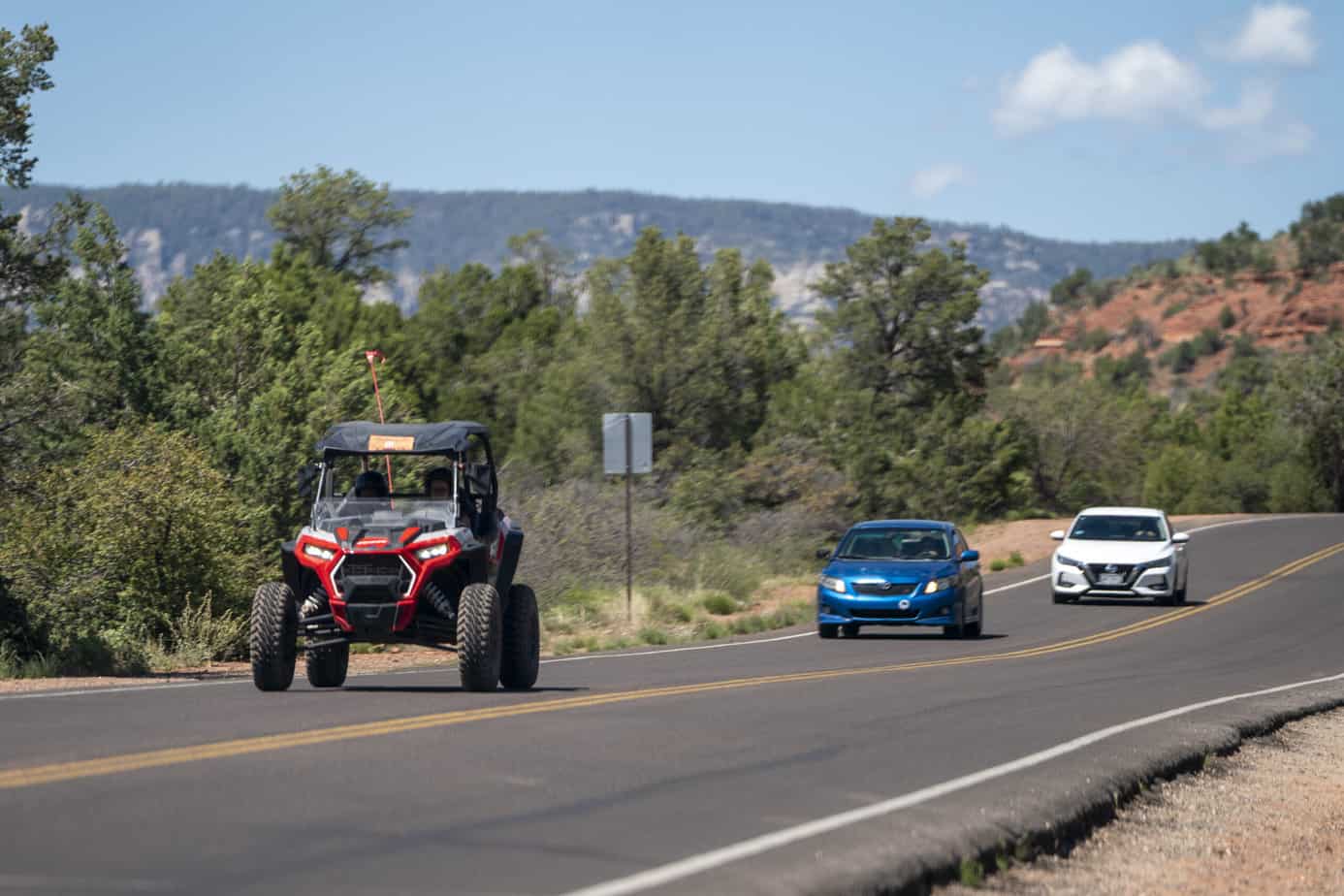
Most residents would agree that OHVs are annoying, but with a decent driver, they are less annoying than a Buick from east Texas that doesn’t know how to navigate a turn lane or a Grand Cherokee with California political campaign stickers from two elections ago that insists on stopping before every roundabout.
When you’re waiting in traffic on Cooks Hill for 30 minutes, it really doesn’t matter if the car stuck in front of you is an OHV, a Subaru or a semi-truck — just like it doesn’t matter who’s buried next to you in a graveyard. The fact is that Sedona City Council has not built alternate routes or roads to alleviate the traffic pressure.
The proposed OHV ordinance is crafted specifically to require OHVs use a type of tire that doesn’t exist on this planet, making it impossible for a driver or owner to rememdy a criminal complaint if cited. It would be an equivalent fallacy for Sedona to require that all Jeeps be levitating hovercraft — lex non cogit ad impossibilia invalidates such actions. The law cannot compel one to do impossible things.
When the ordinance is challenged in court, no judge will find that the city of Sedona was acting in good faith to ensure public safety by passing an ordinance requiring impossible actions.
The fact that the ordinance imposes a real and substantial criminal penalty for failure to comply means that the remedy provided by the court will be swift — and embarrassing for the city.
Sedona’s OHV companies, which have been working in good faith with federal agencies to mitigate the comparatively minor damage done to forest roads by some customers west of Sedona will certainly feel betrayed by the city and will be less likely to work voluntarily with city staff on any real mitigation efforts.
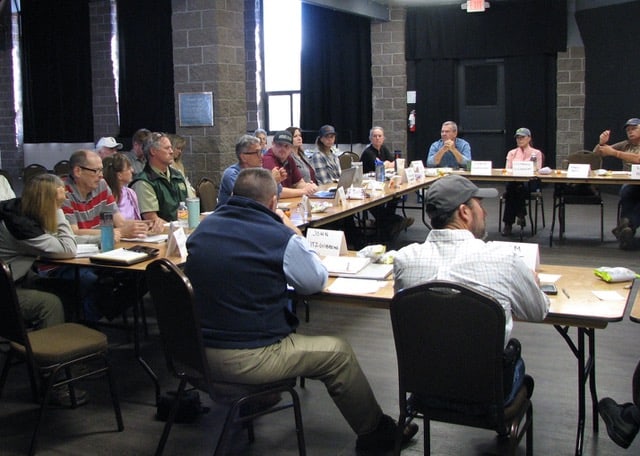
Likewise, and more seriously, they’re not likely to accept the new ordinance without a legal fight that the city will almost certainly lose.
Regardless of how annoying some residents may find OHVs or the near-loophole that Sedona’s mayor claims will finally git dem OHV ne’er-do-wells, this isn’t “The Dukes of Hazzard.” OHVs are street-legal on Arizona roads under ADOT and Arizona Game and Fish Department rules as long as they comply with a series of equipment guidelines. The last time any lawyer checked, state law trumps city codes.
Indeed, because of state law’s supremacy in Arizona — and every other state — Sedona could fall victim to Senate Bill 1487, which allows any of Arizona’s 90 state lawmakers to call for an Arizona Attorney General’s Office investigation into whether a particular city ordinance violates state law. If it does, the city could be deprived of its tax revenue allocation by the state until the offending ordinance is repealed or changed. It may not be a fair way to keep cities in line, but it is the law.
Sedona already lost a 1487 complaint in 2018 and was forced to alter a contract as a result. It’s inexplicable that Sedona’s leaders would want to pull the city back into that a second time.
The problem that residents who dislike OHVs claim they have is the damage they cause and the dust they raise on U.S. Forest Service lands west of Sedona. This ordinance doesn’t fix that problem. It would merely prevent OHV rental drivers from driving the two miles from rental sites in West Sedona to the edge of city limits. Every OHV company could comply with the ordinance by getting a flatbed trailer, taking rented vehicles to the edge of the city, dumping them off and enabling drivers to continue tearing up the roads unmolested.
In fact, the ordinance will exacerbate the traffic problem. Instead of having OHVs driving across town to access certain trails, Sedona drivers will have to cope with trucks towing flatbeds loaded up with OHVs that will be parking and unloading at trailheads and turnoffs, which will cause congestion even where there was none before.
The winning mayoral candidate promised in July that “having already secured state representative support, I will work to change both the way OHVs are regulated and to mitigate their environmental impact.”
This lawmaker was never named or identified, by the way.
Apparently there was no state support. Now, embarrassed and desperate to fulfill campaign promises, the council’s only apparent option is to craft a legally-doomed ordinance that will mitigate zero environmental damage. The sad political cynicism is palpable and council should reject the ordinance.
The 2022 National Highway Traffic Safety Administration letter to manufacturers that a “DOT certification” cannot appear on OHV/ATV tires because such a certification does not exist:
June 3, 2022
Sent To:
- Recreational Off-Highway Vehicle Association (ROHVA)
- US Tire Manufacturers Association (USTMA)
- The Tire & Rim Association, Inc. (T&RA)
- American Society for Testing and Materials (ASTM) Committee F09
- International Organization for Standardization (ISO) ISO/TC 31
- Tire Business Publication
Subject: Improper Certification of UTV/ATV Tires to FMVSS
The National Highway Traffic Safety Administration (NHTSA) has become aware of Utility Terrain Vehicle (UTV) and All-Terrain Vehicle (ATV) tires offered for sale in the United States that are incorrectly labelled and marketed as being compliant with Federal Motor Vehicle Safety Standards (FMVSS). The Agency is providing this information for your awareness and to promote compliance within the off-road tire industry. We encourage you to share this information with other industry members and stakeholders.
According to 49 U.S.C. § 30102, a “motor vehicle” is defined as:
- (7) ‘‘motor vehicle’’ means a vehicle driven or drawn by mechanical power and manufactured primarily for use on public streets, roads, and highways, but does not include a vehicle operated only on a rail line. (bold emphasis added).
- Based on this definition, there are no FMVSS that apply to UTV or ATV tires, because UTVs and ATVs are not manufactured for use on public roadways. Additionally, 49 C.F.R. § 574, Tire Identification and Recordkeeping states:
- 49 C.F.R. § 574.5(e)(1) – The DOT symbol constitutes a certification that the marked tire conforms to an applicable Federal Motor Vehicle Safety Standard.
And
- 49 C.F.R. § 574.5(e)(3) – The DOT symbol must not appear on tires to which no Federal Motor Vehicle Safety Standard is applicable… (bold emphasis added).
As stated above, this means that the symbol “DOT” cannot appear on any ATV, UTV, or Not for Highway Service (NHS) tire and that manufacturers may not certify that such tires conform to an FMVSS or make any representations that such tires conform to the FMVSS. Only tires intended for a vehicle certified to the FMVSS are legally permitted to be marked with “DOT” and may be marketed as conforming to the FMVSS.
As a reminder, language that tires are “approved,” “certified,” or “compliant” with standards that do not apply are misleading and we would appreciate your assistance in communicating this information to your members and distribution and retail channels so that it can be revised.
The city of Sedona’s current draft OHV ordinance requiring DOT-certified tires … despite such a certifcation not existing
ORDINANCE NO. 2023-___
AN ORDINANCE OF THE CITY OF SEDONA, ARIZONA, ADOPTING AN AMENDMENT TO THE CITY CODE TITLE 10 (VEHICLES AND TRAFFIC) BY ADDING CHAPTER 10.30 (IMPROPER MOTOR VEHICLE EQUIPMENT); PROVIDING FOR PENALTIES, A SAVINGS CLAUSE, AND FOR REPEAL OF CONFLICTING ORDINANCES; AND ESTABLISHING AN EFFECTIVE DATE.
WHEREAS, adhering to Federal and State safety regulations related to motor vehicles reduces the chances of serious injury; and
WHEREAS, every year tire failure causes approximately 11,000 vehicle crashes and 200 deaths nationwide and adhering to Department of Transportation (DOT) tire regulations reduces the chance of tire failure; and
WHEREAS, only DOT approved tires are allowed to be used in highway service; and
WHEREAS, no UTV, ATV, or OHV tires are currently DOT approved for highway or on street use (see NHTSA June 3, 2022 letter re: Improper Certification of UTV/ATV Tires to FMVSS; U.S Tire Manufacturers Tire Information Service Bulletin TISB 07); and
WHEREAS the City deems it necessary to adopt certain regulations regarding improper motor vehicle equipment to protect the health, safety, and welfare of the City residents in accordance with DOT regulations.
BE IT ORDAINED BY THE MAYOR AND CITY COUNCIL OF THE CITY OF SEDONA, ARIZONA, as follows:
Section 1. Amendment of Sedona City Code Title 10 (Vehicles and Traffic)
Title 10 (Vehicles and Traffic) of the City Code of the City of Sedona is hereby amended by adding the following Chapter:
Chapter 10.30 – IMPROPER MOTOR VEHICLE EQUIPMENT
10.30.010 – Definitions.
In this chapter unless the context otherwise requires:
“Driver” means a person who drives or is in actual physical control of a motor vehicle.
“Highway” means the entire width between the boundary lines of every paved way if a part of the way is open to the use of the public for purposes of motor vehicle travel including public roads and streets.
“Manufacturer” means a person or entity—
(A)manufacturing or assembling motor vehicles or motor vehicle equipment; or
(B)importing motor vehicles or motor vehicle equipment for resale.
“Motor vehicle” means a self-propelled vehicle, including Utility Terrain Vehicles, All Terrain Vehicles, and Off Highway Vehicles.
“Owner” means the person in whose name such motor vehicle is registered.
“Public employees” means any federal, state, county or City employees.
“State or Federal motor vehicle safety standards” means all motor vehicle standards listed in A.R.S Title 28 or Title 49 of the Code of Federal Regulations (FMVSS) including:
- A.R.S. 28-971 – Brake light or stop lamp in good working order
- A.R.S. 28-955 or A.R.S. 28-1179(A)(3) – Muffler or noise dissipative device in good working order.
- A.R.S. 28-957.01 or A.R.S. 28-964(A)- Adequate windshield or eye protection.
- 49 C.F.R. § 574.5(e)(3) – The DOT symbol must not appear on tires to which no Federal Motor Vehicle Safety Standard is applicable.
- 49 C.F.R. § 574.5(e)(1) – All motor vehicles operated on highways must be equipped with street legal tires approved by NHTSA or DOT.
10.30.020 – Operating Motor Vehicle with Improper Motor Vehicle Equipment Prohibited.
- A person shall not drive or move on a highway a motor vehicle that:
- Is in an unsafe condition that endangers a person.
- Does not contain those parts or is not at all times equipped with lamps and other equipment in proper condition and adjustment as required in this chapter.
- Is equipped in any manner in violation of State or Federal motor vehicle standards.
- Is not approved by the manufacturer to be operated on a highway.
- An owner shall not drive or allow a person to drive or move on a highway the owner’s motor vehicle that:
- Is in an unsafe condition that endangers a person.
- Does not contain those parts or is not at all times equipped with lamps and other equipment in proper condition and adjustment as required in this chapter.
- Is equipped in any manner in violation of State or Federal motor vehicle standards.
- Is not approved by the manufacturer to be operated on a highway.
10.30.030 – Applicability; Exceptions.
- This chapter applies to all highways within the Sedona City limits.
- This chapter does not apply to public employees in the performance of their official duties or to any motor vehicle owned or operated by any federal, state, or local governmental entity.
- – Inspections.
If at any time there is reasonable cause to believe that a motor vehicle is unsafe or is not equipped as required by this chapter or that a vehicle’s equipment is not in proper adjustment or repair, any peace officer may require the driver of the motor vehicle to stop and submit the vehicle to an inspection and such test with reference to the inspection as may be appropriate.
6.15.050 – Authority to Impound Vehicles.
Vehicles operated in violation of this chapter may be impounded in the same manner as provided for by the provisions of SCC 10.15.150.
6.15.060 – Enforcement; Liability.
- Any AZPOST certified peace officer, community service officer, community service aide may issue a written warning or citation for the violation of this chapter.
- Persons Liable. If any motor vehicle is found in violation of any provision of this chapter, the owner, the person in whose name such motor vehicle is registered, as well as the driver of the vehicle at the time of the violation, shall be jointly and severally responsible for such violation and are subject to the penalties therefor. If the vehicle is not attended by a driver, the owner, or person in whose name such vehicle is registered, shall be held prima facie responsible for such violation and is subject to the penalties therefor. Proof that a person other than the owner was operating the vehicle at the time of the violation shall not constitute a valid defense to the offense.
6.15.070 – Separate Offenses.
Each violation pursuant to this chapter shall constitute a separate offense and each day a violation remains unabated may constitute a separate offense.
6.15.080 – Penalties.
- Upon a first violation of this chapter, an officer shall issue a written warning and repair order. A certificate of correction or adjustment of illegal or faulty equipment shall be obtained the person and shown to the police department within five days.
- If there is a violation of this chapter and the person fails to provide the City with a certificate of correction or adjustment within five days or the person has previously been issued a warning within one hundred eighty (180) days from the date a warning was issued, the violation is a civil offense punishable by a fine not to exceed five hundred dollars ($500.00), plus any other penalties, assessments or surcharges authorized by law.
- If there is a violation of this chapter and the person has previously been convicted two (2) or more times of violating this chapter under subsection B, the new violation is a class 1 misdemeanor, plus any other penalties, assessments or surcharges authorized by law.
Section 3. Savings Clause
If any section, subsection, sentence, clause, phrase, or portion of this Ordinance is for any reason held to be invalid or unconstitutional by the decision of any court of competent jurisdiction, such decision shall not affect the validity of the remainder of this Ordinance.
Section 4. Repeal
All other code provisions, ordinances or parts of ordinances in conflict with the provisions of this Ordinance are hereby repealed to the extent of such conflict as of the effective date hereof.
Section 5. Effective Date
The effective date of this Ordinance shall be 60 days following adoption by the City Council.
PASSED AND ADOPTED by the Mayor and Council of the City of Sedona, Arizona, this 23rd day of May, 2023.
________________________________
Scott M. Jablow, Mayor
ATTEST:
_____________________________
JoAnne Cook, CMC, City Clerk
APPROVED AS TO FORM:
_____________________________
Kurt W. Christianson, City Attorney