

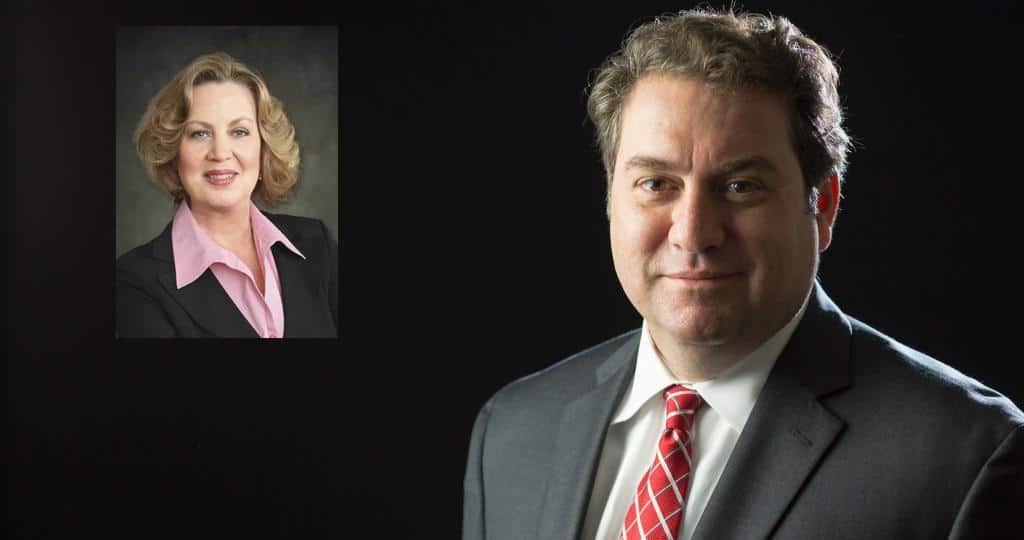
On Monday, Nov. 30, Attorney General Mark Brnovich filed a petition for to remove Susan Bitter Smith from her seat on the Arizona Corporation Commission.
Brnovich alleged that in addition to her regular salary of $79,500 as a commissioner on the state’s regulatory board, she serves as executive for the Southwest Cable Communications Association, a trade group of cable companies in Arizona, New Mexico and Nevada. In this position, she earns $150,000, nearly double her salary as a public official. Her salary for representing these companies isn’t insignificant either — her payout comprises roughly 40 percent of the entire trade association’s budget — meaning these companies knew into which public official to invest in to get what they wanted. Bitter Smith is also a registered lobbyist for two affiliates of the Cox Communications cable company, and lobbying often pays in the six digits, meaning her salary as a public servant was chump change compared to her private earnings.
As a commissioner on the agency charged with regulating these companies and their requests to build new lines, regulate fees and raise rates on Arizona residents, it’s not hard to imagine whether Bitter Smith leaned toward the corporations paying her extravagant salary or whether she served the public interest of taxpayers.
According to Brnovich’s office, “Bitter Smith’s conflicts existed at the time of her election in 2012 and continue to exist today, therefore, she cannot remedy them and must be removed from office.”
Of course, corruption at the top levels of the Arizona Corporation Commission is not isolated.
This week, Commissioner Robert Burns ordered APS to disclose within 30 days, the amount of direct and indirect campaign contributions to ACC Commissioners Tom Forese and Doug Little, which is assumed to top more than $3 million. Commissioner Bob Stump is already being investigated for hundreds of text messages he exchanged with APS officials during the 2014 campaign.
APS waged an ad campaign against small solar power companies in the 2014 election cycle likening solar power panel subsidies to handouts due in part to the fact that homeowners can sell solar power back into the state’s grid — and cut into APS’ profit margin. The campaign ultimately failed, as did an attempt in August to raise rates on homeowners with solar power panels who use the grid when there is no sunlight to power their homes. More and more solar panels are appearing on the roofs of homes in Sedona and the Verde Valley, meaning any ACC decision raising rates on solar power could cost local homeowners hundreds of dollars. Reducing fossil fuel use and saving the environment should be rewarded, not penalized due to the greed of corporate CEOs.
The Arizona Corporation Commission is one of the least-contested statewide public offices during the election cycle, which is an oddity considering the impact it has on every Arizonan when we pay bills for power, water, cable, Internet and natural gas service. Hopefully, Brnovich’s investigations will purge crooked officials from state office, but when the 2016 elections roll around, the cycle will just start again unless there is a fundamental overhaul of an agency that almost seems like it was built to be corrupted.


