

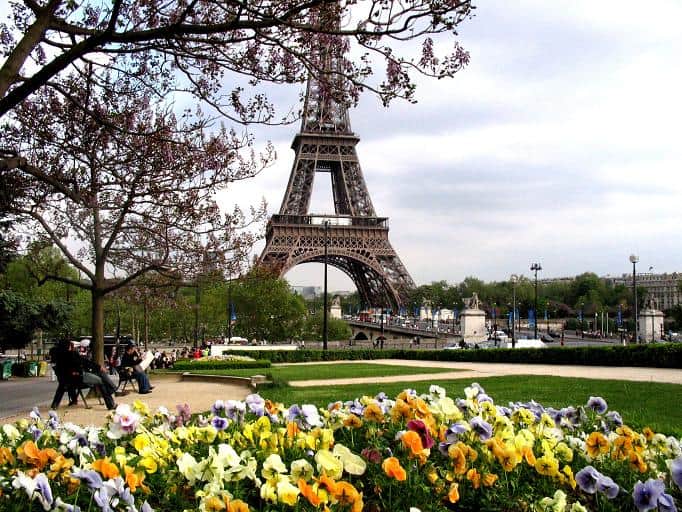
Friday night, Nov. 13, terrorists struck cafes, a soccer stadium and a theatre in Paris, killing at least 129 and wounding more than 350.
Unlike the meticulously planned Sept. 11, 2001, aircraft attacks on the World Trade Center and the Pentagon by Al Qaeda, the attacks on the City of Lights were low-level hit-and-runs with AK-47s assault rifles, car bombs and suicide bombers, reportedly linked to the Islamic State of Iraq and the Levant.
While most American and Western security efforts have targeted potential attacks on the scale of 9/11, officials and counter-terrorism professionals have long feared the type of attacks Paris suffered this weekend.
While many watched the news unfold online from a distance, some of us had a connection to the city itself. Facebook activated its Safety Check feature, a location-based alert system that asks users if they were safe, then sends out notifications to their friends list. More than 360 million users received notifications after Friday night’s attacks, myself included. Facebook has only used the new system previously five times for natural disasters, but will now use the system following terrorist attacks, the company stated on Saturday.
ISIL has specifically threatened Washington, D.C., but we must learn more about the Paris attackers and their methods to track down potential risks in our nation’s capital. I received several comments from residents who wonder if Sedona or the Verde Valley could fall victim to a similar attack. “Soft targets” in public areas with easy access, little to no security and large crowds offer tempting targets to terrorists with nothing to lose and who expect to be killed during or after the act. Should Verde Valley residents be worried? Theoretically yes, but statistically no. While we have thousands of tourists visit daily, the probability of an attack here rather than a major city is low. Stay vigilant, of course, but do not fear a terrorist attack around every corner.
But the end game of terrorism is not to cause mass casualties and high body counts, but rather mass panic and fear. Rather than avoid public places, limit free speech or sacrifice our privacy for greater government intrusion, we should push our leaders toward stronger counter-terrorism efforts, better screening at the border and better monitoring of potential extremists and stronger interdiction and intervention efforts to prevent pending attacks.
ISIL reportedly claimed responsibility, as retaliation of French military intervention in the ongoing Syrian Civil War. French, American and other Western governments have been attacking ISIL military targets throughout Iraq and Syria, but after Friday’s attack, French President François Hollande ordered his nation’s warplanes to pound targets in the city of Al-Raqqa, which the Islamic extremist group claims as its capital.
In the aftermath of Paris, some U.S. governors have called for a ban to accepting a fraction of the quarter million refugees fleeing Syria. Any refugees must be vigorously screened for security risks and ties to terrorism, but rejecting refugees that ISIL extremists are trying to kill is antithetical to our nation’s ideals. After all, in New York Harbor a statue welcomes the tired, poor, wretched refuse, homeless and tempest-tossed huddled masses yearning to breathe free. That gift from France calls America the “Mother of Exiles.” For whom does the Statue of Liberty stand if not refugees?
Until now, Western governments have been content to contain and slowly strangle the extremist “state,” but it has become a breeding ground for other violent Wahhabists who have targeted ethnic and religious minorities in their territory, including Kurds, Christians, Yazidi, Assyrians and Shi’a Muslims. Now with the attacks in Paris, the group has expanded to attack nonmilitary, civilian targets in the West. To prevent future attacks and cut off the command and support infrastructure, Western governments must intensify efforts to destroy ISIL once and for all.


