














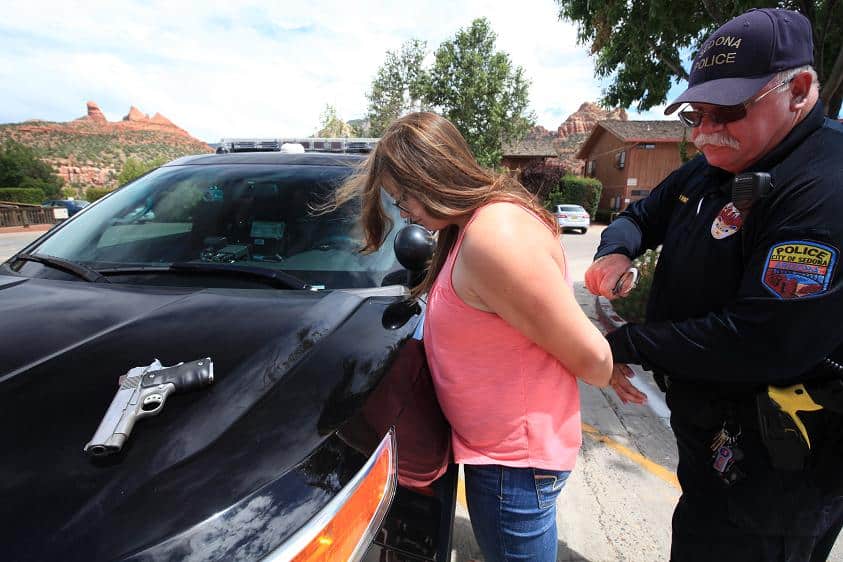
Most Americans are familiar enough with the legal system as it pertains to the accused person. They are charged, innocent until proven guilty in court, and if found guilty, pay their debt to society.
But what about guns seized during a crime?
Since no crime is identical to another and, therefore, each is treated differently, there are an infinite number of answers. However, precedent and legislation have provided several basic scenarios for the life of a firearm after it is taken from its possessor.
Crimes with guns directly involved — guns seized alongside drugs, armed robbery, assault, murder, etc. — are automatically considered felonies, according to Arizona Revised Statute §13-3105. A. In this case, it is unlikely that the possessor of the firearm will ever see it again, except possibly as an exhibit.
These firearms are entered into evidence for the duration of the case. After a holding period, guns involved in such cases can be sold to a licensed gun dealer by the county. In Yavapai County, all felonies are handled by county attorneys. Sales must still comply with all applicable laws.
Funds from sold firearms in Yavapai County are managed by the Partners Against Narcotics Trafficking board as an anti-racketeering fund. Different agencies agree to pool this money, which is regulated to be put to positive use, such as training and new equipment like bulletproof vests.
Illegally altered guns are destroyed instead, as they cannot be legally sold. An example is the sawed-off shotgun. Gun laws require a minimum barrel length for shotguns.
“They’ve got to cut those up and throw them away,” Chief Deputy County Attorney Dennis McGrane said.
To read the full story, see the Friday, July 31, edition of the Sedona Red Rock News.