














The Association of Arizona Food Banks recently released a Feeding America report revealing food insecurity statistics for Arizona broken down by county and district, called Map the Meal Gap.
Food insecurity, according to Harvey Grady, president and CEO of Cornucopia Community Advocates, is the inability to stably provide food for an individual or family, usually noted by those living paycheck to paycheck who are unable to deal with an emergency financially should one arise. Roughly half of the state’s population, Grady said, falls into this category.
Information was gathered by the U.S. Department of Agriculture, U.S. Census Bureau and the U.S. Bureau of Labor Statistics in 2013, the most recent year for which data is available.
The overall rate for Arizona food insecurity in 2013 compared to 2012 dropped slightly from 17.8 percent to 17.5 percent. Child food insecurity rates also dropped slightly, from 28.2 percent to 28 percent. The report states the national overall rate is 15.8 percent.
Child food insecurity is higher than overall security in each county and district report.
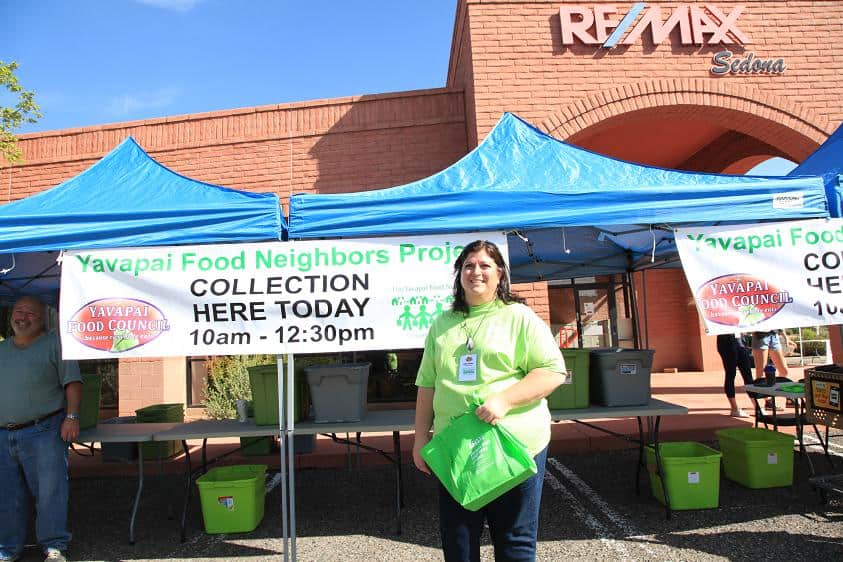
“The child food insecurity rates are higher because the kids are dependent on the adults in their lives. A lot of times, families with a large number of kids have parents working multiple jobs to survive. The income levels are not high enough for them to survive. If it’s an independent adult, he or she can usually get out, get to congregate meals, you can get to food banks,” said Amy Aossey, executive director of the Yavapai Food Council and head of the Yavapai Food Neighbors program.
In the report, U.S. House of Representatives Arizona District 1, which includes Sedona and is represented by Democratic Rep. Ann Kirkpatrick, had the highest overall rate of food insecurity among nine districts at 20.3 percent. District 4, which includes Cottonwood and other parts of the Verde Valley and is represented by Republican Rep. Paul Gosar, had an overall food insecurity rate of 18.9 percent. The child food insecurity rate for the districts was 32.5 percent [2nd] and 30 percent [3rd], respectively.
However, when broken down by county, the report concludes that Apache County by far had the largest rate of child food insecurity at 43 percent and an overall rate of 28.2 percent.
To read the full story, see the Friday, April 17, edition of the Sedona Red Rock News.