













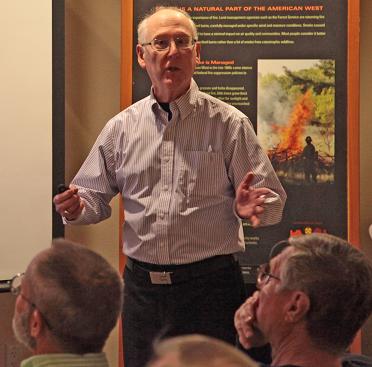
“I can’t believe this many people came out to learn about the Permian,” Kennard B. Bork joked.
On Dec. 5, he stood before a packed house in the Red Rock Ranger District Visitor Center’s small theater. The Friends of the Forest, a nonprofit service organization dedicated to maintaining, protecting and restoring National Forest lands in the Sedona area, had invited him to host its First Friday event for December.
A professional geologist and paleontologist, Bork’s topic for the day was “A Look at the Permian Period — When Sedona’s Red Rocks were Being Formed.”
For most in attendance, it would be an introduction to an alien landscape. The world was a markedly different place 250 million to 300 million years ago. Continents were not separated as they are now. Instead, a supercontinent by the name of Pangea straddled one side of the planet. The ocean of Panthalassa surrounded it, filling one half of the globe with open water.
Neither dinosaurs nor birds yet existed and mammals were a long way off. Sailed mammal-like reptiles ruled the land along with the largest amphibians and insects ever recorded. The egg was still in development, and it would be a some time before flowering plants took root in the ground. Numerous species of cephalopod — “basically, an octopus in a shell,” according to Bork — and cartilaginous fish similar to sharks swam in the immense sea.
To read the full story, see the Wednesday, Dec. 10, edition of the Sedona Red Rock News.