












Arizona witness to partial solar eclipse lasting over 2 hours
Sometimes things just line up.
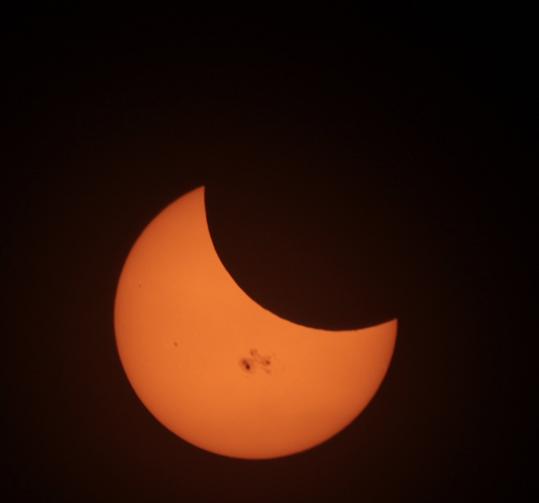
The Astronomers of the Verde Valley hosted a viewing party at club president J.D. Maddy’s Clarkdale home to watch a partial solar eclipse in the afternoon of Thursday, Oct. 23.
The moon passed in front of the sun for more than two hours and with clear skies, was easily visible with proper filters to protect the viewer’s eyes. Just looking around, it wasn’t any darker, the sun came out as much as normal, with temperatures rising toward 90 degrees. Through lenses and filters attached to telescopes to block harmful rays, however, the moon clearly appeared, blocking the sun to the point that it was more crescent in shape.
Sun spots were also visible and the astronomers had telescopes honed to catch solar flares as well. One that looked miniscule in comparison to the orb it plumed from was in fact three Earths tall.
In attendance was another kind of star, Dean Regas, who came down from Cincinnati to watch the eclipse. Regas is the host of the PBS series “Star Gazers.”
To read the full story, see the Wednesday, Oct. 29, edition of the Sedona Red Rock News.