










While some groups plan to boycott Arizona because of Senate Bill 1070, others are coming to the state to show their support of the bill and what it stands for.
SB 1070 requires police officers to determine the status of people during lawful contact if there is reasonable suspicion they are illegal immigrants and to arrest people unable to provide documentation proving they are in the country legally. It also makes it a crime to transport someone who is an illegal immigrant or to hire day laborers off the street.
Boycott Threat
Alex Ware, a 10-year Sedona resident and a proponent of SB 1070, said everyone in the United States must follow the same laws, and “illegal” means “illegal” for a reason.
He said there are just as many people coming to Arizona to spend money and to show support for the bill as those choosing to boycott the state in opposition to it.
Ware said residents from out of state are telling him they are coming to Arizona to make a personal stand and statement, and most of these individuals would not have visited Arizona otherwise.
“They want to show their support,” Ware said of individuals coming to Arizona. “They want to help.”
Recent polls show more than 75 percent of Arizona residents support the bill, and other states are considering following Arizona’s lead.
He said there is a reason those here unlawfully are called illegals.
“Illegal means you have broken the law,” he said, and those breaking the law should be subject to the penalties for doing so.
Ware also wonders why some people do not want to follow the law or show proper identification to police officers when asked. When a police officer makes a traffic stop or approaches any individual for some reason, the first thing asked for is always identification. If for some reason identification is not available, this might raise a red flag to officer.
“If I or anyone else cannot produce identification, that could be a case for suspicion,” Ware said.
Community Impact
Emergency rooms and schools see illegal immigrants every day, and they cannot be turned away for any reason.
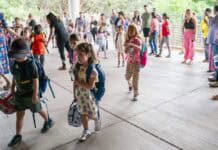
Sedona-Oak Creek School District Superintendent Mike Aylstock said the law prohibits the school district from asking parents or students if they are illegal immigrants.
He said the district is funded the same amount for each student regardless of their status.
The district has programs in place to aid students whose only language prior to enrolling is Spanish, Aylstock said. The district, in these instances, puts these students in classrooms that concentrate on the English language.
Robert Resendes, Yavapai County health director, said there is no question clinics and emergency rooms treat illegal immigrants, and he thinks the number is proportionate to the percentage of the makeup of the community.
He said half of the patients his clinic treats are individuals with no insurance, but not all of them are in the United States illegally. Clinics and emergency rooms are required to treat people with no insurance or other means to pay, and they often have to bite the bullet.
He said many times other insurance companies make up a percentage of the cost for people not paying for medical coverage.
“If we can make a profit on Blue Cross/Blue Shield insurance, [this can be used] to cover the loss,” he said, adding the common practice is to ask patients to pay on a sliding scale or what they can afford.
Resendes added the front desk staff at most clinics is bilingual and there are cards written in Spanish for those who do not speak English. This is required due to some of the grants they receive.
For example, one of the grants requires bilingual staff if at least 5 percent of the patients do not speak English. He said the Yavapai County Clinic sees much more than the 5 percent threshold, and he is sure many of them are illegal immigrants.
“We don’t turn anyone away,” he said. “We are nonprofit, so we are not here to make money.”