













Yavapai College governing board Chairwoman Deb McCasland has sunk to new lows and in her bid to retain the fleeting power she holds as chair, with a stunt that defies convention and teeters on the brink of illegality.
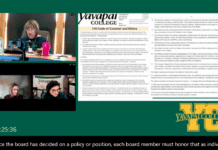
At the end of the meeting on March 31, three members of the board — seemingly fed up with McCasland’s so-called “leadership,” her refusal to agendize items that were lawfully submitted to be discussed by the board and perhaps by her all-too-cozy relationship with college President Lisa Rhine, Ph.D., who seems to be leading the board, rather than serving as the board’s employee — voted to hold new elections for the board chair and secretary.
A board chair enjoys no power above the rest of the board other than two exceptions: Adding items to an agenda unilaterally and arranging the items on the agenda. A chair is required by law and policy to add items that at least two other board members have submitted for board discussion.
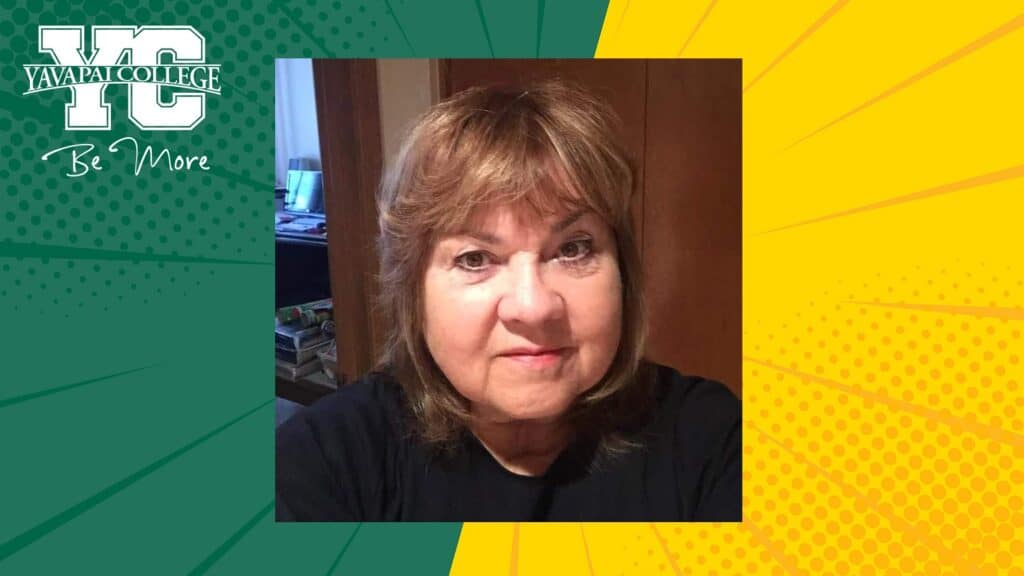
As we discussed previously, McCasland is a pale echo of her predecessor, former District 1 Representative Ray Sigafoos, who commandeered the board and autocratically ran college for more than 20 years until he was supplanted in the 2024 election by new District 1 Representative Bill Kiel.
McCasland is unable to strongarm the board in the same fashion and lacks both the competence and persuasive skill of Sigafoos and has fallen back to her last resort — dictatorial measures to maintain her petty hold on power.
Kiel, District 5 Representative Steve Bracety and the Verde Valley’s District 3 Representative Toby Payne, voted for the measure with McCasland opposed, obviously. District 4 Representative Patrick Kuykendall had already left the meeting early, but his presence would not have changed the vote.
Thus, the board had a 3-1 lawful mandate requiring McCasland to place the board election on the April 21 agenda. We discovered late last week that McCasland had refused to do so. Refusing to place a lawfully required item on an agenda is not just a lapse of judgment or a dereliction of public duty, or a violation of bylaws that can be settled internally by a legislative body, but becomes an open meeting law violation because a government board cannot have a lawful meeting.
Kiel, Bracety and Payne refused to entertain this stunt at the April 21 meeting and voted immediately to adjourn, ending the whole short circus in just 10 minutes.
The Arizona Attorney General’s Office will have to investigate and make a final determination if she violated Arizona Revised Statute §38-431 et al, but it is entirely possible the that such an illegal action may require a court — which normally does not get involved in internal legislative actions — to issue a right writ of mandamus requiring by judicial order an item to be placed on an agenda for discussion.
Not only is McCasland’s action, an assault against the legislative process and an insult to the public and taxpayers, but it rises to the level of absolute incompetence. We also learned that subsequent to Bracety’s decision to call for an election of a new board chair and vice chair on March 31, Rhine unilaterally removed Bracety on April 10 from the Yavapai College Foundation board as the board’s liaison. Whether she actually has this right is unclear, as board members have told us that the governing board and the board alone, make such appointments, not the president.
Rhine’s move appears to everyone involved as clear and naked retribution for Bracety threatening the petty power of McCasland, who Rhine named as Bracety’s replacement. What are the odds!
Rhine gave no explanation and even misspelled Bracety’s name as “Bractey,” which either signals her ineptitude or was an intentional slight, depending on how you want to read it.
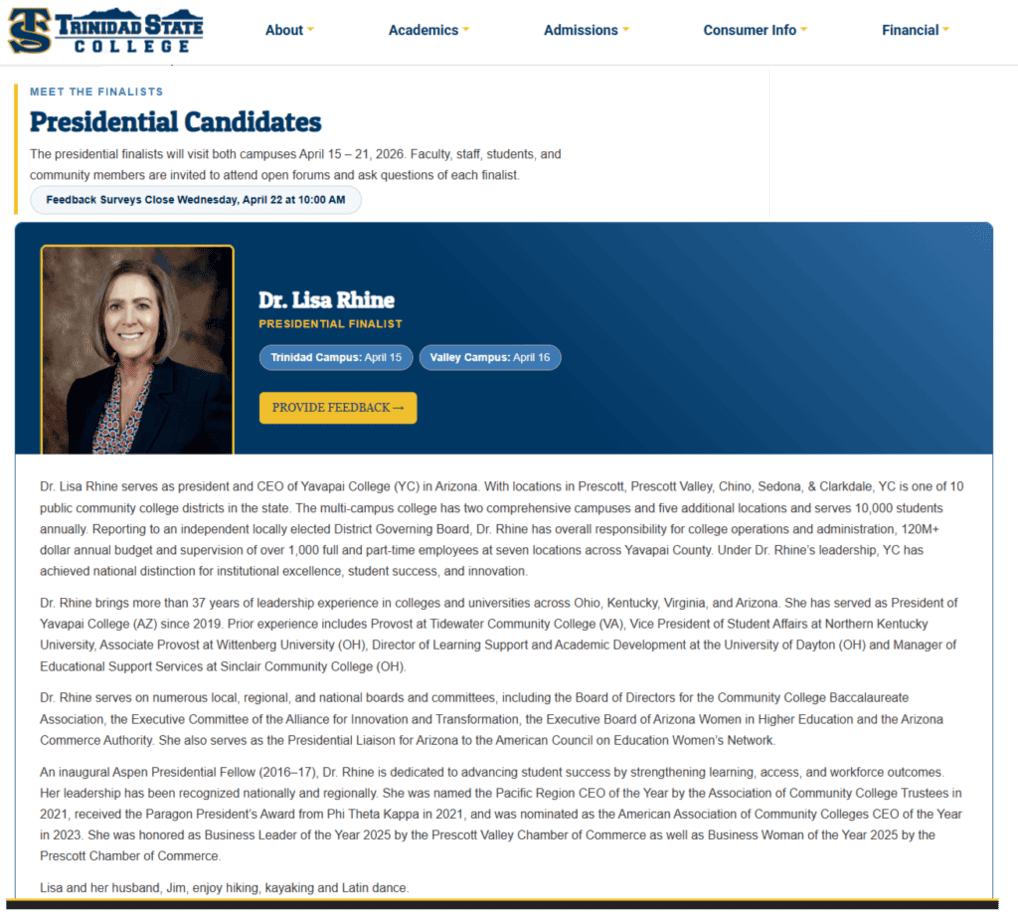
But perhaps Rhine was just in a rush, considering she also stated in the email that she would be out of the office from April 13 to 17. “Why was she out?” you ask. Rhine is looking for other work. She’s one of three candidates to become the new president of Trinidad State College and meet with students, faculty and other stakeholders in Trinidad, Colorado, on April 15. Rhine appears to see the writing on the wall should McCasland be replaced as it signals the board may be done with her, too.
We sincerely hope that Trinidad hires Rhine so that she is no longer our problem.
If McCasland is ousted from the chair and sidelined thereafter, without Rhine telling her what to say, how to vote and how to circumvent the legislative process, McCasland may find the rest of her term a cold, dark and lonely place — and one she built herself.