












At its Feb. 24 meeting, the Sedona City Council voted unanimously to finalize three questions for a survey that will be mailed to voters within city limits this month, conducted by Phoenix-based HighGround Inc. Vice Mayor Brian Fultz and Councilwoman Melissa Dunn were absent and excused from the meeting.
Discussions about the survey have been ongoing since the council’s retreat in December.
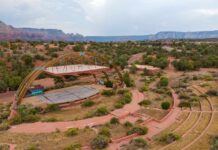
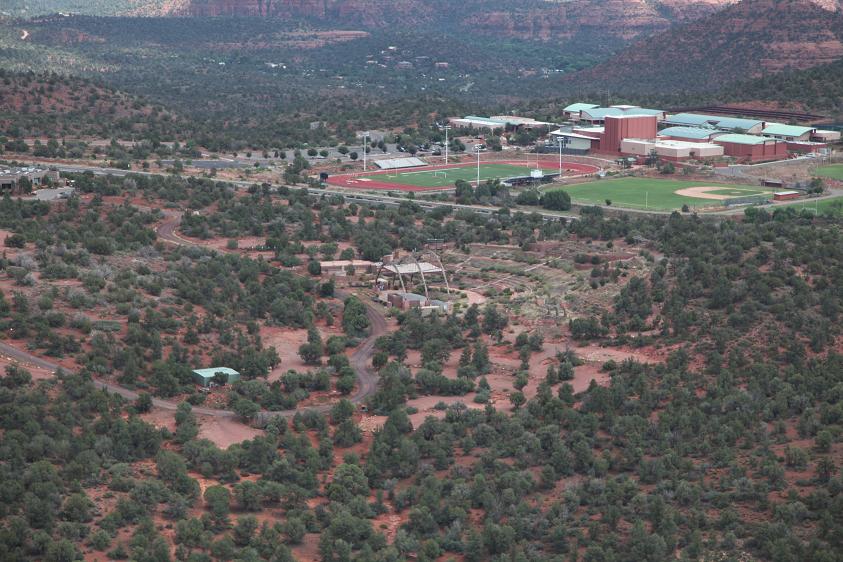
The Western Gateway is a 41-acre property that includes the Sedona Cultural Park and Georgia Frontiere Performing Arts Pavilion, which operated from 2000 to 2003.
“It is also the site of the Western Gateway Trailhead parking for the National Forest Western Gateway 25-plus-mile trail system,” the survey reads. “The site was acquired by the city in December 2022, and the city started a master planning process in the summer of 2024” for potential housing development.
Question 1 will ask respondents to indicate their level of support or opposition for the city’s proposed Western Gateway, which could feature mixed development alongside a community area with event space for public gatherings and performances.
Question 2 asks respondents to rank on a scale of one to five how important the components of the master plan are for: Housing, apartment and townhomes, restaurants, retail, commercial space, community gathering space, an event lawn, an amphitheater and a community recreation center.
Of greatest potential impact in 2026 is Question 3, which asks voters whether they support a proposal by Sedona Cultural Park 2.0, an ad hoc group advocating for reopening the 5,550-seat venue through a $21.9 million plan.
“There is a proposal to restore the outdoor live entertainment amphitheater with a capacity of approximately 5,500 people to host public gatherings and stage performances,” the survey reads. “Knowing just what you know now, do you support or oppose that proposal?”
“It’s a step in the right direction,” SCP 2.0 President John Bradshaw said about the survey. “But I think it’s convoluted and going to be difficult for the average person to go through everything first before they get to that third question.”
While the city previously conducted online surveys in January and October 2024 that ran 18 questions and dug into specific amenities, cost concerns and park types, sometimes with language that critics deemed leading. The new HighGround poll strips everything down to gauge general sentiment.
City Manager Anette Spickard anticipates presenting the results to council on Tuesday, April 28, with potential discussions of a letter of intent with SCP 2.0 to follow at a council meeting in May. Such a letter would give the group formal authorization to represent the city while collecting background for a business plan, exploring partnerships with concert promoters and determining revenue-sharing arrangements. Bradshaw estimates that work would take up to eight months.
“I was disappointed that the city feels it needs to move to a survey before even issuing a letter of intent,” SCP 2.0 board member Jennifer May wrote. “Our only goal was to provide accurate financial data so council and the community can fully understand what the Sedona Cultural Park and amphitheater could generate and how those tax dollars could be earmarked to support priorities like workforce housing. Rather than using taxpayer funds or concentrating housing in one location, reopening the amphitheater creates an opportunity to fund multiple workforce housing projects throughout the city, which has long been Sedona’s stated intent.”
The direct mail survey with unique QR code to each registered voter will take recipients “to a secure online survey tied only to that voter — allowing responses to be cross tabulated with relevant demographic data while preventing duplicate submissions,” for a cost of $10,750, the Jan. 27 council packet reads.
Council voted 4-3 Jan. 27 to move forward with the survey, with Fultz, Ploog and Dunn opposed.
Deputy City Manager Lauren Browne said she is currently finalizing the mailing date and when the survey will close, and has not yet determined the minimum number of responses to consider the survey statistically viable.
“With this being one of the last properties of its kind in Sedona, it’s understandable that residents all care deeply about the future of the property,” Browne said. “With the results of this survey, City Council will have clarity on if the majority of residents support restoring the amphitheater or not. With that answer in hand, City Council will decide on if next steps include a more detailed feasibility analysis of the 5,500 [seat] amphitheater concept.”