

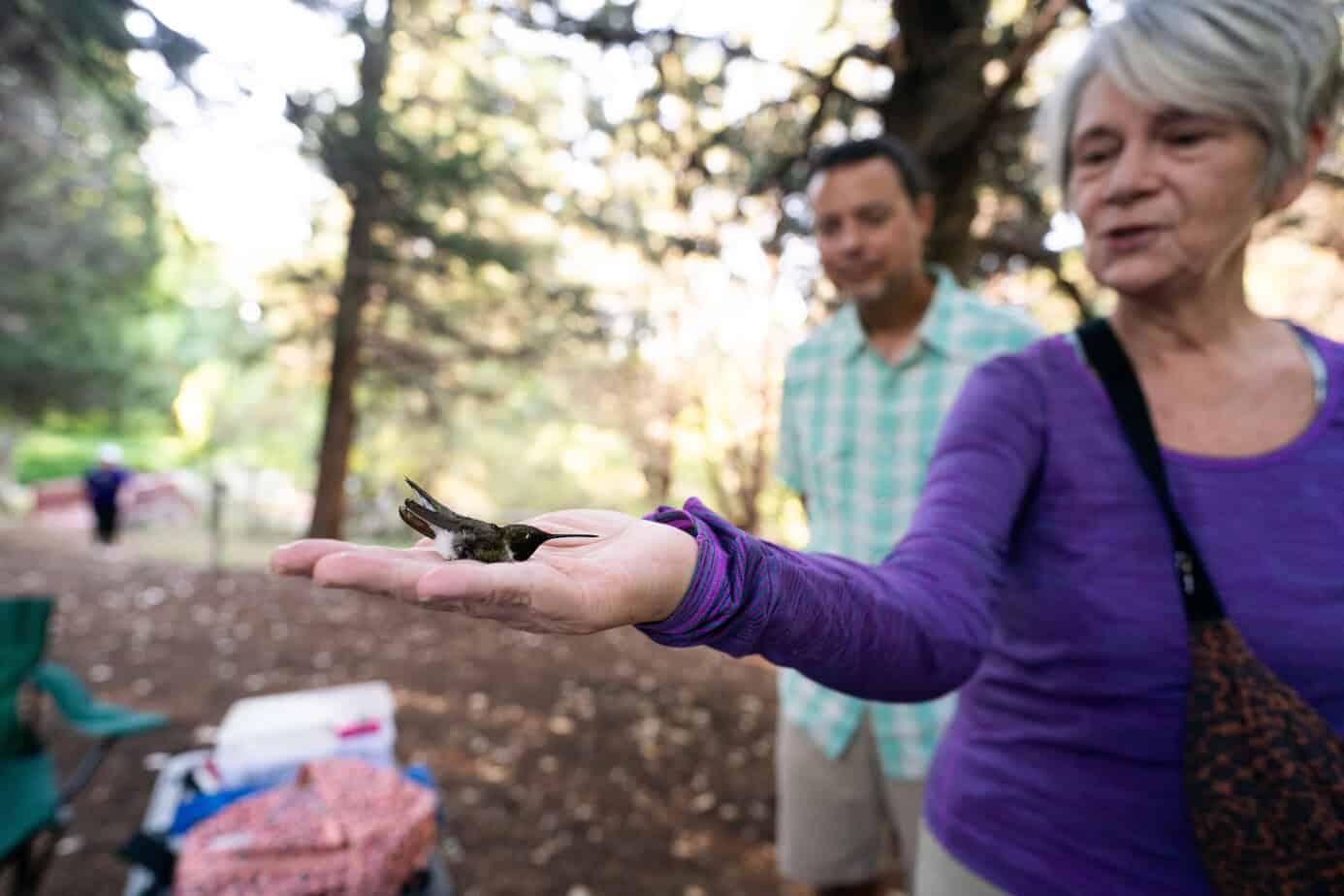
Hummingbird Society hosts 2 more weekends of public banding
A hummingbird’s heart hums just as much as its wings.
When the International Hummingbird Society puts on its banding events every other Saturday at the Page Springs Fish Hatchery, members want everyone to get the chance to feel it.
After about 20 hummingbirds, Hilary Morejon, a member of the IHS, was still calling “Who’s next?” after every one.
The next volunteer holds out their hand flat, a bander will place the hummingbird on the volunteer’s palm, and then the bird will ascend and fly away, though sometimes after resting in the palm for a few minutes.

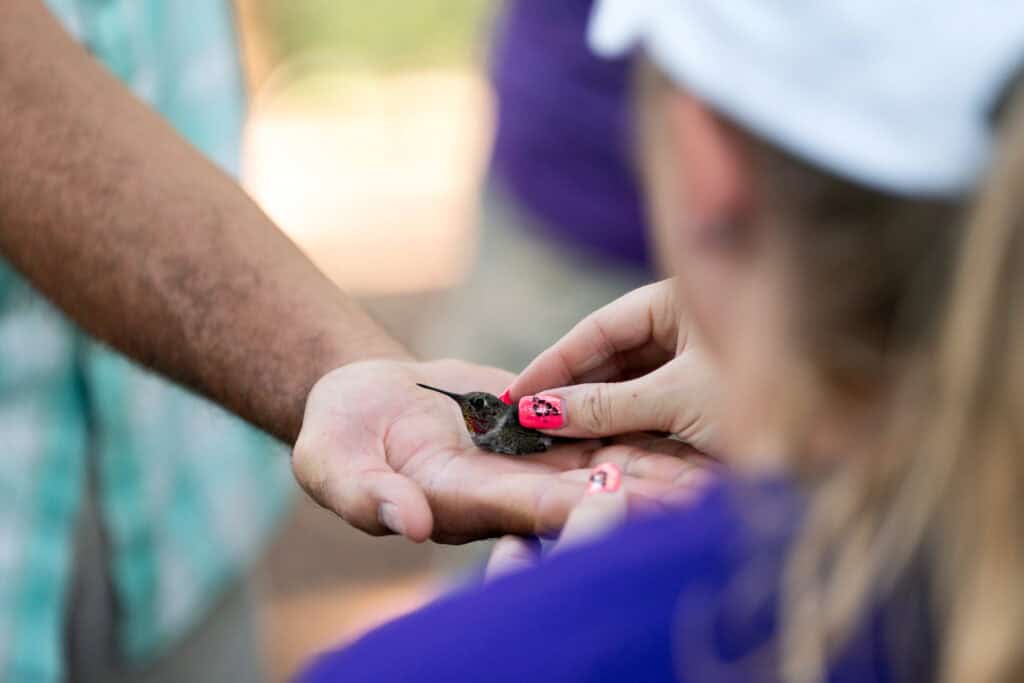
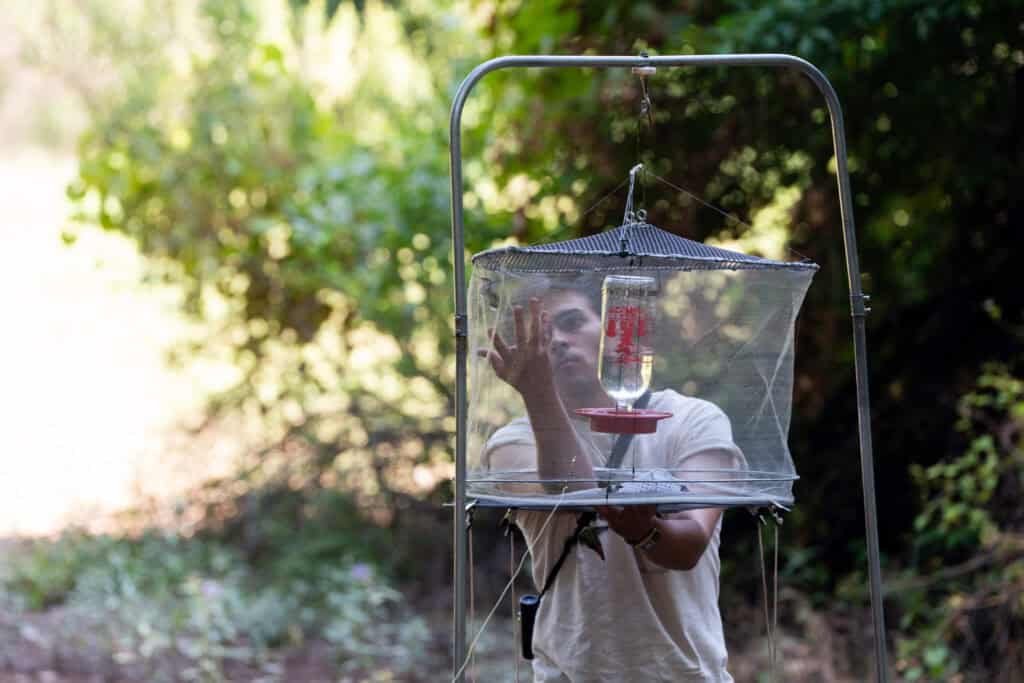
The process to band hummingbirds is somewhat delicate, because of how small the birds are. They’re caught around feeders with mesh nets and brought in mesh bags to the banding station, where their beaks, wings, weight, sex and fat levels are measured.
Only then are they finally banded.
The bands help confirm how far hummingbirds migrate when they are caught by banders elsewhere. In recent years, banders across the Southwest have confirmed hummingbirds migrate south into Mexico.
Bird Variety
Because of how small the hummingbirds are, the measurements needed to place the band around the birds’ legs are very specialized.
“Every species has a range, but then they make sure to verify the measurements — that way, it’s not too big, too small,” said Whitney Morejon, Hilary’s husband who also frequently volunteers with the organization. “Because — not at this site — but there have been birds captured where the foot’s missing, and it’s suspected that probably [someone] put a band on too tightly or improperly.”
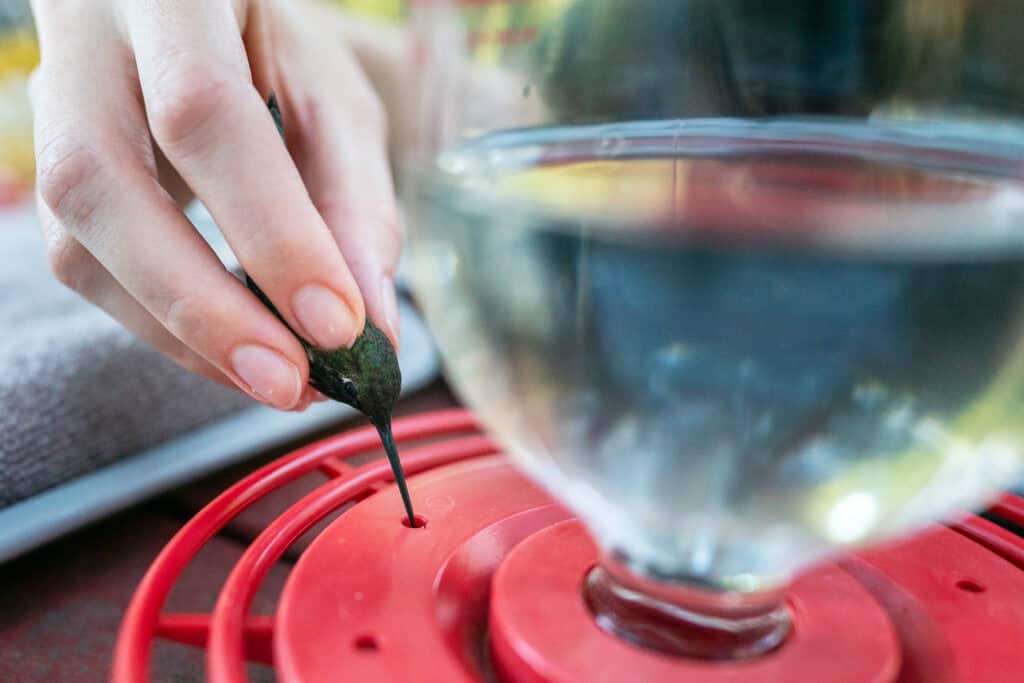
There are five hummingbird species in Sedona over the summer; the Anna’s — the new official bird of the city Sedona — and the Black-chinned and Rufous hummingbirds are most prevalent, followed by the Broad-tailed and Calliope hummingbirds.
Information gathered from hummingbirds helpsresearchers and volunteers identify the age, migration pattern and local population of the species.
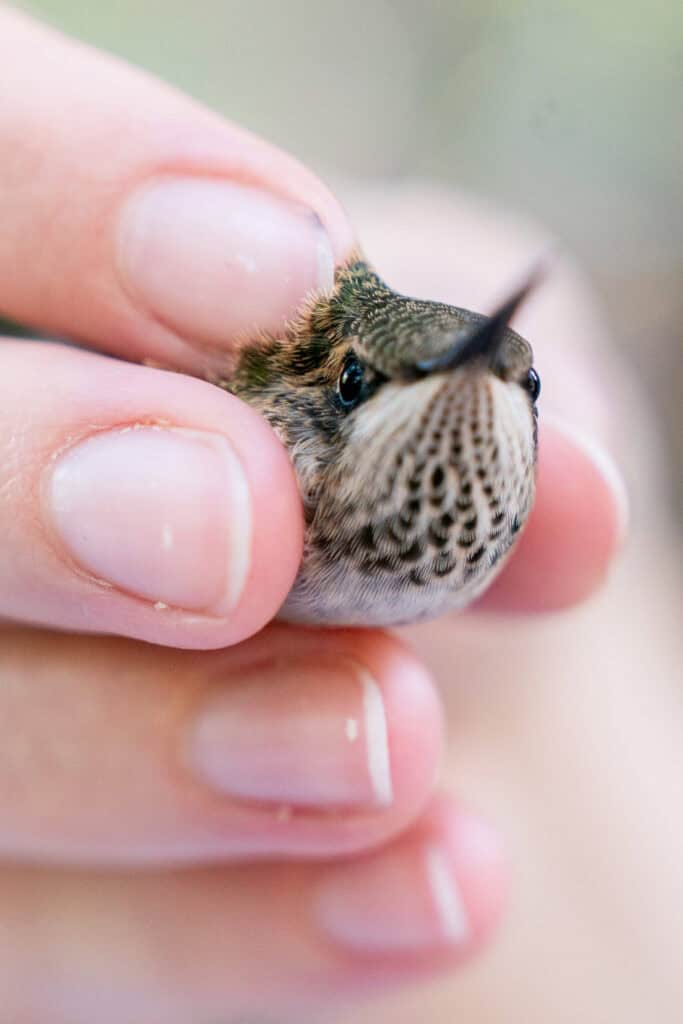
“The corrugations on the bill, which are little marks on the edge of it, help you determine age,” volunteer Lenore Hemingway said while sifting through a field guide for the Anna’s and Black-chinned hummingbirds. “The feather buffy edges help determine age. The gorget, the throat colors, are age.
“But then this is for sex” — she pointed to a diagram of tail feathers — “The shape of this will help you determine if it’s a male or female.”
Migration
Whitney Morejon said that in the about-five-hour session, about 40 birds get banded.
“Here we got a lot of recaptures from the same day, same season from previous seasons,” he said. “At least three to four recaptures out of those 40. We had 13 or 14, one session, of recaptures, and [a] majority from previous seasons. So that means we didn’t disrupt their migratory pattern. One, they [the banders] have really good technique. Two, they have really good training, so, no injuries to the birds.”

Hemingway said during the Sedona Hummingbird Festival, which took place at the end of July, the Saturday session had about 60 hummingbirds banded.
“A little less than that Sunday because sometimes when you handle the birds, that spurs them to migrate,” she said.
One of the largest places in the Southwest for hummingbirds is southeast Arizona, where the two Aug. 8 banders — Hilary Morejon and Amanda Hammer — were trained in Portal, an unincorporated community in Cochise County five miles west of the New Mexico border.
Whitney Morejon said banders often take a class to be certified, but Susan Wethington, the bander based in Portal takes an apprenticeship approach, in which the students will stay in town for about two weeks to complete their training.
Because a lot of banders are based in the Sedona area, and it’s a hotspot for hummingbird activity. A national banding conference is scheduled through Sunday, Aug. 16, at the Church of the Red Rocks.
“There’s going to be 50 to 60 hummingbird banders coming to Sedona,” Hemingway said. The Sedona banders will show off techniques they’ve learned to make the banding process easier with banding at a few private residences.
Hummingbird banding events take place every other Saturday through the summer in Page Springs Fish Hatchery, 1600 N. Page Springs Road. The next one is Aug. 22 from 6:26 to 11:26 a.m. and the last one of the season is on Sept. 5 from 6:35 to 11:35 a.m. It is free and open to the public and attendees are not required to stay the whole time, but hummingbirds tend to be more active in the earlier parts of the session.


